
 Sumbal Jesrani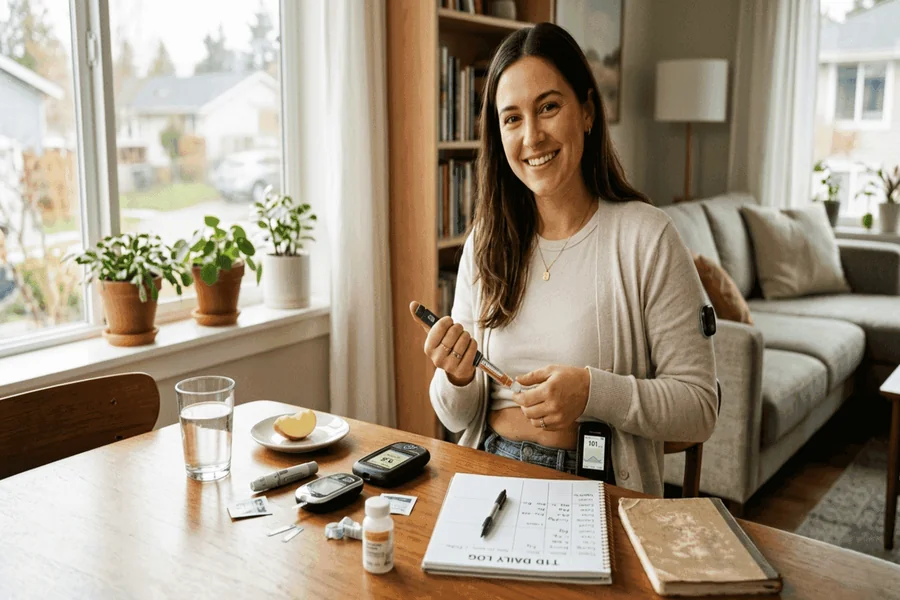
Every hour at least 40 people worldwide are diagnosed with Type 1 Diabetes. It’s not caused by poor lifestyle choices or a sugar-rich diet; it’s an autoimmune condition where the body mistakenly attacks insulin-producing cells in the pancreas.
This means that life changes quickly. From that moment, every bite of food, drop of insulin, and minute of exercise becomes a piece of a complex puzzle called self-care.
But here’s the truth: self-care doesn’t have to feel overwhelming. With the right tools, education, and attitude, individuals living with Type 1 Diabetes can reclaim control. That’s what this blog is all about empowering you with knowledge and realistic strategies.
- Why Self-Care is the Heartbeat of Type 1 Diabetes Management
- The Role of Education: Your First Line of Defense
- Building a Routine: The Foundation of Consistency
- 1. Monitoring Blood Glucose:
- 2. Insulin Administration:
- 3. Mindful Eating Habits:
- 4. Regular Exercise:
- Finding the Balance Between Control and Flexibility
- The Emotional Side of the Equation
- Challenges in Daily Life & How to Tackle Them
- Challenge 1: Hypoglycemia (Low Blood Sugar)
- Challenge 2: Hyperglycemia (High Blood Sugar)
- Challenge 3: Navigating Social Life:
- Challenge 4: Emotional Overload:
- Technology Is Changing the Game
- Continuous Glucose Monitoring (CGM)
- Insulin Pumps:
- Apps and Smart Devices:
- Emergency Planning: Be Prepared
- Create a Diabetes Emergency Kit:
- Guidelines That Guide the Journey
- Final Reflections
Why Self-Care is the Heartbeat of Type 1 Diabetes Management
Type 1 Diabetes self-care is more than just medical management. It’s a lifestyle, a daily commitment, and—yes—a challenge. But it’s also your strongest weapon in keeping complications at bay and living a fulfilling life.
The Role of Education: Your First Line of Defense
Understanding the “why” behind insulin doses or blood sugar readings can change the game. That’s the core goal of type 1 diabetes patient education, to equip patients and caregivers with tools that enable informed choices and independence.
Effective programs teach you to:
- Interpret blood sugar patterns,
- Adjust insulin based on food and stress levels,
- Identify symptoms of high or low glucose,
- Manage real-life situations like work, school, or travel.
But education isn’t static. It evolves as you grow, from newly diagnosed teens to adults with changing routines. The best outcomes come from continuous learning tailored to your stage of life.
Building a Routine: The Foundation of Consistency
No two days are identical with Type 1 Diabetes. That’s why establishing a routine creates predictability. Let’s break it down:
1. Monitoring Blood Glucose:
Using fingerstick or CGM (Continuous Glucose Monitoring), regular checks help identify trends, not just numbers. These insights guide every decision in your day.
2. Insulin Administration:
Insulin may be delivered through injections or a pump. Your dosage depends on your insulin-to-carb ratio, stress levels, and activity. Pumps provide flexibility, but affordability and preferences vary. This is where the following type 1 diabetes treatment guidelines become essential.
3. Mindful Eating Habits:
Food isn’t the enemy; it’s part of your plan. With guidance from a dietitian, type 1 diabetes self-care encourages:
- Accurate carb counting,
- Balanced meals,
- Proper meal timing aligned with insulin action.
Thanks to strong type 1 diabetes patient education, you learn that no food is off-limits, just better managed.
4. Regular Exercise:
Exercise improves insulin sensitivity but may cause glucose levels to drop. Smart planning helps:
- Monitor glucose before and after activity,
- Carry fast-acting carbs,
- Adjust insulin accordingly.
Finding the Balance Between Control and Flexibility
Tight blood sugar control reduces the risk of complications but often requires:
- More frequent monitoring,
- Meal-time precision,
- Rigid planning.
Too much flexibility, on the other hand, may raise risks of nerve damage, kidney disease, or vision loss. Type 1 diabetes self-care is about navigating this tightrope.
Type 1 diabetes treatment guidelines offer a balanced framework based on clinical research. They recommend:
- Target A1C levels,
- Safe glucose ranges,
- Dosing protocols are based on body weight and carb intake.
Still, guidelines are just a starting point. Your personal experiences and lifestyle will shape how these are implemented.
The Emotional Side of the Equation
Managing blood sugar is one thing, managing emotions is another. Burnout, guilt, and isolation are common, especially when you follow every rule, but your glucose won’t cooperate.
Emotional well-being plays a huge role in effective type 1 diabetes self-care. That’s why support systems matter, friends, family, mental health professionals, or peer communities help you stay mentally strong and resilient.
Challenges in Daily Life & How to Tackle Them
Even the most disciplined plan faces obstacles. Here’s how to manage the most common ones:
Challenge 1: Hypoglycemia (Low Blood Sugar)
It may occur after intense activity, skipped meals, or excess insulin.
Quick Tips:
- Keep glucose tablets or juice on hand
- Teach those around you how to help during an episode
Challenge 2: Hyperglycemia (High Blood Sugar)
Triggered by stress, illness, overeating, or underdosing insulin.
Quick Tips:
- Follow correction doses as per your treatment plan
- Stay hydrated to flush out excess glucose
- Never skip insulin unless directed by a healthcare provider
Challenge 3: Navigating Social Life:
Social events and travel can make management tricky.
Quick Tips:
- Don’t shy away, educate those around you
- Use carb-counting apps while dining out
- Always pack snacks and emergency supplies when traveling
Challenge 4: Emotional Overload:
Burnout is real, so is the pressure to “always be perfect.”
Quick Tips:
- Talk to a mental health professional or diabetes coach
- Join support groups
- Celebrate small wins, stable readings, active days, well-planned meals
Technology Is Changing the Game
Today, tech allows better control with fewer hassles.
Continuous Glucose Monitoring (CGM)
CGMs offer 24/7 tracking and alerts. They provide real-time insights to prevent highs or lows.
Benefits:
- Less finger pricking
- Quicker response to trends
- More accurate insulin decisions
Insulin Pumps:
Deliver insulin continuously and offer customized bolus options. Some integrate CGMs for automated adjustments.
Apps and Smart Devices:
- Apps help track meals, insulin, moods, and workouts. They also allow you to:
- Share data with healthcare providers
- Review weekly trends
- Set reminders for medication and meals
- Adopting tech is one of the best ways to simplify and enhance type 1 diabetes self-care.
Emergency Planning: Be Prepared
You may face unexpected events, missed meals, travel delays, or nighttime lows. Being ready is part of staying safe.
Create a Diabetes Emergency Kit:
Include:
- Glucose tablets or snacks
- Glucagon emergency kit
- Extra insulin, syringes, or pump parts
- Backup meter or CGM
- Medical ID bracelet or card
- Educate Your Circle: H3
- Make sure friends, coworkers, or family know:
- Signs of low blood sugar
- How to help in an emergency
- When to call for assistance
These small steps can save your life, and they reflect responsible type 1 diabetes self-care.
Guidelines That Guide the Journey
Type 1 diabetes treatment guidelines provide a foundation, not a formula. They guide healthcare professionals in creating plans tailored to individual needs.
Key components include:
- Personalized A1C goals (commonly <7% for adults)
- Insulin requirements (usually 0.4–1.0 units/kg/day)
- Frequency of glucose checks
- Screening for complications like retinopathy and neuropathy
But they are most effective when combined with your daily experience, emotional awareness, and lifestyle goals.
Final Reflections
Every insulin dose, every measured meal, every mindful decision, you’re doing more than just surviving; you’re thriving. Type 1 diabetes patient education builds your foundation. Type 1 diabetes self-care builds your future.
It’s not about being perfect, it’s about being prepared. When you combine scientific Type 1 diabetes treatment guidelines, practical patient education, and a willingness to evolve and grow, you create a sustainable, empowered life.
