
 James
James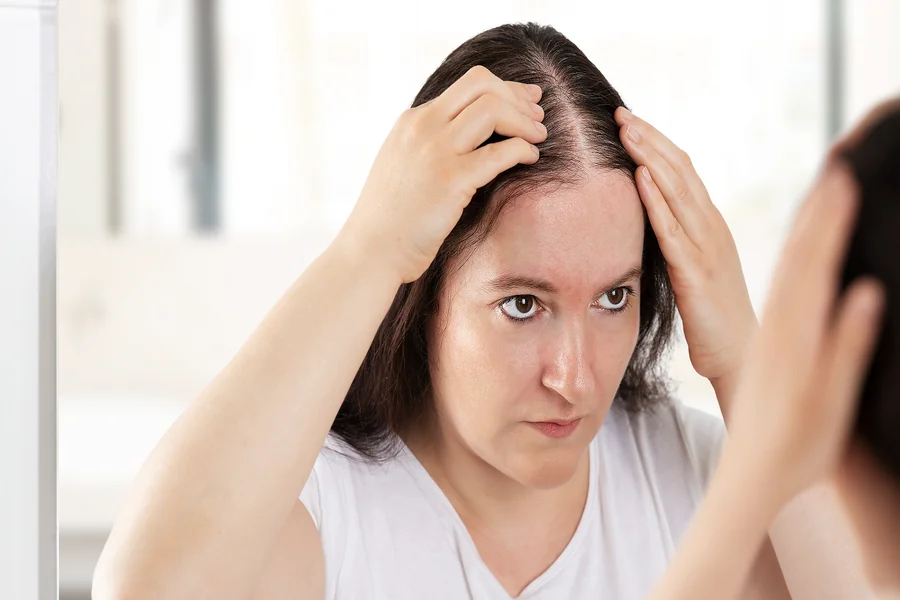
Hair loss treatment in women works best when it starts with the cause. Some cases improve after stress, illness, or nutrient deficiencies resolve, while others need ongoing therapy. The goal is to protect active follicles, reduce damage, and choose care that fits the diagnosis.
Start With the Cause
The first step is to identify the type of hair loss involved. A widening part, gradual loss of density, sudden clumps, smooth patches, or broken strands can point to different problems. A dermatologist may examine the hair and scalp, review medications and family history, and order blood tests when thyroid disease, anemia, or nutrient deficiency is possible.
Seek care sooner when loss is sudden, patchy, painful, or accompanied by redness, scaling, inflammation, or scarring. These signs may require faster treatment to protect the remaining follicles.
Use Proven Medical Options
Topical minoxidil is one of the most established medical options. It may stimulate hair growth and help maintain density, but results take time. Many people need several months of regular use before noticing a change. Continued use is usually needed to preserve improvement.
Prescription medicines may be considered when hormones contribute to the problem. They are not suitable for everyone. A doctor must review possible side effects, pregnancy plans, current medications, and other health factors.
If hair loss persists despite medical treatment, Dr. Ross Kopelman can help develop a treatment plan based on the diagnosis, the degree of loss, donor density, and long-term goals.
Common medical approaches include:
- Topical minoxidil for gradual patterned loss
- Prescription medicine for selected hormonal cases
- Correction of iron or nutrient deficiencies
- Treatment of thyroid or underlying health disorders
Do not start several products at once. Using a single planned approach makes it easier to assess progress and identify adverse reactions.
Protect Hair From Daily Damage
Good hair care cannot reverse every cause, but it can reduce breakage and prevent added stress on fragile strands. Use a mild shampoo, apply conditioner after each wash, and avoid rough towel drying. When you wash your hair, use lukewarm water and handle wet strands gently.
Choose wide-toothed combs to reduce pulling. Start at the ends and work upward rather than forcing knots from the roots. Limit flat irons, curling tools, hot rollers, and high-heat blow-drying. Repeated bleaching, relaxing, perming, or coloring can weaken the hair shaft and make thin hair appear less dense.
Avoid tight braids, buns, ponytails, extensions, and weaves that create constant tension. Long-term pulling can damage follicles and cause permanent loss.
Helpful daily habits include:
- Detangle slowly from the ends upward
- Use the lowest practical heat setting
- Avoid hairstyles that cause pain or pulling
- Eat enough protein and calories
- Skip supplements unless testing confirms a deficiency
Compare Common Loss Patterns
Different causes need different responses. The table below shows why diagnosis matters before choosing care.
| Pattern | What It May Indicate |
| Sudden diffuse hair shedding after illness, stress, childbirth, or rapid weight change | A temporary cycle disruption that may improve after the trigger resolves |
| Gradual widening of the part with ongoing hair thinning | Female pattern hair loss that may require long-term treatment |
| Smooth, round bald patches | A possible autoimmune disorder requiring medical evaluation |
| Broken strands near tight hairstyles | Traction or repeated physical damage |
| Redness, pain, scaling, or scarring | Inflammation that could permanently damage follicles |
People sometimes compare these symptoms with male pattern hair loss, but the visible pattern is often different. Women commonly retain their frontal hairline while density decreases across the crown and top of the scalp.
Temporary loss may recover once its trigger ends. Genetic or progressive loss usually needs continued management.
Set Realistic Treatment Expectations
No method can guarantee stopping hair fall immediately. Hair grows slowly, so even a suitable treatment requires patience. The first sign of progress may be reduced loss rather than visible regrowth. Some patients also notice increased shedding after starting minoxidil before improvement begins.
Products marketed as instant cures often lack strong clinical support. Taking high doses of vitamins can also create problems. Excess vitamin A, vitamin E, or selenium may increase loss rather than correct it.
The phrase “how to treat bald hair in females?” can be misleading because results depend on whether follicles remain active. Medicine may support miniaturized follicles, but it cannot revive follicles destroyed by scarring.
Track progress with monthly photographs. Use the same lighting, angle, hairstyle, and distance each time. Daily mirror checks can make normal changes look more dramatic than they are.
Consider Procedures When Needed
Office-based procedures may help when medication alone does not provide enough improvement. Platelet-rich plasma, low-level light devices, and microneedling are among the treatments for hair loss considered for selected patients. Results vary, and these options may require several sessions.
Hair transplantation may be appropriate when the hair loss is stable, and the donor area contains sufficient healthy follicles. The procedure moves follicles from denser areas to zones with reduced coverage. It does not prevent future loss, so medical management may still be needed.
A specialist should assess scalp health, donor quality, age, pattern stability, and expected coverage before recommending surgery. Patients considering advanced restoration options can consult Kopelman Hair for an individualized evaluation based on their pattern of hair loss and treatment goals. Patients with widespread donor loss, active scarring disease, or uncontrolled progression may not be suitable candidates.
The strongest approach combines an accurate diagnosis, realistic goals, consistent follow-through, and protection from avoidable damage.
