
 James
James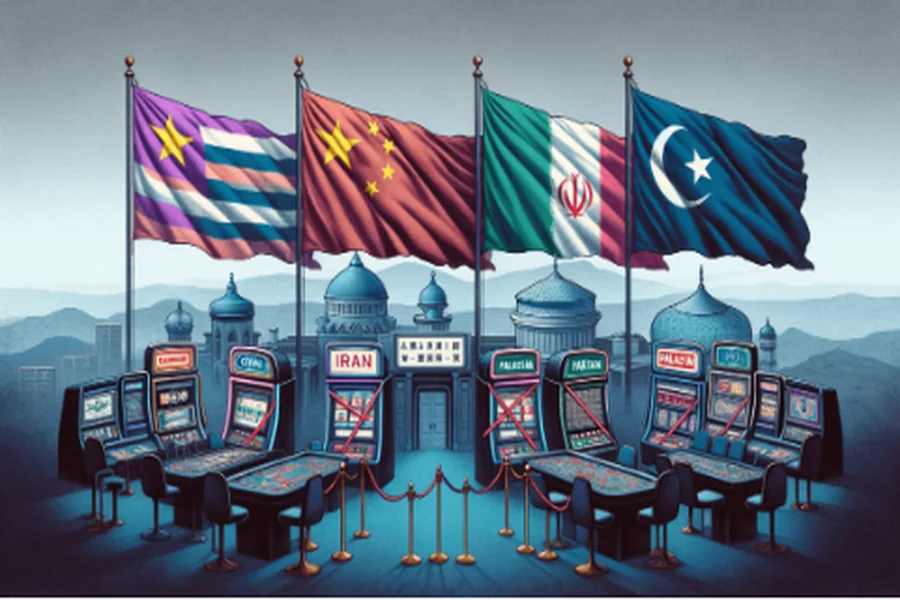
Cross a single border and the same slot machine can go from a celebrated tourist attraction to a criminal offence carrying a prison sentence. Gambling is one of the few activities on earth treated so wildly differently from one country to the next, ranging from state-sponsored spectacle to outright prohibition.
That patchwork is not random. It reflects a deep tug of war between religion, morality, economics and politics, and tracing the spectrum from total ban to open market shows exactly why the world’s rulebooks look nothing alike.
- From Prison To Promotion
- The Countries That Ban It Outright
- The State-Run Monopolies
- Control Over Competition
- The Regulated Open Markets
- The Grey Zone And The Great Exceptions
- A Map That Never Stops Redrawing
- FAQ
- Why is gambling banned in some countries?
- Why do other countries legalise gambling?
- What are the main ways countries regulate gambling?
- Are any strict countries changing their gambling laws?
From Prison To Promotion
It helps to picture national gambling laws as a spectrum rather than a simple yes or no. At one extreme sit countries that jail people for placing a bet, and at the other are nations that advertise casinos as a pillar of their economy.
Most countries land somewhere in between, allowing some forms of gambling while restricting others, or permitting it only for certain people in certain places. Where a nation sits on that line is decided by which pressures win out.
Four forces do most of the pulling:
- Religion — faith-based prohibitions, above all in Islamic law, push a country toward an outright ban.
- Morality — broader social worries about addiction, debt and crime harden public attitudes even in secular states.
- Economics — the promise of tax revenue, jobs and tourism pulls hard in the opposite direction, toward legalisation.
- Politics — a government’s basic view of personal freedom decides whether gambling is a private choice or a public danger.
These forces rarely point the same way, which is why the outcome differs so sharply from one capital to the next. A nation weighs faith against money, and freedom against protection, and lands wherever that particular balance settles.
The difference is stark in practice. In a tightly regulated market, an operator can legally advertise something like a wanted win promo code under strict rules on who can see it, while a few hundred kilometres away the same offer would be illegal to publish at all. The law, not the game, is what changes.
The Countries That Ban It Outright
The strictest nations forbid gambling entirely, and the driving force is almost always religion. In much of the Islamic world, betting is prohibited under Sharia law, backed by criminal penalties that can include fines and imprisonment.
The prohibition rests on two religious concepts. The first is maisir, the idea of gaining wealth through pure chance rather than work or genuine value, and the second is gharar, an objection to excessive uncertainty in any financial dealing, which together extend the ban to lotteries, betting and casinos alike.
Countries such as the United Arab Emirates, Saudi Arabia and Qatar have long enforced this, with bans that reach online too, prompting internet providers to block offshore sites. Qatar’s penal code, for instance, can punish gambling with up to three months in jail, and enforcement treats the activity as a genuine crime rather than a vice to be tolerated.
Enforcement is rarely watertight in practice, since determined players still reach blocked sites through virtual private networks that disguise their location. That gap between the letter of the law and everyday behaviour is a recurring theme, and it is one reason some governments have started to ask whether a controlled, taxed market might serve them better than a ban that leaks.
The State-Run Monopolies
A step along the spectrum sits a very different model, one where gambling is legal but only the government is allowed to offer it. Here the state runs the lotteries and betting itself, keeping private companies out of the market entirely. The activity is permitted, but competition is not, which is a distinction that often confuses outsiders who assume legal means open.
Control Over Competition
Several Nordic countries, including Norway and Finland, have historically taken this route. The logic is part protective and part financial, since a monopoly lets the state cap how aggressively gambling is pushed while keeping all the profit in public hands.
Supporters argue it is the responsible middle path, limiting harm while funding public services, and critics counter that it simply hands the government a lucrative captive market. Either way, it shows that legalising gambling and opening it to competition are two entirely separate decisions.
The Regulated Open Markets
Further along again are the countries that treat gambling as legitimate entertainment and license private operators to provide it. Nations such as the United Kingdom and Malta run detailed frameworks where companies compete for customers under close supervision.
The motivation here is heavily economic, since a regulated industry generates tax revenue, creates jobs and draws tourists, all of which governments are keen to capture. Places like Las Vegas, Macau and Monaco built entire economies on exactly this bet, turning gambling into a headline export rather than a hidden vice. Macau alone earns several times the gaming revenue of the Las Vegas Strip, a scale that makes gambling central to its public finances rather than a sideline.
The trade-off is a duty of care, because permissive laws come paired with rules on advertising, age verification and player protection. In this model the state’s job is not to stamp gambling out but to keep it fair, visible and contained, treating it as a personal choice that nonetheless needs guarding. Britain’s own history shows how far this can swing, having moved from tight post-war restrictions to one of the most liberal online markets in the world, and more recently back toward tighter controls as concerns about harm have grown.
The Grey Zone And The Great Exceptions
Between these clear categories lies a messier reality, since the internet has outrun a great many national laws. Online gambling often falls into a grey market, technically unaddressed by legislation written long before it existed, which is why players in restrictive countries still reach offshore sites through workarounds. Even a single nation can be a patchwork, with the United States leaving the decision to individual states, so that an activity legal in one is a crime across the border in the next.
Plenty of nations also carve out striking exceptions to their own rules:
- China — casinos are banned on the mainland, yet Macau and Hong Kong operate under entirely separate systems.
- Singapore — gambling is legal, but locals must pay a hefty entry levy to deter casual play while tourists enter free.
- Malaysia — a single resort operates legally, though Muslim citizens remain barred under religious law.
- Russia — casinos are confined to a handful of designated gambling zones far from the major cities.
- Cambodia — casinos serve foreign visitors, while locals can face arrest for gambling themselves.
These carve-outs reveal governments trying to have it both ways, capturing tourist money and tax while shielding their own populations, a compromise that pleases almost nobody fully but keeps the revenue flowing.
A Map That Never Stops Redrawing
The gambling map is not fixed, and its lines shift as priorities change. Even some long-standing bans are loosening, with the United Arab Emirates introducing a national lottery and awarding its first casino licence in recent years, a striking move driven by tourism and economic diversification.
The reasons a country bans or embraces gambling come down to which forces hold sway: faith, morality, money and freedom, weighed differently in every capital. Wherever a person lives on that spectrum, the risks of gambling itself do not change, so anyone who finds their play becoming hard to control can seek free, confidential support from services such as GamCare or the National Council on Problem Gambling.
FAQ
Why is gambling banned in some countries?
Usually for religious or moral reasons. In much of the Islamic world it is forbidden under Sharia law as maisir, gaining wealth by chance, with penalties that can include fines and imprisonment even for online betting.
Why do other countries legalise gambling?
Mainly for economic reasons. A regulated industry generates tax revenue, creates jobs and attracts tourism, which is why places like the United Kingdom, Macau and Las Vegas actively license and promote it.
What are the main ways countries regulate gambling?
There are four broad models: an outright ban, a state monopoly where only the government offers it, regulated licensing of private operators, and a grey market where the law has yet to catch up with online play.
Are any strict countries changing their gambling laws?
Yes. The United Arab Emirates, long a total-ban country, has recently launched a national lottery and issued its first casino licence, driven by tourism and a push to diversify its economy.
