
 James
James
You raise a house’s value before selling by removing buyer objections: fix the visible defects, improve how the place presents, and make only the improvements that nearby comparable sales actually support. Gutting a kitchen eight weeks before listing is rarely the answer. The National Association of Realtors’ 2025 seller data backs this up. Fifty-three percent of sellers completed minor renovations or fixed broken items, 35% chose to sell as is, and only 12% took on major renovations.
If you’re selling in the next three to twelve months and you don’t want to spend money you won’t get back, work with three separate ideas of value: market value (what comps justify), buyer-perceived value (how the house reads to someone walking through), and transaction value (how few problems surface between offer and closing).
- What Actually Increases Home Value Before Selling?
- Start With Comparable Sales, Not a Renovation Wish List
- The Net-Benefit Formula for Every Home Improvement Project
- What Should I Fix First Before Selling My House?
- Does a Fresh Coat of Paint Help a Home Sell? Fresh Paint for One Room or the Entire House
- Lead-Safe Rules for Houses Built Before 1978
- How Much Does Curb Appeal Matter for First Impressions?
- Exterior Doors, Garage Doors, and Other Exterior Improvements: What the ROI Data Shows
- Building a Grand Entrance Without a Big Budget
- Should You Remodel the Kitchen or Bathroom Before Selling?
- When Does a Full Remodel Make Sense Instead of a Refresh?
- Flooring, Light Fixtures, and Making a Space Feel Larger
- Do Smart Home Technology and Energy Improvements Add Value?
- How Much Does a Deep Clean and Staging Change Buyer Perception?
- Which Renovations Should You Avoid Before Selling?
- How Much Should You Spend, and Should You Tap Home Equity?
- How to Hire Contractors Without Creating New Problems
- A 60-Day Pre-Sale Action Plan
- Frequently Asked Questions
- What increases a home’s value the most?
- What is the 3-3-3 rule in real estate?
- How do you increase home value by $50,000?
- Is it better to sell as is or make repairs first?
- The Bottom Line: Spend Where Buyers Can See It, and Comps Support It
What Actually Increases Home Value Before Selling?
Every project in this article gets tested against one question: does it raise supported market value, improve buyer perception, or reduce transaction risk? If it does none of the three, it’s a personal preference purchase rather than a home improvement that pays you back at closing.
- Supported market value: what recent comparable sales in your neighborhood and price tier justify.
- Buyer-perceived value: whether the house looks clean, maintained, and move-in ready to potential buyers.
- Transaction value: fewer inspection objections, smaller concession requests, less delay.
Condition carries real weight with current buyers. The 2025 NAR/NARI Remodeling Impact Report found 46% of buyers were less willing to compromise on a home’s condition. That’s why low-impact improvements like fresh paint and replacing tired cabinet hardware often outperform expensive renovations on a per-dollar basis. Money spent is not automatically value gained.
Start With Comparable Sales, Not a Renovation Wish List
Many homeowners begin with a wish list and work outward from there. Reverse it. Before you collect a single bid, do three things. Get an as-is price range from a local agent or appraiser. Pull recently sold renovated and unrenovated houses in the same neighborhood and price tier. Then identify the actual gap between the two. That gap, not a home improvement wish list, is your entire budget ceiling, and it also tells you how your house will read against competing properties in the same bracket.
Fannie Mae’s appraisal guidance is useful here. An over-improvement is anything larger or more expensive than what’s typical for the neighborhood, and appraisers are directed to consider only its contributory value, not what the owner spent. A luxury kitchen in a starter-home market may not get a dollar-for-dollar adjustment. National ROI tables are benchmarks for comparison. Local comps control the decision.
The Net-Benefit Formula for Every Home Improvement Project
Expected net benefit = probable sale-price improvement + likely avoided concessions − total project cost − extra carrying costs
Run it three times: conservative, expected, optimistic. If the project only clears zero under the optimistic scenario, skip it. You’re absorbing all the risk of a renovation to hand the upside to whoever buys the house. Carrying costs are real too. Taxes, insurance, utilities, and mortgage interest keep running while the property sits, so any project that pushes your selling date back a month has to clear a higher bar. Big projects that finish after listing photography day do almost nothing for your price.
What Should I Fix First Before Selling My House?
Active defects come before anything decorative. Buyers who spot one broken thing start hunting for others, so work down this list first:
- Leaks, moisture intrusion, and any staining that suggests either
- Rot or deteriorated exterior trim
- Damaged flooring and trip hazards
- Loose railings and unstable steps
- Broken doors, windows, and fixtures
- Failed caulk and grout
- Dead light fixtures, non-working appliances, dripping plumbing
- Peeling paint and obvious wall damage
Visible neglect is expensive because of what buyers infer from it. A rotted trim board reads as a roof question. A running toilet reads as skipped regular maintenance everywhere else. Potential homebuyers price that guesswork in, and their number is almost always larger than the repair invoice would have been.
Sort each item into repair, replacement, or elective improvement, and be honest about which is which. Disclosure obligations and permit rules vary by state and city, so confirm the requirements for your property before you start work.

Does a Fresh Coat of Paint Help a Home Sell? Fresh Paint for One Room or the Entire House
Interior paint is the most commonly recommended pre-sale project in the NAR/NARI report: 50% of agents suggested painting the entire house and 41% suggested painting one interior room. That doesn’t mean every property needs repainting. New interior paint earns its keep when walls are marked or damaged, when colors are very dark or clash across sightlines, when trim is visibly worn, or when a room photographs badly. Paint alone won’t make a home sell, but a scuffed hallway can absolutely stall one.
Neutral colours applied consistently beat anything trendy. Buyers read a whole floor plan at once, and a single loud room breaks the sequence. A new coat in one palette also makes an open space feel larger and better finished in photos, which is where most potential homebuyers meet your house for the first time.
DIY painting stops being practical when there’s heavy surface prep, high ceilings, exterior painting that needs ladder access, rot repair mixed into the scope, or a listing date that won’t move. Sellers in the Seattle-Tacoma area include a contractor such as Cover Pro Painting among the companies asked to bid the same written scope covering prep, repairs, number of coats, specific products, and cleanup responsibility. Verify licensing and insurance for whoever you’re considering, and compare at least three bids written against identical specifications, since a cheaper number usually means less preparation rather than better pricing.
Lead-Safe Rules for Houses Built Before 1978
Safety note: Under the EPA’s Renovation, Repair and Painting Rule, paid contractors disturbing painted surfaces in pre-1978 homes generally must be lead-safe certified and follow prescribed work practices. Minor-work exceptions generally apply at six square feet or less per interior room and 20 square feet or less outside, but window replacement and demolition are covered regardless of area. This is a summary, not legal guidance. Verify federal, state, and local requirements before sanding or demolition.
How Much Does Curb Appeal Matter for First Impressions?
Buyers form an opinion from the street and from the first listing photo, before they touch a doorknob. The front of the house is the first thing they judge, and curb appeal improvements are the cheapest goodwill you can buy:
- Power-wash siding, walkways, and the driveway
- Clean gutters and window screens, then wash the windows
- Repair trim, railings, and entry hardware
- Swap a dented or faded box for a new mailbox
- Cut back overgrown vegetation, edge the beds, refresh mulch
- Touch up exterior paint where weathering or failed caulk shows
Landscaping work is popular for a reason. Roughly 25% of sellers completed landscaping projects in 2024, and some estimates put returns as high as 200%. Treat that as a directional figure rather than a promise, since it depends heavily on the starting condition of the yard. You can also add value to your home here without expensive landscaping, because edging, pruning, and clean mulch do most of the visual work.
Exterior Doors, Garage Doors, and Other Exterior Improvements: What the ROI Data Shows
| Project | Average job cost | Resale value | Cost recouped |
| Garage door replacement | $4,672 | $12,507 | 268% |
| Steel entry door replacement | $2,435 | $5,270 | 216% |
| Manufactured stone veneer | $11,702 | $24,328 | 208% |
| Fiber-cement siding replacement | $21,485 | $24,420 | 114% |
| Minor midrange kitchen remodel | $28,458 | $32,141 | 113% |
| Midrange bathroom remodel | $26,138 | $20,915 | 80% |
| Major midrange kitchen remodel | $82,793 | $42,130 | 51% |
| Upscale bathroom remodel | $81,612 | $34,000 | 42% |
These are national modeling estimates from the 2025 Cost vs. Value Report across 119 markets, not guaranteed returns for your address. The pattern still holds: visible exterior replacements, especially exterior doors, outperform expensive interior renovations.
Building a Grand Entrance Without a Big Budget
The budget version of a grand entrance costs a few hundred dollars. Repaint the front door in a color that reads cleanly against the siding, install a new handset and lockset, clean the glass, fix the doorbell, add crisp house numbers, and make sure the porch light works. Buyers stand at that front door for a full minute while the agent works the lockbox, so every flaw there gets studied. A new garage door leads the national ROI table, but if yours is sound, washing it, repainting it, and replacing failed weatherstripping is the smarter move before you spend anything on the beds.
Should You Remodel the Kitchen or Bathroom Before Selling?
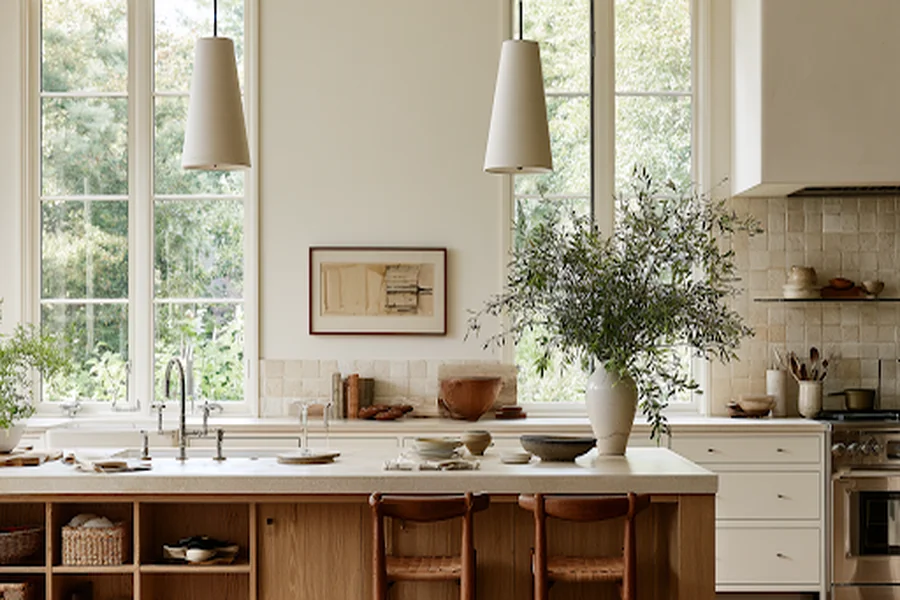
Minor beats major, and the gap is wide. A minor midrange kitchen remodel recouped an estimated 113% nationally against 51% for the major version. The NAR/NARI report is more conservative across the board, putting a complete kitchen renovation near 60% and a bathroom renovation near 50%. The two studies use different project scopes, cost inputs, and valuation methods, so read both as directional rather than as a calculator. Renovations at that scale also carry schedule risk that cosmetic work doesn’t.
The refresh list does most of the work in a kitchen that buyers already treat as the focal point of the house:
- Repair cabinet doors and drawer slides, replace damaged hardware
- Swap worn faucets and dated light fixtures
- Re-caulk tubs and sinks, regrout where it’s stained or failing
- Add task lighting and consistent bulbs
- Deep-clean appliances, including inside and behind them
A visually clean bathroom with modern fixtures attracts buyers without a gut renovation, and the money you don’t spend ripping out an entire kitchen of sound cabinetry stays available for paint, landscaping, and staging.
When Does a Full Remodel Make Sense Instead of a Refresh?
Larger projects are defensible when the space is functionally deficient rather than just dated, when renovated local comps consistently sell at a premium that exceeds the full cost of the work, when the job finishes before listing photography, when the finish level matches the price tier, and when you’re holding a contingency budget. Bellevue-area owners review the kitchen and bathroom project scope offered by remodelers such as Oleg & Sons when deciding between a cosmetic refresh and a substantial renovation, with the final scope still tested against comps and your selling timeline.
Flooring, Light Fixtures, and Making a Space Feel Larger
Refinishing sound hardwood usually makes sense instead of replacing it. Have serviceable carpet professionally cleaned. Replace flooring only where condition is an obvious buyer objection or in a high-visibility space like the main living area.
Lighting is cheap and makes a big difference in photos. Use one bulb color temperature throughout the house, replace burned out bulbs, and swap fixtures that date the property. Then remove furniture. Too much furniture chokes circulation paths and makes rooms photograph small. Pulling pieces into storage costs nothing and changes how large the space feels to buyers walking through. Tidy the storage areas as well, since closets and the garage get opened on every showing.
Do Smart Home Technology and Energy Improvements Add Value?
Treat these as low-cost differentiators rather than value engines. Thirty-six percent of buyers rated smart home capabilities highly important, Zillow found homes with smart lighting sold for about 3% more, and a smart thermostat saves roughly $50 a year. A thermostat, smart locks, LED conversion, weatherstripping, and attic insulation are inexpensive improvements that document lower energy bills, which matters to potential homebuyers doing payment math at current interest rates. Skip expensive proprietary systems the next owner may not want to inherit.
How Much Does a Deep Clean and Staging Change Buyer Perception?
Deep-clean everything, including odors, appliance interiors, grout, and windows. Clear counters, pull unnecessary items out of closets, and take down personal photos. Prioritize the living room, master bedroom, kitchen, and primary bath. Open curtains and blinds before the photographer arrives so rooms read bright rather than closed off.
NAR’s 2025 Profile of Home Staging found 83% of buyers’ agents said staging helped buyers visualize the property as their future home, 29% of agents reported staging led to offers 1% to 10% higher, and 49% of sellers’ agents said it reduced time on market. These are agent-reported observations, not controlled results, so staging can improve presentation and buyer response without guaranteeing a higher price. Schedule all of it to finish before photography day.
Which Renovations Should You Avoid Before Selling?
Approach these cautiously: luxury kitchens, upscale bathrooms, room additions, pools and other highly regional amenities, bold personalized finishes, replacing mechanical systems that still work without local evidence buyers pay for it, and any project that can’t realistically finish before your listing date. Many buyers see a pool as a maintenance obligation rather than a feature, and an over-improvement for the neighborhood transfers money from your pocket to the buyer’s. The same logic applies to renovations that convert a bedroom into a specialized space, because you’re shrinking the pool of potential homebuyers who can use the floor plan as built.
How Much Should You Spend, and Should You Tap Home Equity?
Cap pre-sale spending at what the value gap supports and hold back a contingency of roughly 10% to 15%. Homeowners typically spent about $15,000 on improvements in 2025, and 84% pay for renovations with cash. Buyers won’t reimburse you for a receipt they never see, and every dollar you don’t spend chasing an unsupported upgrade is more profit at closing.
- Cash: no interest, no lien, simplest at closing.
- Home equity loan or HELOC: a loan hands you a lump sum of a fixed amount, usually at a fixed interest rate lower than credit cards, but it’s secured by the house you’re selling.
- Cash-out refinance: viable only with a longer timeline; most lenders cap total borrowing near 90% of home value.
- 0% APR card: workable for small repairs you’ll clear at closing.
Borrowing against home equity you’re about to cash out anyway is rarely a smart idea unless the improvements clearly pass the net-benefit test. Keep invoices, permits, and receipts. The IRS treats capital improvements differently from ordinary repairs for purposes of adjusted basis, and standalone repainting generally doesn’t qualify. Ask a tax professional about your situation before selling.
How to Hire Contractors Without Creating New Problems
Most home improvement disputes start with a vague scope. FTC and NARI guidance converges on the same checklist:
- Verify applicable licensing, liability coverage, and workers’ compensation
- Get at least three written bids on an identical scope and material grade
- Confirm in writing who pulls permits and schedules inspections
- Require a schedule, cleanup terms, warranty, and a written change-order process
- Never pay the full amount upfront
- Check references and recent projects of similar size
Unfinished work, a missing permit, or a two-week delay past your listing date can erase the value the improvement was supposed to add. Ask each bidder how many days the crew will actually be inside the house, since disruption has a cost of its own when you’re living there while selling.
A 60-Day Pre-Sale Action Plan
Work backward from your target listing date so the sequence stays honest.
Days 60 to 45: Get a local as-is price opinion and comps. Walk the house and list defects. Collect estimates for the improvements you’re considering. Check permit and lead-safety requirements.
Days 45 to 30: Complete repairs and approved improvements. Finish the punch list. Start packing and moving excess furniture into storage.
Days 30 to 14: Paint or touch up. Deep-clean. Power-wash and handle landscaping. Stage the principal rooms and open up circulation space.
Final two weeks: Do a walkthrough with fresh eyes. Clean windows, replace failed bulbs, organize improvement records and warranties, and schedule listing photography.
Frequently Asked Questions
What increases a home’s value the most?
Condition and comparable sales, before any specific project. Exterior work such as a garage door or front door replacement and modest interior refreshes lead national ROI estimates, but supported value always depends on what similar houses in your neighborhood recently sold for and what buyers in that price tier expect.
What is the 3-3-3 rule in real estate?
It’s an informal rule of thumb, usually framed around review windows: check showing activity, offer activity, and pricing at set intervals after listing. It isn’t an official standard, and it has nothing to do with how an appraiser values a property.
How do you increase home value by $50,000?
Only if comps support that number. Stack repairs, interior paint, curb appeal, and a minor kitchen remodel or bath refresh, then test the total against renovated comparable sales in your local housing market. Project cost does not equal added value.
Is it better to sell as is or make repairs first?
Thirty-five percent of sellers sold as-is in 2025, and selling that way can suit a distressed property, a tight timeline, or an investor-heavy market. Repairs usually pay off when defects are visible or likely to surface during inspection, since buyers discount for uncertainty far more aggressively than for a known, quoted fix.
The Bottom Line: Spend Where Buyers Can See It, and Comps Support It
Work in order: comps, then defects, then presentation, then a selective refresh. Get a local as-is price opinion and at least three comparable written bids before you commit money to any major project. The projects that return the most value before selling are the ones a buyer notices in the first ten minutes and an appraiser can defend on paper.
