
 James
James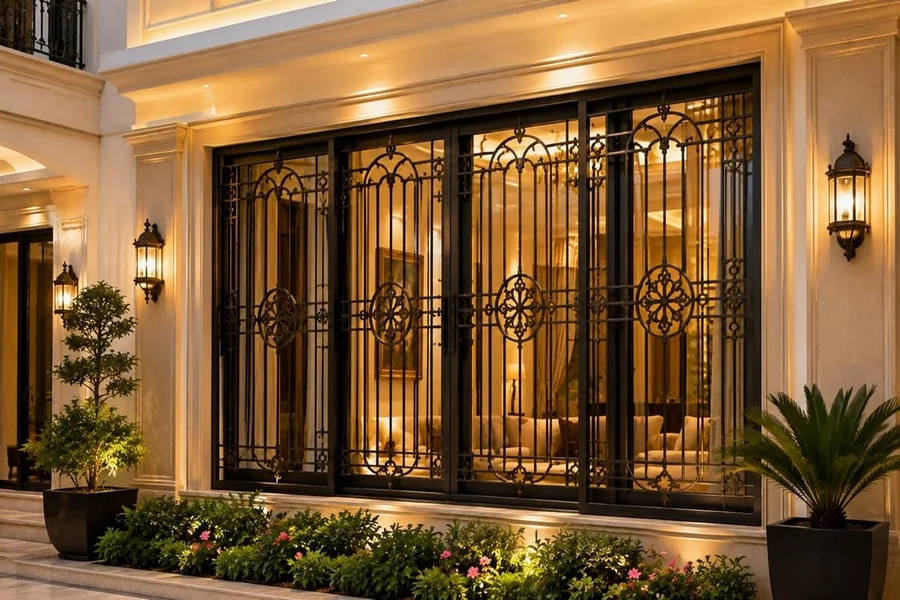
Black or bronze iron grilles draw the same complaint from nearly every homeowner who tours an older home: they make the rooms feel dark. My neighbor Denise said exactly that when she closed on her 1912 foursquare, right before she tried to rip hers off with a crowbar. Two years later, she sold the house with every grille intact. What actually changed was whether that metalwork was drawn into the design or treated like an obstacle.
Grilles decide how much daylight reaches a room, how the house reads from the sidewalk, and whether you spend your weekends sanding rust instead of sitting on the porch. Get the geometry and the finish right and the darkness complaint disappears. This walks through the iron styles that work, where the light actually goes, how to match grilles to your architecture, and a maintenance routine that keeps them from becoming the enemy.
Why people fight their iron grilles
Older decorative metalwork was usually installed as window protection, not decoration. It also tends to be the cheapest thing anyone ever painted. Knobby welds, uneven bars, thick coats of white paint over old rust. Combined with dark glass and heavy drapes, that produces a cave-like living room. Strip the paint. Re-blacken the iron. Hang sheer curtains instead of lined ones. The bars do not have to fight the window. Thin, well-spaced metal becomes a frame around the view, and a frame can flatter what sits inside it. Denise ended up with grilles on the front three windows only, and a garden wall out back with none at all.
The distinction is function. Small openings lined up like a grid read as security or architecture. Big panes with sparse metal read as decoration. Modern decorative wrought iron often leans into the second category. A garden gate or a courtyard window with two or three broad scrolls isn’t pretending to be a burglar bar.
Reading the light: how geometry decides what reaches the room
You can predict how dark a grille will make your window before you buy anything by looking at how much open sky one bay exposes. Wide spacing between vertical bars, roughly eight to ten inches on a standard double-hung, keeps more than half the glass open to light. Bars set four inches apart and layered with horizontal rails start acting like a screen.
Vertical bars matter more than they get credit for. They also make rooms feel taller, unlike dense grid patterns, which make a window read like a cage. For a south-facing window you want the extra shade, so density costs you nothing. For north-facing rooms you want open spacing. Facing is the real variable, and it is worth checking before you commit. The National Weather Service publishes climate and sun guidance for every U.S. region, which is a reasonable starting point for matching grille density to your exposure.
Door placement is where I keep seeing mistakes in person. People mount a grille on a door and immediately hit their knuckles every time they carry groceries in. Fixed panels or a top section only solves that. It’s the same logic as any door installation: if you can’t open it without thinking about it, the layout is wrong. If you just want the light without the metal, a plain casement or awning window gets the job done with zero fuss. If you want the iron, treat it like a picture frame and keep the glass in charge. The same question shows up in metal roofing, where color and profile choice decide how hot a roof runs. It’s the same tradeoff of aesthetics versus heat and upkeep, applied to metal instead of glass.
Matching grilles to your house’s architecture, not your mood board
Grille style follows local history better than any trend. According to architectural documentation from the National Park Service, historic districts preserve architectural character, and the styles that survived there usually reflect what the neighborhood looked like when it was built.
Here’s what holds up:
- Craftsman and bungalow: simple verticals, minimal scrollwork, matte black.
- Spanish colonial or mission: arched tops with heavier scrolls, often forged iron, dark bronze.
- Colonial revival: thin rectangular grids, low ornament, black.
- Victorian or Gothic: ornate scrollwork, finials, patterns that read as pattern from the sidewalk.
Walk your block before you order anything. The houses that look right in your neighborhood almost always share a pattern language. Match two or three of those cues and your grilles feel intentional instead of imported. If you’re updating a farmhouse window instead, you’d skip iron entirely and lean into a different palette.
One caveat: if you remodel with a new grille style, tell your insurer. Most standard policies assume perimeter protection, and a change like this sits inside that conversation. A grille isn’t a security system and shouldn’t be pitched as one, but it can be part of the story when you’re talking to your agent.
A simple seven-step decision guide
Here’s the sequence I’d follow before ordering a single bar:
- Walk the exterior at three times of day, morning, noon, and late afternoon. Note which rooms go dark and when.
- Check your sun exposure by direction. South and west can take denser metal, north and east cannot.
- Match the style to three houses on your block with similar architecture.
- Pick the finish. Matte black and dark bronze forgive weathering better than white or bright colors.
- Measure open spacing between bars. Aim for at least six inches unless security is the actual goal.
- Ask the fabricator how the finish is applied. Powder coat lasts longer than sprayed paint.
- Confirm mounting bolts and how you’ll touch up chips. A bare scratch turns into a rust ring in one rainy season.
Order samples if you can. Powder coated bronze can read as gray in shade and brown in sun. That’s the kind of thing you can’t judge from a phone screen at 11 p.m.
Upkeep, resale, and the resale math
Iron that’s maintained adds character. Iron that’s ignored reads as deferred maintenance, and buyers price deferred maintenance as a problem, not a feature. Rust streaks on siding are the fastest way to turn a charming detail into a negotiation point. Homeowners repair and improvement spending has trended upward for years, per the U.S. Census Bureau, which tells you buyers expect finishes to be current, not salvaged.
Keep it simple:
- Inspect every spring and fall. Catch rust at the surface, not at the weld.
- Sand small chips with fine grit, prime with a rust inhibiting primer, topcoat with the same color.
- Rinse pollen and salt off with a garden hose. No pressure washer at full blast on old joints.
- Re-tighten bolts once a year. Iron moves in cold and heat more than wood does.
- Repaint every five to seven years. Powder coated metal often stretches longer.
Here’s the stance I’d stake out if it were my house. I’d invest in three windows that face the street, keep them in matte black, and leave the rest of the house alone. Iron reads strongest when it’s concentrated, and it stays inexpensive to maintain when you’re not chasing a dozen of them.
The bottom line
Iron isn’t a villain and it isn’t a decoration you bolt on casually. It’s a frame, and frames either flatter the view or fight it. If you’re considering wrought iron windows, start by standing in the room you care about at 4 p.m. Ask what you actually want from that window: light, protection, or a certain look from the street. Once you’ve answered that, the style, spacing, and finish follow from your answer instead of your Pinterest board.
What’s your window facing? That single question will tell you more about which grille belongs on it than any showroom will.
