
 James
- The Difference Between Treating Hair Loss and Managing Its Appearance
- Why Identifying the Cause of Hair Loss Comes First
- What Medical Hair Loss Treatment Is Designed to Do
- What Cosmetic Hair Management Can and Cannot Achieve
- Medical Treatment vs. Appearance Management
- Why Some People Choose Cosmetic Coverage During Treatment
- When Hair Loss Needs Medical Attention
- Choosing a Plan That Addresses Both Health and Appearance
- The Most Important Difference Is the Outcome You’re Seeking
The Difference Between Treating Hair Loss and Managing Its Appearance
Noticing more hair in the shower or a widening part can raise two very different questions. The first is medical: Why is the hair thinning, and can anything be done to stop or reverse it? The second is practical: How can the change in appearance be managed right now?
These questions are closely related, but they don’t necessarily have the same answer.
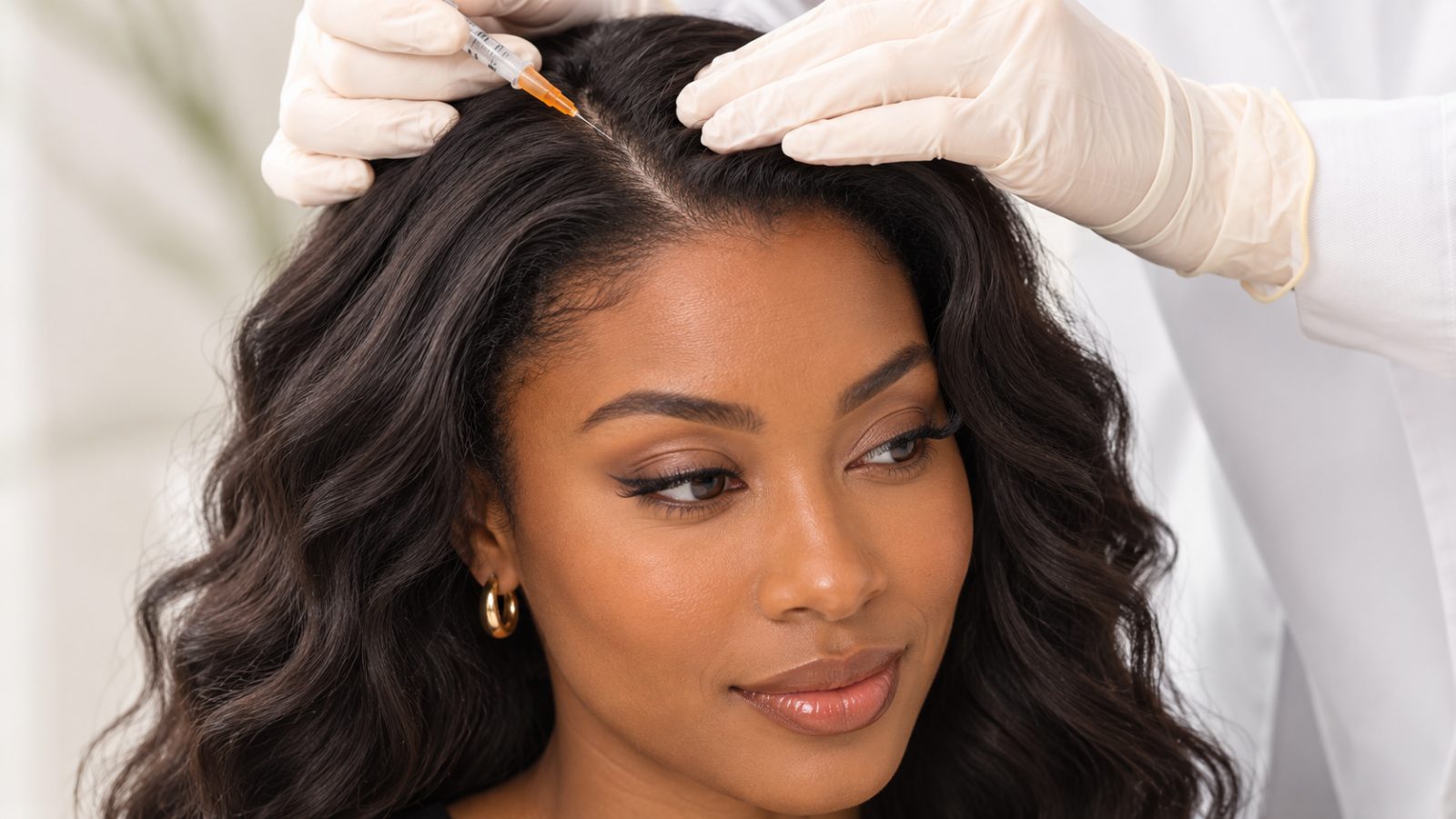
Medical hair loss treatment focuses on identifying and addressing the underlying condition. Cosmetic hair solutions, including wigs, toppers and concealing products, focus on changing how the hair looks without necessarily changing what is happening at the follicle.
Understanding the difference helps people make informed decisions without expecting one approach to do the work of the other.
It also makes room for an important possibility: medical treatment and appearance management can be used together.
Why Identifying the Cause of Hair Loss Comes First
Hair loss is a symptom with many possible explanations, not a single condition.
Some people experience gradual thinning associated with hereditary pattern hair loss. Others notice sudden shedding after an illness, childbirth or a period of significant physical stress. Patchy hair loss may be associated with alopecia areata, while persistent pulling from tight hairstyles can contribute to traction alopecia.
Certain inflammatory scalp conditions can also damage hair follicles and lead to permanent loss if they are not recognised and managed appropriately.
These conditions may look similar to someone examining their hair in the mirror, but their treatment needs can be very different.
A dermatologist typically begins with a medical history and an examination of the hair and scalp. Depending on the findings, additional tests may be appropriate, including blood tests or a scalp biopsy.
Not everyone needs extensive testing, and not every form of hair loss requires medication.
For example, some cases of temporary shedding improve after the triggering event has resolved. Other conditions benefit from early intervention because delaying treatment may reduce the opportunity to preserve existing hair.
The essential point is that appearance alone cannot reliably establish the cause.
A person may successfully conceal thinning with a hairstyle or hairpiece while an underlying condition continues to progress.
That is why cosmetic coverage should not replace medical assessment when the cause is uncertain.
What Medical Hair Loss Treatment Is Designed to Do
The purpose of medical treatment depends on the diagnosis.
For hereditary pattern hair loss, treatment may aim to slow progression, maintain existing hair or encourage some regrowth.
Topical minoxidil is one commonly used option for androgenetic alopecia. It can help some people maintain or regrow hair, although results vary and typically require consistent use over several months.
Oral finasteride is another treatment used for male pattern hair loss. It affects the hormonal pathway involved in that condition, but it is not appropriate for everyone and requires consideration of potential adverse effects.
Other diagnoses call for entirely different approaches.
Alopecia areata may be treated with corticosteroids or other immune-targeting medications, depending on its severity and the patient’s circumstances.
Hair loss related to an infection requires treatment of the infection. When a hairstyle is causing traction alopecia, reducing the damaging tension is an essential part of management.
Hair transplantation may be an option for selected patients with suitable donor hair and an appropriate diagnosis, but it is a surgical procedure rather than a universal solution.
No single treatment works for every type of hair loss.
Medical interventions also have limitations. Some require long-term use, some take months to produce visible changes, and some cannot restore hair where follicles have been permanently damaged.
Patients should discuss expected benefits, risks, costs and alternatives with a qualified clinician before choosing treatment.
What Cosmetic Hair Management Can and Cannot Achieve
Cosmetic hair management has a different objective.
Rather than attempting to change the biological process causing hair loss, it helps a person achieve a preferred appearance with the hair they have or with additional hair products.
Options range from strategic haircuts and volumising products to scalp concealers, partial hairpieces and full wigs.
For someone with a widening part or thinning near the crown, a topper may add coverage to a specific area. A full wig can provide more extensive coverage when thinning is widespread or when someone simply prefers a different hairstyle.
People who want additional styling flexibility may consider lace closure wigs, which generally use a defined lace section near the top or front of the wig to create a parting area and a more natural-looking transition.
The size and construction of the closure influence how the hair can be parted and styled.
These products can produce an immediate visual change, which is a significant advantage for someone who does not want to wait months to see whether a medical treatment works.
However, they do not stimulate hair follicles, correct hormonal changes or treat inflammatory scalp disease.
They also require appropriate fitting and care.
A poorly fitted wig, overly tight attachment or excessive tension on remaining hair may cause discomfort or contribute to further damage.
Cosmetic coverage is therefore best understood as an appearance option, not a substitute for diagnosis or treatment.
Medical Treatment vs. Appearance Management
The distinction becomes clearer when the two approaches are compared according to their purpose.
| Consideration | Medical hair loss treatment | Non-medical appearance management |
| Primary goal | Address a diagnosed cause, slow progression or encourage regrowth where possible | Change the visible appearance of thinning or hair loss |
| Examples | Minoxidil, prescription medication, treatment of scalp disease, selected procedures | Wigs, toppers, concealers and styling techniques |
| Time to visible benefit | Often weeks to months, depending on the condition and intervention | Frequently immediate once fitted or applied |
| Effect on underlying cause | May address the condition, depending on diagnosis and treatment | Does not treat the underlying medical cause |
| Main limitations | Variable response, side effects, cost and ongoing treatment needs | Fit, maintenance, comfort and potential tension or irritation |
| Professional guidance | Medical diagnosis and treatment planning | Appropriate fitting and styling; medical advice when scalp health is a concern |
Neither column represents a universally better choice.
The right approach depends on what is causing the hair loss, what outcomes are medically realistic and what matters most to the individual.
A person may want to preserve their remaining hair, improve their appearance immediately, or pursue both goals at the same time.
These preferences can coexist.
Why Some People Choose Cosmetic Coverage During Treatment
Medical treatment rarely changes a person’s appearance overnight.
Someone beginning treatment for pattern hair loss may need several months before they can judge whether it is helping. A patient recovering from temporary shedding may also experience a period when the hair remains noticeably thinner.
During that time, cosmetic coverage can provide a practical option.
A person preparing for work, attending an important event or simply wanting a familiar hairstyle may prefer not to wait for possible regrowth.
Others may decide against medical treatment because of contraindications, side effects, expense or personal preference.
These are individual decisions that should be made with an understanding of the available options.
Cosmetic products can also offer flexibility in how much coverage someone wants.
A lightweight topper may be sufficient for a small thinning area, while a full wig may be more suitable when coverage needs are extensive.
For example, WowAngel offers human hair wig options with different textures and lace constructions. Such products can be considered for styling or coverage preferences, but their suitability depends on cap fit, attachment methods and the wearer’s scalp condition.
They should not be presented as treatments for alopecia.
A person using a wig during medical treatment should also ask their clinician about any restrictions related to scalp sensitivity, topical medication or ongoing procedures.
When Hair Loss Needs Medical Attention
Some hair changes deserve more attention than a change in styling products.
Sudden or unexplained shedding, rapidly developing bald patches, and hair loss accompanied by scalp pain, redness, scaling or inflammation should prompt medical assessment.
Loss of eyebrows or eyelashes, or hair loss occurring alongside other unexplained symptoms, may also warrant evaluation.
A dermatologist can help determine whether the pattern suggests a temporary shedding condition, hereditary thinning, an autoimmune disorder or another cause.
Early assessment is particularly important when scarring alopecia is a possibility, because damage to the follicles can become irreversible.
It is also important to consider the effects of cosmetic styling on the remaining hair.
Tight braids, extensions, adhesives and poorly fitted hairpieces may place unnecessary stress on fragile hair or irritated skin.
If a style causes pain, persistent pulling or visible damage, it should be adjusted or discontinued rather than tolerated for the sake of appearance.
A comfortable, well-maintained cosmetic solution should support daily life without creating an additional scalp problem.
Choosing a Plan That Addresses Both Health and Appearance
A useful starting point is to separate the decisions into two questions.
First, what needs to happen medically?
This may involve obtaining a diagnosis, monitoring a temporary condition, starting an appropriate treatment or managing a scalp disorder.
Second, what would help the person feel comfortable with their appearance in the meantime?
That answer might be a different haircut, a concealing product, a topper, a wig or no cosmetic intervention at all.
For example, someone with gradually widening hair parting may benefit from evaluation for female pattern hair loss. If treatment is appropriate, they may choose to use a topper while waiting to assess the response.
Someone experiencing temporary shedding after a major illness may prefer gentle styling and short-term coverage while their clinician monitors recovery.
A person with an inflammatory scalp condition may need to prioritise medical treatment and avoid irritating attachments until the scalp is stable.
These examples illustrate why individual circumstances matter more than any single product recommendation.
The aim is not to choose between medical care and personal appearance, but to understand what each option can realistically provide.
The Most Important Difference Is the Outcome You’re Seeking
Hair loss treatment and cosmetic hair management answer different needs.
Medical care investigates what is happening to the hair and scalp and determines whether an intervention can improve the underlying condition. Cosmetic solutions help people manage how their hair looks today.
One approach may offer the possibility of slowing hair loss or encouraging regrowth. The other can offer immediate coverage and styling flexibility without changing the medical cause.
Both can have a legitimate place in a person’s care and daily routine.
The important thing is to avoid confusing the two.
A natural-looking wig does not mean the cause of hair loss has been resolved, just as a medically appropriate treatment does not guarantee that someone will achieve their preferred hairstyle.
With an accurate diagnosis, realistic expectations and suitable cosmetic options, people can make decisions that respect both their scalp health and their personal preferences.
