
 Steve Wiideman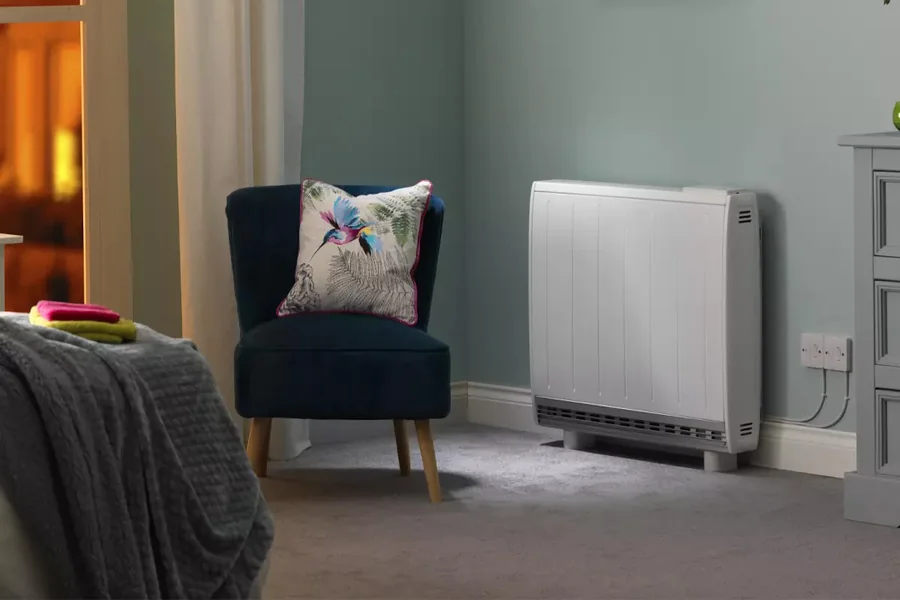
Storage heaters have come a long way from the bulky, temperamental units many people still picture. For years, the category had a reputation problem: too much heat in the morning, not enough by evening, and very little sense that the system was responding to how people actually live. That old criticism was fair. Traditional storage heating often worked on a rigid cycle, storing cheap off-peak electricity overnight and releasing it during the day whether you needed it or not.
The modern benchmark is very different. Today, an advanced storage heater is expected to do more than simply hold heat. It needs to retain energy efficiently, release warmth with control, respond to occupancy patterns, and make the most of off-peak tariffs without wasting power. In that context, the Dimplex Quantum stands out—not because it reinvents electric heating entirely, but because it solves the historic weaknesses of storage heating better than almost anything else on the market.
- What “advanced” actually means in a storage heater
- High heat retention changes everything
- Why retention matters more than output
- Smarter charging, not just bigger storage
- Learning from daily demand
- Better control over when heat is released
- Fan-assisted delivery improves comfort
- Controls that make the technology usable
- A more practical user experience
- Why it stands above standard electric heating options
- The bigger picture for homeowners and landlords
What “advanced” actually means in a storage heater
It’s easy to call any updated heating product “smart,” but in practice, the most advanced storage heaters tend to excel in four areas:
- heat retention
- controllable output
- intelligent charging
- user-friendly controls
Those points matter because they directly affect running costs and comfort. If a heater loses stored heat too quickly, you pay for energy you never fully benefit from. If it can’t control output well, rooms become uncomfortable and inefficient. If it charges too much or too little overnight, you either waste money or end up cold. And if the controls are confusing, even a technically capable heater won’t perform as intended in real homes.
The Dimplex Quantum earns its reputation by addressing each of those issues in a coordinated way. Rather than treating storage heating as a simple overnight charge-and-release process, it behaves more like a responsive heating appliance that happens to use off-peak energy as its foundation.
High heat retention changes everything
The biggest technical leap in premium storage heating has been insulation. Older models tended to bleed heat gradually throughout the day, even when you wanted to hold it back for later. That was one of the main reasons people felt storage heaters were inefficient, even when they were buying electricity at lower overnight rates.
Why retention matters more than output
A heater that stores heat well gives you options. It can hold onto energy collected at cheaper times and release it later, when the room actually needs warming. That flexibility is what makes modern high-heat-retention heaters more practical for households with unpredictable schedules.
The Quantum is widely recognised for that performance. Its design is built around retaining stored heat effectively, which means it’s far better suited to real-world living patterns than older generation units. If you want a useful overview of the Dimplex Quantum storage heating system, it helps to look at the product range through the lens of heat management rather than just headline wattage. That’s really where its advantage becomes clear.
Smarter charging, not just bigger storage
A common misunderstanding is that the best storage heater is simply the one that stores the most heat. In practice, that can backfire. Overcharging wastes money, while undercharging leaves rooms cold by late afternoon or evening. The real challenge is prediction.
Learning from daily demand
One of the Quantum’s strongest points is its intelligent approach to charging. Instead of operating as a crude overnight battery, it is designed to anticipate likely heating demand and adjust accordingly. That matters because no two days are alike. A cold, windy Tuesday in January requires a different charge profile from a mild spring day, and an advanced heater should reflect that.
This is where the gap between conventional storage heaters and genuinely modern models becomes obvious. The Quantum is engineered to make more informed decisions about energy use, helping reduce the mismatch between what was stored overnight and what is actually needed later.
Better control over when heat is released
Storage heating used to be associated with a frustrating lack of responsiveness. If too much heat escaped early in the day, there was little you could do about it. If you came home late, the room might already have lost most of its warmth.
Fan-assisted delivery improves comfort
The Quantum addresses that issue with more controlled heat output, including fan-assisted release on many models. That’s significant because it allows stored warmth to be delivered more deliberately, rather than drifting out passively all day. The result is a system that feels less like an old-fashioned storage heater and more like a controllable room heater with the efficiency benefits of off-peak charging behind it.
For users, that translates into something simple: comfort when it’s wanted, not just when the heater happens to be warm.
Controls that make the technology usable
Even the best heating technology can be undermined by poor controls. This has been a longstanding issue across the electric heating market. If programming is awkward or unclear, people tend to override settings, rely on manual boosts, or leave systems running inefficiently.
A more practical user experience
Part of what makes the Quantum feel advanced is that its controls are designed around everyday use. Clear programming, accessible settings, and a better interface all contribute to improved efficiency because they make it easier for users to get the intended performance from the heater. That may sound mundane compared with insulation or charging algorithms, but it has a real effect on energy outcomes.
There’s a broader lesson here: sophistication in heating isn’t just about internal components. It’s also about how well the product translates complex energy management into something a homeowner or tenant can use confidently.
Why it stands above standard electric heating options
It’s also worth noting that the Quantum’s appeal is not simply about being better than older storage heaters. It occupies a useful middle ground in the wider heating landscape. Panel heaters and direct-acting electric radiators can be responsive, but they typically use electricity at the point of demand, which can be costly. Basic storage heaters can exploit off-peak tariffs, but often with poor control. The Quantum combines the strongest parts of both approaches: stored low-cost energy and a more managed, modern delivery of heat.
That’s why it is often viewed as the most advanced option available. It doesn’t just improve one aspect of storage heating; it rebalances the whole experience.
The bigger picture for homeowners and landlords
For properties without access to gas, the quality of electric heating matters enormously. Flats, rural homes, retrofits, and older all-electric properties often need a system that keeps costs manageable without sacrificing comfort. In those settings, the difference between an outdated storage heater and a high-heat-retention model can be substantial.
The Dimplex Quantum represents the direction the sector has been moving toward for years: less waste, more control, and a closer fit between how energy is bought and how heat is actually used. That combination is what makes it advanced in a meaningful sense—not as a marketing label, but as a practical improvement on the way storage heating used to work.
If the standard for “most advanced” is a heater that retains heat better, charges more intelligently, releases warmth more effectively, and is easier to live with day to day, the Quantum makes a very strong case for the top spot.
