
 James
James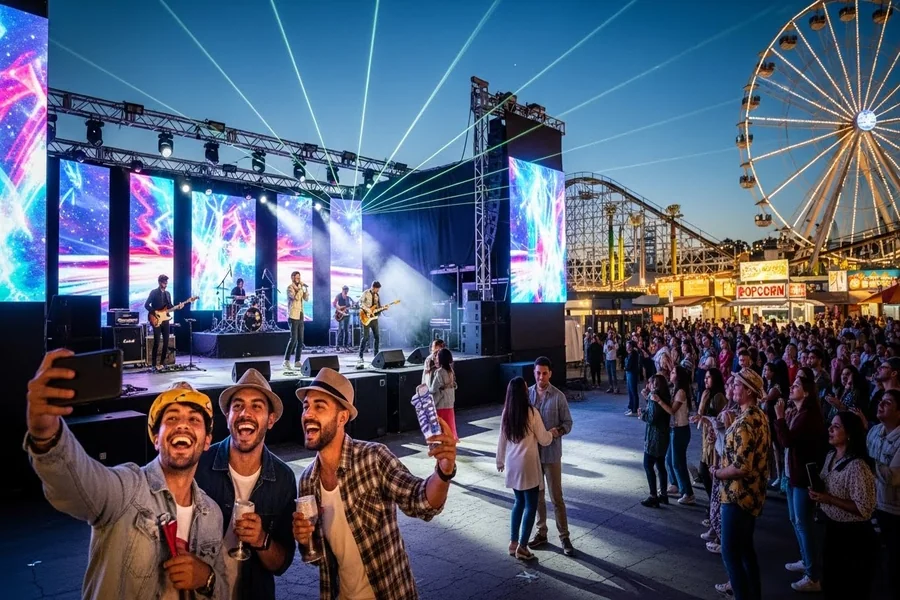
From its beginnings, entertainment has been related with life together. Historically, people have had the chance to meet, celebrate and spend time together in shared experiences, such as watching movies in the cinema, attending concerts, and sporting events, and now to attending nightclubs. It’s the diversity of channels through which such experiences are now generated and experienced.
Streaming significantly has made entertainment more accessible beyond the traditional medium, through the community of games, the depth of immersive experience, and creator driven events and interactive technology. Consequently, social rituals are changing with regard to experiences that are made personal and yet yet can connect people to each other.
Entertainment Is No Longer Tied to One Place
The main thing that’s changed is the belief that entertainment should be at a specific, physical location. Video can be viewed in the comfort of your own home, a concert can be performed live, and play can bring together people from across the globe.
For instance, Netflix has created a worldwide entertainment service based on on-demand viewing. According to its annual report for 2025, the company serves over 300 million paying members globally — indicating how many consumers are currently watching entertainment digitally.
The change has altered social customs. Friends can enjoy the same content at the same time, via messaging, and families can encourage consistent viewing patterns, instead of tuning in for one specific time of the day or week.
Gaming Has Become a Social Space
Gaming is a more straightforward re-illustration of the concept of “infrastructure for entertainment.
Games like Fortnite and Roblox have evolved from traditional playtime. Playing can involve connected with pals, joining mock-up occasions and joining recreational tasks that are like social occasions.
Fortnite has served as the venue for many big, virtual events before. Epic Games reports that over 12 million players were taking place at the game’s Travis Scott event in 2020.
That number proved that in some ways, digital entertainment fosters the magnitude and occasion that usually comes with a big physical event.
Outside the games, there’s been an uptick in gaming communities existing, with players utilizing platforms like Discord, Twitch streaming and different sorts of gatherings for correspondence, sparing residents and developing communities.
Live Entertainment Is Becoming More Immersive
Don’t worry, physical entertainment is not gone. As an alternative, some venues have been incorporating technology into their traditional experience to create them more interactive.
Take, for example, in the case of an exhibition, although these types of shows are currently the exception rather than the rule. The projects in Tokyo like the teamLab Borderless incorporate into art the digital technologies, projection displays, sound and the actual environment, which form the experience where you can participate in the piece of art.
According to TeamLab, Borderless is a museum which has no characteristic map and boundaries, and works of art can “meet each other and the viewer”.
This kind of hobbies alters the social experience. It’s not just a fixed-seat viewing experience. They explore the landscape and take pictures, talk about what they see, and sometimes post pictures on social media.
Creator Culture Is Changing Participation
Social Media also have influenced audiences’ connection with entertainers.
YouTube, Twitch and TikTok are just a few platforms that enable creators to connect with an authentic audience and for viewers to engage, join, and shape the content.
In 2025, the numbers for digital participation of entertainment were revealed, with over two billion logged-on users enjoying music videos each month on YouTube.
As one of the new types of creators, we have created a new form of “corporation” that has incorporated the subjectivity of the audience.The creator economy has emerged, and since the subjectivity of the audience, the creator has created a new form of “corporation”. Using a livestream to broadcast may not sound like traditional broadcasting, but it involves going to a social event.
Personal Habits Are Becoming Part of Entertainment
As entertainment becomes more flexible, personal rituals are becoming more visible. People develop routines around gaming sessions, streaming releases, concerts, podcasts and social gatherings.
These rituals can involve everything from choosing a particular playlist to preparing food or selecting familiar products before settling down for an evening.
For adult consumers who vape, personal preferences may also form part of these routines. Different products and formulations can occupy a small place within a wider leisure setting, with some consumers researching options such as nic saltes e-liquid according to their individual preferences. Such choices remain separate from the entertainment itself, but they illustrate how modern leisure can involve several personal rituals happening at once.
Physical Venues Are Adapting
Traditional entertainment companies are adapting to these developments instead of just facing up to digital entertainment.
Cinema has embraced the introduction of premium formats, interactive experience and enhanced hospitality services. Concert stages are becoming increasingly visually rich and dynamic as well as interactive with end-user audience – with an increasing focus on lighting, visual effects and large-scale digital production.
Interactive exhibitions and interpretation through digital technology are also becoming a growing part of museums and galleries’ efforts. The changes are a reflection of commercial reality: where there are greater choices in terms of entertainment, physical spaces must present experiences that aren’t likely to be transported easily elsewhere.
Social Rituals Are Becoming More Flexible
New media and entertainment provide people with choices on when, where and how they can be involved. One could see a movie on a screen, take part in an online discussion and then go to an event associated with that movie.
This liberty has blurred the distinction between private and public amusement. Opportunities for leisure no longer must be “all alone” or “all together.
Also, digital platforms facilitate insider interests to attain communities.Additionally or, indeed, more, digital platforms may enable niche passions to get to be communities. Those who are extremely interested may find people with similar interests, no matter how far they are.
What Comes Next
Fixing the cabler way of seeing and listening to programs to digital is not likely to be a linear process. Rather, the two are coming to share more and more space.
A concert can include a live audience, a livestream and a Twitter conversation. Digital art + architecture can work as counterparts in a museum exhibit. A gaming platform is a site that can serve several functions, such as entertainment and gaming, communication and networking, and space where communities gather.
The change is more insider/outsider culture. People no longer just consume something but are engaged in an experience regarding entertainment.
Social habits surrounding tech will continue to change, as does technology.Social habits will move with the technology, as they have been doing. The best entertainment moments may well turn out to be the ones that provide people with a fun and a reason to share it with other people.
