
 James
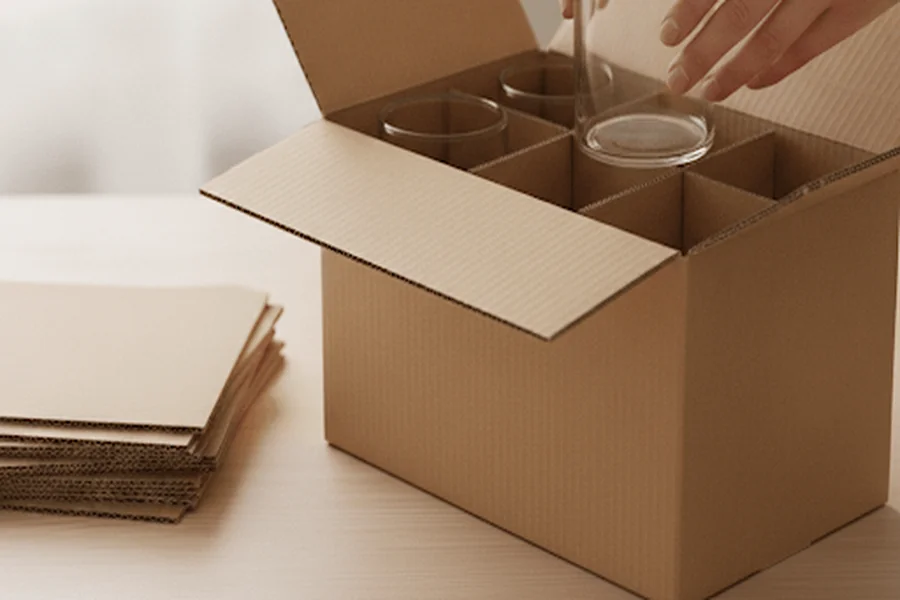
Shipping glass bottles, jars, candles or ceramics can feel like a gamble. The good news is that a few practical habits make a real difference in how products arrive. Here are seven ways to ship fragile items more confidently.
1. Measure Every Product Carefully
Good packaging starts with accurate numbers. Record the height, diameter or footprint and weight of each item, measured on the actual product rather than a spec sheet. Even small differences can change which insert fits best.
2. Give Each Item Its Own Space
When fragile items share a box, they should not rub against one another. Corrugated partitions divide a case into individual cells, giving every item its own place and helping reduce product-to-product contact during handling.
3. Size Partitions to the Product
A partition works best when it is built for the item it holds. Cell dimensions and partition configuration should be evaluated against the product dimensions, packing requirements and overall packaging application. A tall bottle and a squat jar may need very different cells, so suitability for another product should be evaluated rather than assumed.
4. Know What Board Grades Mean
Corrugated board is often described by ECT or Mullen grade. ECT (Edge Crush Test) measures edgewise compression strength, while Mullen measures bursting strength. They are different tests, so do not treat them as interchangeable. Ask your supplier which grade suits your product and how it will be shipped.
5. Use Pads Between Layers
Stacking products in tiers? Layer pads add a flat, even surface between levels and help separate rows of items. Pads work well alongside partitions to create a complete interior setup.
6. Work With an Interior Packaging Specialist
Some suppliers focus on the packaging that goes inside the box. For example, Great American Paper corrugated partitions come in single wall and double wall corrugated, in both ECT and Mullen grades, with kraft as well as specialty papers and coatings. A specialist can review your product details and recommend a configuration.
7. Review Your Packaging Regularly
Products change, and so should packaging. Revisit your inserts whenever you launch a new item, switch bottle or jar styles, or add multi-item bundles. Customer feedback and return reasons are also useful clues about what to adjust.
Final Thoughts
Shipping fragile products does not have to be stressful. Measure carefully, give each item its own space, choose the right board and keep your packaging up to date. Small steps inside the box can make a big difference in how your products reach customers.
