
 James
James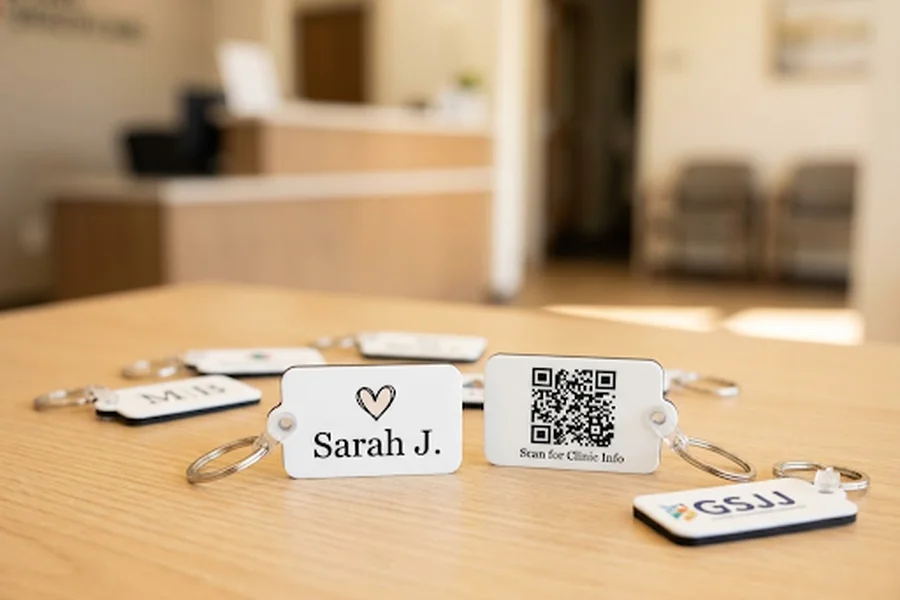
Medical appointments come with enough uncertainty on their own. A new building, a long wait, unfamiliar staff, or a clinical research visit spread across several appointments can make the surroundings feel even less familiar.
A small personal item will not change that experience completely. It can give someone something recognizable to carry, use, or look at while they are there.
It could be a favorite lapel pin, a notebook for tracking questions, or even a simple QR-code card—which often proves more practical than yet another printed handout.
- What Small Items Can Help Create Moments of Comfort for Patients?
- 1. Enamel Pins — Keeping a Sense of Personal Identity
- 2. Personalized Keychains — Carrying Something Meaningful
- 3. Custom Patches — Maintaining Personal Style
- 4. Neon Signs — Creating a Welcoming Atmosphere
- 5. Business Cards With QR Codes — Making Helpful Information Accessible
- 6. Custom Lanyards — Making Healthcare Staff Easier to Recognize
- 7. Personalized Stickers — Adding Small Moments of Self-Expression
- 8. Encouragement Cards — Offering Simple Words of Support
- 9. Personalized Notebooks — Creating Space for Questions and Thoughts
- 10. Fidget Spinners — Offering a Simple Sensory Activity
- How Can Healthcare Teams Use Small Comfort Items Thoughtfully?
- What Should Buyers Look for in a Custom Merchandise Supplier?
- Conclusion
What Small Items Can Help Create Moments of Comfort for Patients?
1. Enamel Pins — Keeping a Sense of Personal Identity
Enamel pins often say something about the person wearing them. A hobby, favorite character, sports team, or memorable place can become a small visual cue that invites recognition or conversation.
Someone attending several clinical research appointments might wear a pin connected to an interest outside the medical setting. It gives staff or other participants an easy, non-clinical point of conversation and lets the person bring a familiar part of everyday life into an unfamiliar environment.
2. Personalized Keychains — Carrying Something Meaningful
A keychain has a practical advantage that some other keepsakes do not: it tends to go home with the person and become part of an existing daily routine.
Names, initials, dates, or small symbols can give the item a personal connection without changing its basic purpose. GSJJ custom pvc keychains can incorporate these personal details, making them a simple item to keep nearby during a medical or clinical research visit.
For clinics or research programs considering a QR-code keychain for participants, how durable QR code keychains are for everyday use is worth considering alongside the design itself. Material, construction, finish, and the amount of daily handling can all affect how well the item holds up over time.
3. Custom Patches — Maintaining Personal Style
Patches can serve a different purpose from personal keepsakes. They can identify participation in an event, organization, or community.
A local health fair, youth program, or community outreach initiative might create a small series of patches around the event or neighborhood. Participants could choose whether to add one to a hat, jacket, or bag. The design becomes a shared reference without requiring everyone to wear the same thing.
4. Neon Signs — Creating a Welcoming Atmosphere
Neon signs belong to the room rather than the patient’s pocket.
A children’s clinic, youth program, or community health center might use a mascot, local reference, or short phrase on a wall near the waiting area. It gives the space a recognizable feature and breaks up an otherwise generic interior.
That is about atmosphere, not treatment. A sign should not be presented as a way to manage anxiety.
5. Business Cards With QR Codes — Making Helpful Information Accessible
Some healthcare information is too detailed to fit comfortably on a small printed card. A QR code provides a way to connect that physical card with a larger, approved online resource.
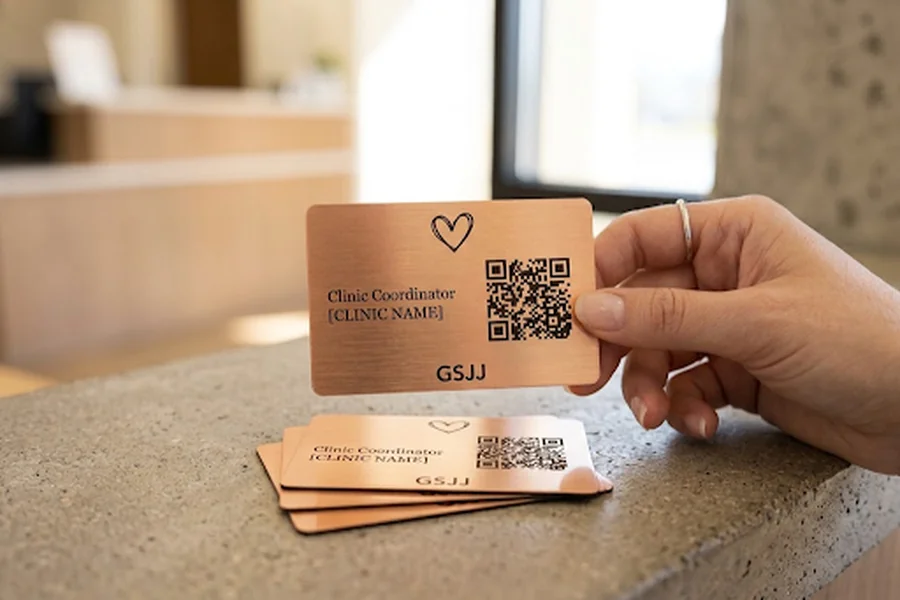
A QR code can take a patient or research participant to an approved study page, educational material, contact information, or appointment instructions without putting all of that content on the card itself.
A clinical research team using GSJJ business cards with QR code could, for instance, give participants a compact reference card that points to an approved study-information page.
When a clinic or research program is deciding where to get high-quality metal business cards with QR codes, the choice is about more than the material itself. QR-code placement, artwork support, customization options, readability, and production capabilities can all affect whether the finished card works well in practice.
6. Custom Lanyards — Making Healthcare Staff Easier to Recognize
Sometimes the useful thing is knowing who to ask.
A patient arriving at a research center may see several people working in the same area. Consistent staff identification can make it easier to pick out a coordinator or other team member without having to stop and ask everyone.
Custom lanyards can serve that straightforward purpose while keeping staff identification consistent across a team.
7. Personalized Stickers — Adding Small Moments of Self-Expression
Stickers require very little explanation. People know what to do with them.
A child at a health event might pick a favorite animal for a notebook or activity folder. An adult might choose a small logo, symbol, or phrase. The choice itself is often more relevant than the sticker’s practical function.
8. Encouragement Cards — Offering Simple Words of Support
A short note can be enough.
In a patient welcome kit or research program, an encouragement card might thank someone for participating or include a brief message from the team. It does not need to make a health claim or say much at all.
Sometimes keeping the message uncomplicated works better.
9. Personalized Notebooks — Creating Space for Questions and Thoughts
There is usually something worth writing down.
A patient may think of a question before an appointment, receive instructions during it, and remember another question on the way home. A notebook gives all of those thoughts somewhere to go.
For research participants, it can also become a running place for questions between study visits. The personalization is nice, but the blank pages are what make the item useful.
10. Fidget Spinners — Offering a Simple Sensory Activity
Waiting is easier for some people when their hands are occupied.
A fidget spinner or another quiet sensory item can be available in a waiting area for patients who like that kind of activity. Others will ignore it. Both responses are perfectly reasonable.
These products should remain optional distractions, not be described as treatment for anxiety.
How Can Healthcare Teams Use Small Comfort Items Thoughtfully?
The setting usually determines what makes sense.
A children’s event may have room for stickers and sensory toys. A research center may get more use from notebooks, information cards, or clearly identified staff. Hygiene, accessibility, noise, safety, and age are practical considerations as well.
Most importantly, patients should not be expected to want the same things. Offering a choice is usually more appropriate than treating one item as universally helpful.
These small products also have a fairly limited role. They can add convenience or personality to an environment, but they do not replace professional medical or psychological care.
What Should Buyers Look for in a Custom Merchandise Supplier?
Customized healthcare materials leave little room for careless artwork. A misspelled name, incorrect logo, or poorly placed QR code can become an avoidable production problem.
That is where a 2D/3D Artwork Proof becomes useful. Buyers can review the design before giving production approval rather than discovering an issue after the order has moved forward.
GSJJ states that it responds within 5 minutes during working hours, provides an initial 2D/3D Artwork Proof within 3 hours, and completes final Design Approval and Production Intake within 12 hours.
Those are front-end design and approval timeframes. They do not mean physical products are manufactured, shipped, or delivered within 12 or 24 hours.
After the artwork is approved, other purchasing details still matter: MOQ, materials, manufacturing techniques, communication, production timing, and shipping arrangements.
Conclusion
Comfort items aren’t for every patient.
A custom pin, an initialed keychain, or a basic notebook won’t change a medical outcome. But in a clinical room, these everyday objects offer a sense of familiarity.
For healthcare staff, the goal isn’t to overpromise. They are simply practical additions that make a hospital stay slightly more comfortable.
