
 James
James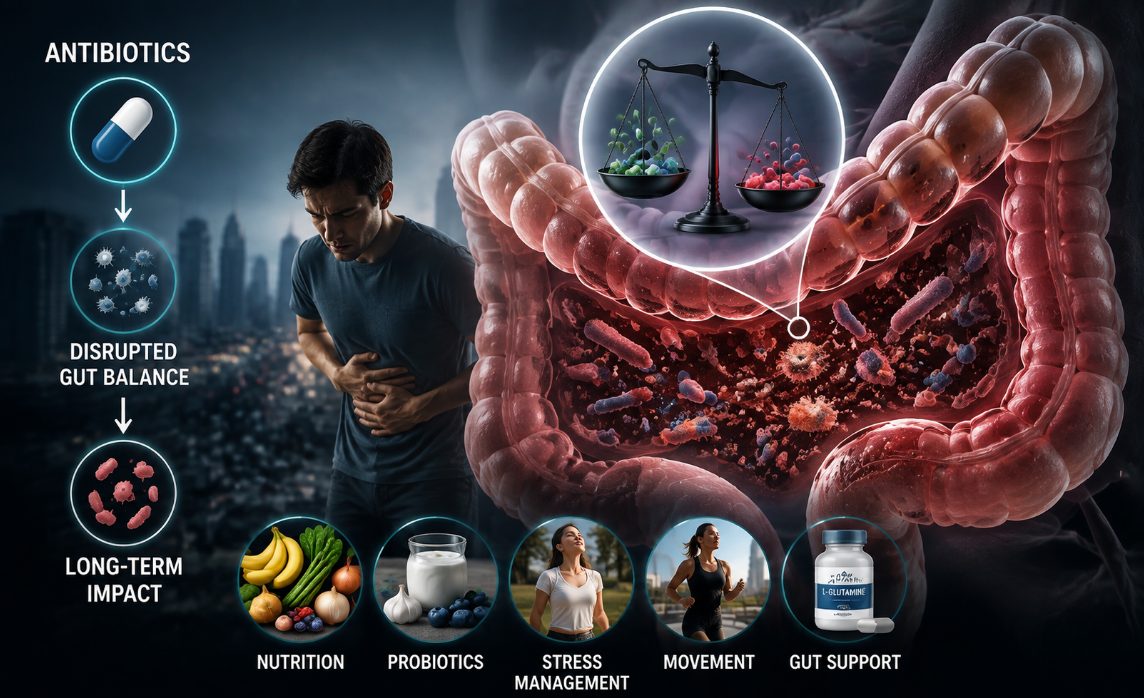
You took antibiotics six months ago. The infection is long gone. But something is different. Bloating that wasn’t there before. Food that sits wrong when it never used to. Energy that dips in the afternoon for no obvious reason. New sensitivities to things you used to eat without thinking.
The antibiotics worked. And they left something behind.
At Herbal Lab we hear this story constantly. People who finished a course of antibiotics months ago and still don’t feel quite right in their gut. The frustrating part is that most standard advice doesn’t address why the gut hasn’t recovered, or what it actually needs to do so.
- What Antibiotics Actually Do to the Gut
- The Collateral Damage Problem
- What Fills the Gap
- The Mucosal Layer
- Why Probiotics Alone Often Aren’t Enough
- The Gut Environment Problem — and What Bitter Herbs Address
- The Post-Antibiotic Recovery Protocol
- When Post-Antibiotic Gut Issues Need Medical Attention
- Final Thoughts
What Antibiotics Actually Do to the Gut
Antibiotics treat bacterial infections by killing bacteria. That sounds straightforward until you remember that the human gut contains approximately 38 trillion bacterial cells, the vast majority of which are not causing any infection whatsoever.
The Collateral Damage Problem
Broad-spectrum antibiotics like amoxicillin, azithromycin, and fluoroquinolones don’t distinguish between the bacteria causing your infection and the bacteria running your gut. Research on post-antibiotic microbiome changes consistently shows bacterial diversity drops by 25 to 50 percent during a standard course. The species hit hardest are often Bifidobacterium and Lactobacillus, the organisms most associated with gut health, because they’re particularly sensitive to antibiotic disruption.
The infection bacteria are gone. So is a large portion of everything else.
What Fills the Gap
Ecological niches don’t stay empty. When beneficial bacteria are reduced, opportunistic organisms expand into the space they leave behind. Candida albicans, certain Proteobacteria strains, and in serious cases Clostridium difficile take advantage of the disrupted environment. This is dysbiosis: not absence, but the wrong balance. The gut isn’t empty. It’s populated with the wrong residents.
The Mucosal Layer
Less discussed but equally important: antibiotics thin the intestinal mucus layer. This layer isn’t just lubrication. It’s a physical barrier between the intestinal contents and the gut wall. When it thins, intestinal permeability increases. Compounds that should stay inside the gut cross into circulation and trigger immune responses. This is the mechanism behind the food sensitivities and systemic low-grade inflammation that often appear after antibiotics. The gut wall itself is more exposed than it should be.
Why Probiotics Alone Often Aren’t Enough
The standard advice after antibiotics is to take probiotics. It’s not wrong, but it addresses only part of the problem.
Probiotics add beneficial bacteria. They don’t remove the opportunistic organisms that established during the antibiotic course. If Candida or dysbiotic Proteobacteria have colonized the gut environment, introducing Lactobacillus on top of that doesn’t fix the underlying imbalance. It adds organisms to a disrupted environment without changing what the disrupted environment favors.
Research on post-antibiotic microbiome recovery shows that some bacterial species don’t return to pre-antibiotic baseline even 12 months after a single course. People who feel off six months after antibiotics are not imagining it. The microbiome genuinely hasn’t recovered. And in most cases, the reason is that only half the problem was addressed.
To recover gut health after antibiotics properly, you need to do two things: repopulate beneficial bacteria and restore the intestinal environment those bacteria need to survive. Probiotics handle the first. The second requires different tools.
The Gut Environment Problem — and What Bitter Herbs Address
The intestinal environment after antibiotics is hospitable to the wrong organisms. pH shifts. Mucus is thin. Opportunistic colonizers have established. Probiotics introduced into this environment are swimming upstream.
Restoring the environment is different from repopulating it. Traditional European herbal medicine approached exactly this problem with bitter herbs, specifically wormwood and black walnut, which address the intestinal environment through two different mechanisms.
Wormwood (Artemisia absinthium) contains absinthin and artabsin, bitter sesquiterpene lactones that stimulate bile production and digestive secretion. This shifts intestinal conditions toward an environment that favors beneficial bacteria over opportunistic ones. Bitter compounds also restore digestive tone that antibiotic courses disrupt.
Black walnut hull contains juglone (5-hydroxy-1,4-naphthoquinone), which has selective antimicrobial activity against opportunistic organisms, particularly Candida, while being less disruptive to gram-positive beneficial bacteria than broad-spectrum approaches.
Used together, they address the environmental side of post-antibiotic gut disruption that probiotics miss. The wormwood and black walnut tincture from HERBAL LAB delivers both in an alcohol-free glycerin base at 1000mg per serving, which matters for people with sensitive post-antibiotic guts.
The Post-Antibiotic Recovery Protocol
How long for gut to recover from antibiotics? The honest answer: without active support, some species don’t return to baseline even after a year. With a structured protocol, most people see meaningful improvement within four to six weeks.
- Weeks 1 and 2: start with the wormwood and black walnut tincture at 1ml once daily before a meal. The goal in this phase is shifting the intestinal environment before reintroducing beneficial bacteria at scale. Taking probiotics into a dysbiotic environment first often produces disappointing results.
- Weeks 2 through 6: add a quality probiotic alongside the tincture. Take them at different times of day. Lactobacillus rhamnosus and Bifidobacterium longum are the most studied species for post-antibiotic recovery. Increase the tincture to 1ml twice daily if tolerated.
- Diet during recovery: remove refined sugar, which feeds Candida and pathogenic bacteria. Increase soluble fiber from psyllium, oats, and flaxseed. This is what recovering beneficial bacteria actually eat. Add fermented foods gradually: kefir, sauerkraut, kimchi. Stay well hydrated, which matters especially with tannin-containing herbs.
- Maintenance: some people cycle the tincture monthly after the active protocol. One week per month seems to maintain the intestinal environment without overdoing it. Others find they don’t need to once the gut has genuinely reset.
When Post-Antibiotic Gut Issues Need Medical Attention
There’s a clear line between what herbal support is appropriate for and what requires a doctor.
See a doctor if you have bloody stool or significant weight loss following antibiotics. Severe diarrhea persisting more than two weeks after finishing antibiotics may indicate C. difficile, which needs medical treatment, not herbal support. Fever alongside digestive symptoms warrants evaluation. Symptoms that worsen rather than gradually improve over several weeks also need a clinical eye.
The persistent-but-not-acute picture — ongoing bloating, mild irregularity, new food sensitivities, low-grade fatigue that started after antibiotics — is appropriate for the approach described above. Acute complications are not. And that last sentence has a dash in it, sorry, replacing now: The persistent picture of ongoing bloating, mild irregularity, and new food sensitivities is appropriate for the approach described above. Acute complications are not.
Final Thoughts
To recover gut after antibiotics completely, most people need to address both sides of the problem: the bacterial population and the environment those bacteria live in. Probiotics alone handle one side. The wormwood and black walnut protocol handles the other.
The gut has real capacity to recover from antibiotic disruption. Most people just don’t give it what it needs to do so. Remove refined sugar, add targeted herbal support for the environment, repopulate with probiotics, and eat in a way that feeds what you’re trying to grow. Four to six weeks of that approach produces a different result than six months of just waiting.
