
 James
James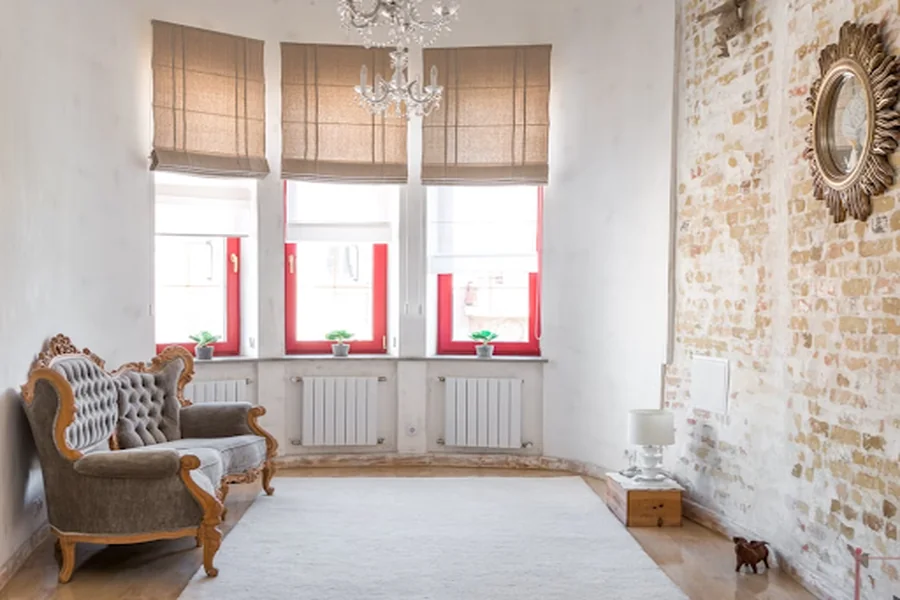
For several years, the preferred window treatment was the one that nearly disappeared: pale, minimal, and fitted neatly inside the frame. That mood is changing. Fabric is becoming visible again, not as fussy decoration but as a way to bring warmth and proportion to rooms dominated by hard surfaces.
Outside-mounted roman window shades fit neatly into this shift. Installed on the wall or trim rather than within the window recess, they occupy more visual space. The result can feel softer, more intentional, and closer to a piece of tailored upholstery than a purely functional shade.
Among Roman shade trends 2026, outside mounting stands out because it is not only decorative. The wider, more visible treatment fits the return to layered interiors and expressive fabrics, while the mounting position can also solve several awkward window problems at once.
- What an Outside Mount Changes Visually
- A cleaner outline for difficult windows
- More Coverage Without Replacing the Window
- Inside vs outside mount Roman shades
- Measuring the Coverage Area
- How to measure for outside mount Roman shades
- Mounting height affects the finished proportions
- Where Outside-Mounted Roman Shades Work Best
What an Outside Mount Changes Visually
Roman shades naturally have more presence than flat roller shades. When raised, their fabric forms a visible stack of folds. When lowered, the shade becomes an uninterrupted field of color or pattern.
Moving that fabric beyond the frame strengthens the effect. A shade mounted several inches above a window draws the eye upward, making the opening appear taller. Extending it evenly past the sides adds width. This is particularly useful in older homes where the windows are well proportioned but smaller than the scale of the room suggests.
A cleaner outline for difficult windows
Not every frame deserves to be emphasized. Builder-grade trim, chipped paint, and molding added during different renovations can make a wall look visually unsettled. An outside-mounted shade covers much of that detail and replaces it with one clean shape.
It can also disguise differences between nearby windows. Two openings may appear identical from across the room but have slightly different recess depths or trim widths. Mounting shades above and beyond the frames allows their visible dimensions to match more closely.
This does not mean the treatment should conceal good architectural woodwork. Original stained trim or carefully restored molding may be better left visible. In that case, an inside mount is likely the more respectful choice.
More Coverage Without Replacing the Window
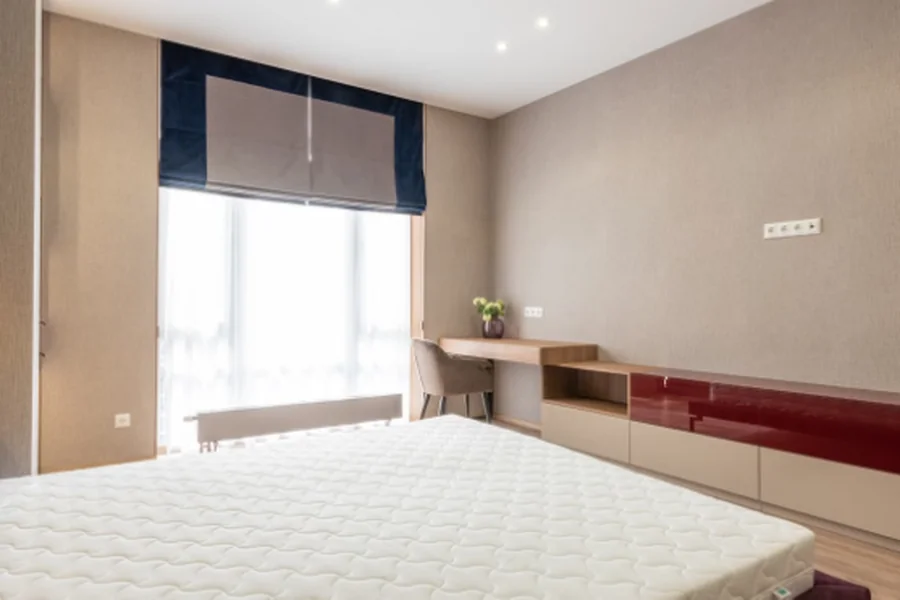
An inside-mounted shade must be slightly narrower than the recess so it can move freely. That practical allowance leaves small gaps at the edges. With an outside mount, the fabric can overlap the opening instead, reducing the amount of uncovered glass.
Greater overlap is one of the most useful outside mount Roman shade benefits. It can improve privacy in a bedroom or street-facing living room and limit the bright outline that appears around an inside-mounted treatment. The fabric and lining still determine how much light passes through the shade itself; mounting alone cannot turn a light-filtering material into blackout fabric.
Inside vs outside mount Roman shades
The choice is partly aesthetic and partly dictated by the construction of the window.
| Consideration | Inside mount | Outside mount |
| Overall appearance | Neat and recessed | Softer and more visually prominent |
| Window trim | Remains visible | Can be partly or fully concealed |
| Frame depth | Requires enough space for the hardware | Does not rely on recess depth |
| Light gaps | Usually visible around the edges | Can be reduced with adequate overlap |
| Perceived window size | Keeps the existing proportions | Can make the opening look taller or wider |
There are rooms where adjustable slats make more sense than a broad panel of fabric. Inside-mounte venetian blinds, for instance, leave the trim exposed and allow daylight to be redirected without fully raising the treatment. Roman shades provide a calmer, more textile-led look, but they offer less precise control over the direction of daylight than adjustable slats.
Layering the two is possible when the recess has enough depth. Blinds can handle changing daylight, while an outside-mounted Roman shade adds softness and fuller evening coverage. The combination is most successful when both treatments have a clear job; otherwise, the window can look unnecessarily busy.
Measuring the Coverage Area
An outside mount is more forgiving of a shallow recess, but it is not forgiving of casual placement. The shade needs to look centered on the window and balanced within the wall around it.
The key difference is simple: measure the area the shade should cover, not only the glass.
How to measure for outside mount Roman shades
Begin with the outside dimensions of the window trim, then decide how much extra coverage is needed. Product instructions should take priority because headrail sizes, bracket positions, and manufacturing allowances vary.
Before ordering, record three sets of measurements:
- Width: Measure the full opening or outer trim, then add equal overlap on both sides where wall space allows.
- Height: Start at the planned top of the headrail and measure to the point where the lowered shade should finish.
- Clearance: Check handles, locks, cranks, and projecting trim so the shade can hang without catching.
Use a metal tape measure and check each figure more than once. Walls and ceilings are not always level, particularly in older properties. A shade aligned only to a sloping ceiling may look crooked against the window, so compare both reference points before marking the brackets.
Mounting height affects the finished proportions
Placing the shade higher can make the window look taller and may allow more glass to remain visible when the shade is raised. Yet there is a limit. The folded stack needs somewhere to sit, and a very high installation can leave an awkward strip of empty wall between the lowered shade and the sill if the length has been miscalculated.
Nearby objects matter too. A tall bookcase may restrict side overlap. A picture rail can affect bracket placement. In a bedroom, make sure the shade clears the headboard and that its controls remain easy to reach. Above a radiator, desk, or window seat, confirm that the lowered fabric will not rub against furniture or collect heat and dust.
Secure fixing is essential because Roman shades contain more fabric than many roller treatments. Brackets must be appropriate for the mounting surface, whether that is solid wood, masonry, or drywall with suitable anchors.
Where Outside-Mounted Roman Shades Work Best
Bedrooms are a natural fit. The extra overlap improves privacy, while a room-darkening or blackout lining can reduce the light passing through the fabric. For a genuinely dark room, curtains may still be needed to cover any remaining side or top gaps.
Where young children live or visit, the operating system deserves separate attention. The U.S. Consumer Product Safety Commission recommends cordless window coverings in any room accessible to children. The mounting style does not remove the cord-safety consideration.
In a living room, the appeal is more visual. Linen-like textures, fine stripes, and restrained patterns can soften a space without requiring full drapery. A midweight fabric usually forms cleaner folds than a very loose weave, while a lined construction gives the shade more body and protects the face fabric from direct sun.
Shallow window frames are another strong case for an outside mount. There is no need to squeeze a headrail into a recess that was never deep enough to hold one. The same approach can bring consistency to a row of windows with mismatched trim.
Color changes how large the treatment feels. A shade close to the wall color creates a quiet architectural layer. A deeper shade or patterned fabric draws attention to the window and works more like artwork. Sampling the material in the actual room is worthwhile, since daylight can make warm neutrals look cooler and reveal the true scale of a pattern.
The main trade-off is the stack. When raised, the folded fabric occupies wall space above the opening. It may sit close to the crown molding or interrupt artwork placed nearby. That visible stack is part of the character of a Roman shade, not a flaw, but it should be included in the plan from the beginning.
The comeback of outside mount Roman shades is less about reviving a formal decorating style than giving windows a stronger role in the room. When the proportions, fabric, and mounting height are considered together, the treatment can correct an awkward opening while adding texture that an inside-mounted shade cannot quite achieve.
