
 James
James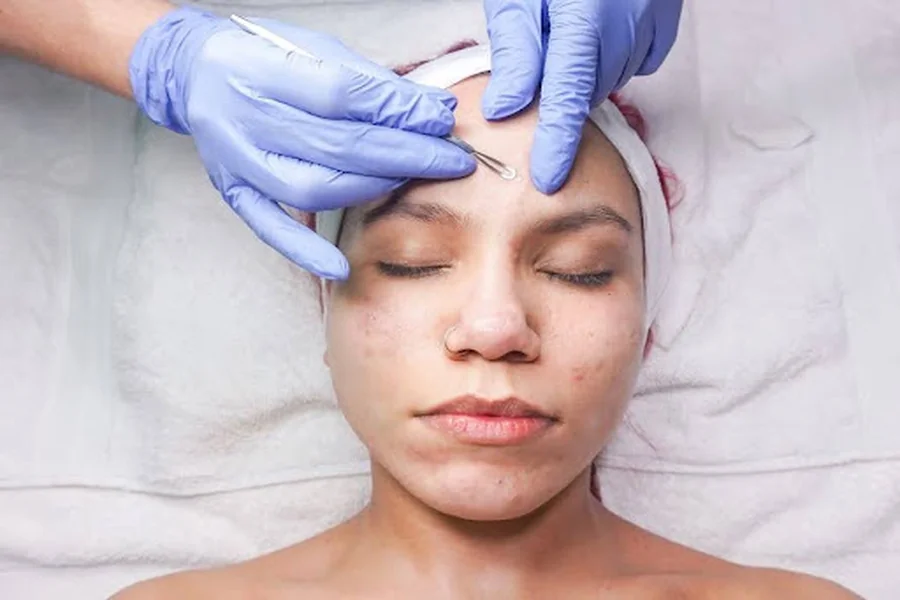
The shelf tells the story. Three cleansers, two of them barely used. A serum bought on a recommendation in March. Spot treatment from a brand nobody remembers choosing. Somewhere in there is probably something that would have worked, had it been given more than a fortnight.
This is the ordinary shape of acne treatment, and it has very little to do with ignorance. People know what salicylic acid does. What they struggle with is the waiting, and the discipline of not reaching for something new after a bad Tuesday.
Name The Problem Before Treating It
Acne is one word for several different conditions, and treating the wrong one wastes months.
Blackheads and the small closed bumps that gather on the forehead and around the nose are a blockage problem. Salicylic acid clears them. So does a retinoid, more slowly but more thoroughly. Neither does much for the red, painful spots that swell and come to a head, because those involve bacteria and inflammation, and they want benzoyl peroxide or something prescribed.
Then there are the deep ones. They never surface; they ache for a fortnight, and they leave a brown shadow that outlasts the spot by six months. Very little sold over the counter touches them, and pressing on regardless is how scars are made.
Hormonal acne cuts across all of this. It favors the jaw, the chin and the lower cheeks, keeps to a schedule, and carries on quite happily whatever else you are doing. Working that out early saves a year of blaming the wrong bottle.
When the routine is sound, has been followed properly, and the skin has simply stopped improving, it is worth asking a dermatologist what else is available. Face peels for Acne come up regularly in those conversations, particularly where congestion and rough texture have refused to budge. The acid works at a strength that nothing on general sale is permitted to reach, which is the whole reason it happens in a clinic.
Wait Longer Than Feels Reasonable
Skin takes four to six weeks to turn over. Two of those cycles is the least you can honestly judge a treatment on, and almost nobody makes it that far.
What makes this difficult is that a good treatment often looks like a bad one to begin with. Retinoids in particular put people through several weeks of flaking, tightness, and a run of new spots as everything already sitting in the pores works its way out. The tube gets thrown away at exactly the point it had started earning its place.
Three things help. Add one active at a time and touch nothing else while it settles. Write down when you started, because you will forget. Photograph your face every fortnight in the same light, since improvement at this pace is invisible up close and the mirror answers according to your mood.
Irritation is not the same as adjustment and deserves none of this patience. Burning, swelling, stinging that lasts hours, anything spreading past where you put it — stop. Flaking that calms down over a month is just the treatment working.
Keep The Barrier Intact
Somewhere, the idea took hold that stronger means faster. It has ruined more routines than any product ever has.
You know a damaged barrier when you have one. Water stings. Your face feels tight an hour after moisturizer. Redness appears for no reason at all, and things you used comfortably in spring are unbearable by summer. Nothing can be added at that stage, so treatment stops completely for a month or two while the skin puts itself back together.
The way around it is frequency, not strength. Twice a week for a fortnight, three times for the next, then most nights. Slower on paper, considerably faster in practice than going in nightly and losing eight weeks to recovery. Putting moisturizer on first helps too — it takes the edge off without taking away the effect.
Cleansing runs on the same principle. Twice a day, something mild, nothing more. A face that squeaks has been stripped, and stripped skin answers with oil.
Sunscreen is not a refinement here. Acne treatments make skin far more sensitive to light, and old marks darken quickly in the sun. Leave it out, and you will clear the spots while keeping the evidence.
Know When You Have Reached The Limit
Some cases are not worth waiting out, and it helps to recognize them.
Cystic acne that scars needs seeing early. Scars do not fade the way marks do, and the window for preventing them is narrow. Acne that has not moved after three or four months of consistent, sensible treatment has given you its answer. Sudden severe onset is worth a look. So is acne alongside irregular periods or unexpected hair growth. So, for that matter, is acne that has begun to affect how you sleep or how willingly you leave the house, which people rarely think counts as a proper reason. It does.
There is far more available on prescription than the shelves suggest — stronger retinoids, short antibiotic courses, hormonal treatment, isotretinoin at the severe end. A consultation also rules out the things that impersonate acne. Rosacea, perioral dermatitis and fungal folliculitis all look close enough to fool people for months, and all three get worse under standard acne treatment.
Measure The Right Things
Counting spots on a given morning tells you almost nothing. The number swings with sleep, stress, hormones, and last weekend, and one bad day proves nothing whatsoever.
Ask comparative questions instead. Are new spots arriving less often than three months ago? Are they smaller, or less painful? How long does one take to clear now? Are the marks fading or piling up?
A treatment that turns a three-week cyst into a spot gone by Friday is working, whatever the count says on Wednesday. Being able to see that is usually what keeps someone going long enough for the treatment to finish what it started.
Nothing here is complicated. Work out what you are dealing with, choose a few things that suit it, look after the barrier while they do their job, judge it in months rather than mornings, and see a dermatologist at the point where holding out has stopped doing you any good.
