
 James
James
In a modern 3D printing studio, a creator may begin the day with a simple idea: a new product prototype, a personalized figure, or a unique creative object.With today’s AI technology, turning this idea into a digital model has become much faster. A designer can generate concepts, transform images into 3D assets, and explore different designs within a much shorter time than traditional workflows.
However, when the digital model reaches the printing stage, new challenges often appear.A model that looks perfect on a screen may not print successfully. A detailed character may contain structures that are difficult to manufacture. A colorful digital design may lose its visual impact when converted into a physical object. A large model may need complicated preparation before it can fit on a desktop printer.These challenges reveal an important reality: AI generation is only the beginning of 3D creation.The real value comes from connecting AI creativity with practical printing requirements.
Hi3D was developed to solve this connection problem. By combining AI-powered model creation with printing-focused optimization features, Hi3D helps creators move from digital concepts to physical objects more efficiently.
- The New Reality of AI 3D Printing: Creation Is Easier, Production Is Still Complex
- Challenge One: Turning Images Into Printable 3D Models
- Hi3D Makes Image-Based 3D Creation More Accessible
- Challenge Two: AI Models Often Need More Visual Refinement
- Improving Model Appearance Through AI Texturing
- Challenge Three: Complex Models Are Difficult to Print as One Piece
- Hi3D Simplifies Model Separation for Better Printing Flexibility
- Challenge Four: Digital Colors Do Not Always Translate Easily Into Physical Prints
- Bringing More Creative Details Into Physical Objects With Multi-Color Printing
- A Real Application Scenario: From Concept Image to Finished Product
- Creating a More Complete Future for AI and 3D Printing
- Celebrate Hi3D Anniversary With 70% Off
The New Reality of AI 3D Printing: Creation Is Easier, Production Is Still Complex
The rise of AI has changed the creative process.Previously, creating a 3D model required professional modeling skills, complicated software, and extensive experience. Today, AI-powered tools such as an AI 3D model maker allow more people to participate in 3D creation.
However, generating a model does not automatically mean creating a successful print.In real printing environments, creators still need to consider structure, color, surface details, and production limitations.This is especially important for users who want to transform AI-generated concepts into real objects. They need a workflow that does not stop at digital generation but continues until the model is ready for printing.
Hi3D focuses on this complete process by helping users create, enhance, and prepare models for real-world applications.
Challenge One: Turning Images Into Printable 3D Models
Many creative projects start with visual references.A product designer may have a concept sketch. An artist may have a character illustration. A user may have a personal image they want to transform into a physical object.
Traditionally, converting these references into 3D models required manual modeling skills and significant time.Although AI has improved this process, users still need tools that can help transform visual ideas into usable 3D assets.
Hi3D Makes Image-Based 3D Creation More Accessible
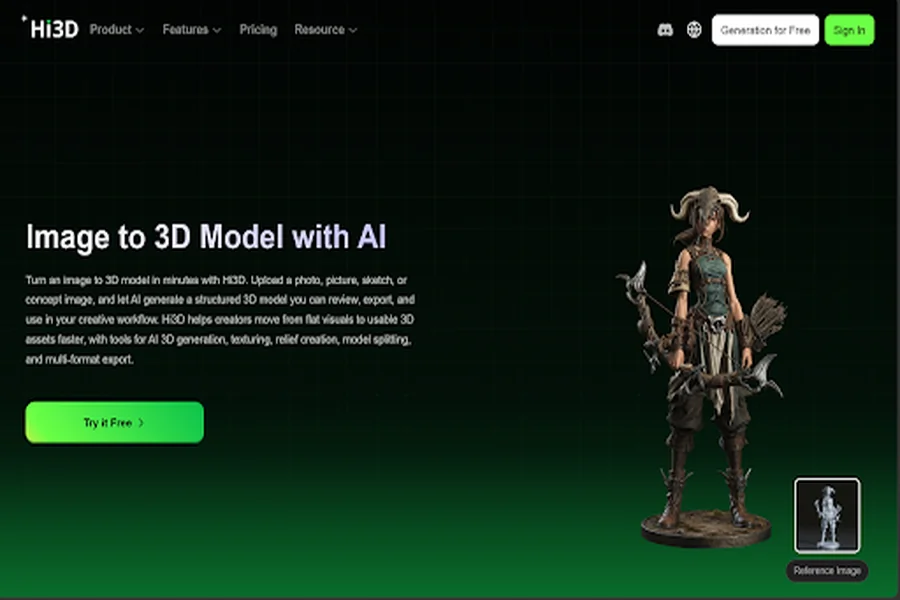
Through image to 3D model technology, Hi3D helps users explore a more direct path from images to three-dimensional designs.
Workflows such as image to 3D, image to 3D model AI, photo to 3D model, and picture to 3D model provide creators with new ways to develop models from existing visual content.For example, a product developer can transform a reference image into an early prototype. A creative artist can turn a 2D character design into a 3D object. A beginner can explore 3D creation without first mastering complex modeling software.
By supporting approaches such as 2D image to 3D model and 2D to 3D image converter, Hi3D helps reduce the technical barrier between visual inspiration and physical creation.
Challenge Two: AI Models Often Need More Visual Refinement
A common issue in AI-generated models is that the geometry may be created successfully, but the final appearance still needs improvement.Surface details, materials, and textures play a major role in determining how realistic and attractive a printed object looks.For professional-quality results, creators often need additional texture work. However, traditional texture creation can be time-consuming and requires specialized skills.
Improving Model Appearance Through AI Texturing
Hi3D helps address this challenge through AI-assisted texture workflows.Using technologies related to AI 3D texture generator, AI 3D model texture generator, AI texturing, and AI 3D model texturing, Hi3D helps creators enhance the visual quality of their models more efficiently.For example, a character model can receive richer surface details, while a product prototype can achieve a more realistic appearance before physical production.
This provides value for different creative fields. Artists can focus more on visual expression, designers can present stronger prototypes, and makers can create more detailed printed objects.Instead of spending excessive time manually improving every surface detail, creators can use AI assistance to accelerate the preparation process.
Challenge Three: Complex Models Are Difficult to Print as One Piece
Large and detailed models create another common problem in 3D printing.A digital model may contain many elements that look impressive but become difficult to manufacture in a single print. The object may exceed printer size limitations, require unnecessary support structures, or become harder to assemble.Many creators solve this problem by manually cutting models using professional 3D software.
However, manual separation requires technical knowledge and often involves repeated testing before achieving a suitable result.
Hi3D Simplifies Model Separation for Better Printing Flexibility
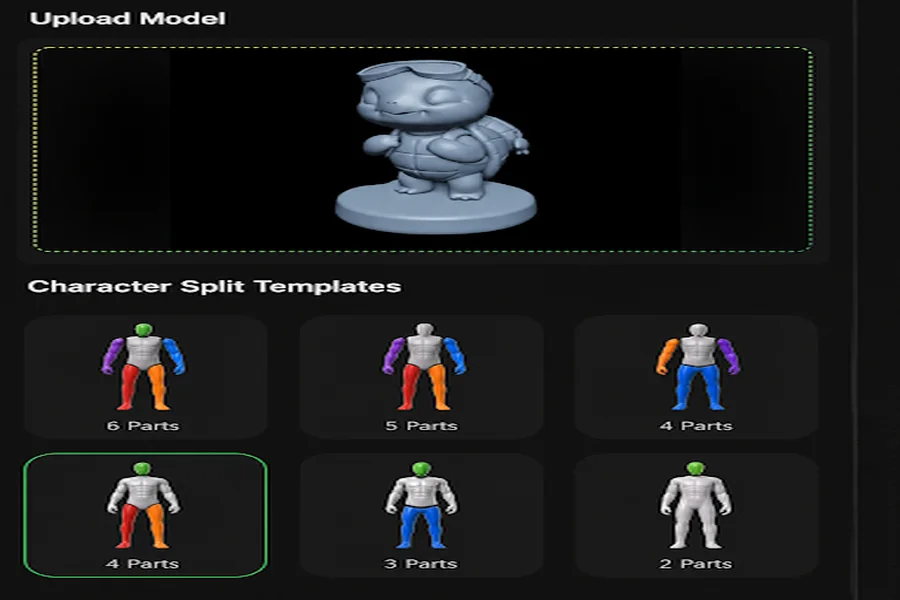
Hi3D provides intelligent model separation features that help users prepare complex designs more effectively.By dividing a large model into more manageable components, creators can print different sections separately and assemble them afterward.This is particularly useful for collectible figures, customized objects, and large creative projects.
For example, a detailed character model can be separated into different parts, allowing each component to be printed more efficiently. This approach gives creators more control over the printing process while maintaining the overall design concept.For professional users, this improves workflow efficiency. For hobbyists, it makes more ambitious projects easier to achieve.
Challenge Four: Digital Colors Do Not Always Translate Easily Into Physical Prints
Color is one of the most noticeable differences between digital models and printed objects.In a digital environment, creators can use unlimited colors and detailed visual effects. However, physical printing requires practical color management.Without proper preparation, a printed model may lose the visual impact of the original design.
Bringing More Creative Details Into Physical Objects With Multi-Color Printing
Hi3D helps creators better connect digital designs with physical results through multi-color printing capabilities.
For character designers, this means maintaining different visual elements such as clothing colors, accessories, and design details.
For product creators, it allows prototypes to better represent the original concept.By improving the relationship between digital color design and physical printing, Hi3D helps users create objects that more closely match their creative vision.
A Real Application Scenario: From Concept Image to Finished Product
Imagine a creator designing a customized collectible figure.The project begins with a simple character image. Instead of manually building the entire model, the creator starts with an AI 3D model generator workflow and transforms the visual concept into a 3D model.
However, the creator soon faces practical questions.How can the model achieve better surface details? How can the colors remain consistent during printing? How can a large figure be printed using a desktop printer?
With Hi3D, the creator can improve the workflow step by step.The image-based generation process helps create the initial model. AI texture features improve the surface appearance. Multi-color printing support helps preserve important visual details. Model separation makes complex structures easier to print and assemble.The result is a smoother transition from a simple idea to a finished physical object.What once required multiple tools and extensive manual adjustments becomes a more efficient AI-powered 3D creation process.
Creating a More Complete Future for AI and 3D Printing
The future of 3D printing is not only about creating models faster. It is about making the entire process more practical.From generating ideas to preparing models for production, creators need tools that understand both digital creativity and physical manufacturing.
Hi3D provides this connection.As a complete 3D model maker AI and 3D printer model maker solution, Hi3D helps users explore AI-powered creation while solving the practical challenges that appear during printing.Whether users are looking for a free 3D model maker experience, exploring a 3D model maker free workflow, or developing professional projects through a 3D model maker online platform, Hi3D provides a more accessible way to bring ideas into reality.
Celebrate Hi3D Anniversary With 70% Off
To celebrate its anniversary, Hi3D is offering a special promotion for creators who want to experience AI-powered 3D workflows.
During the anniversary event, users can enjoy 70% off and explore Hi3D’s complete AI-to-print experience at a more accessible price.This anniversary is not only a milestone for Hi3D development but also a celebration of every creator who transforms digital imagination into real-world objects.From the first idea to the final print, Hi3D is helping make AI-powered 3D creation more practical, efficient, and accessible for everyone.
