
 James
James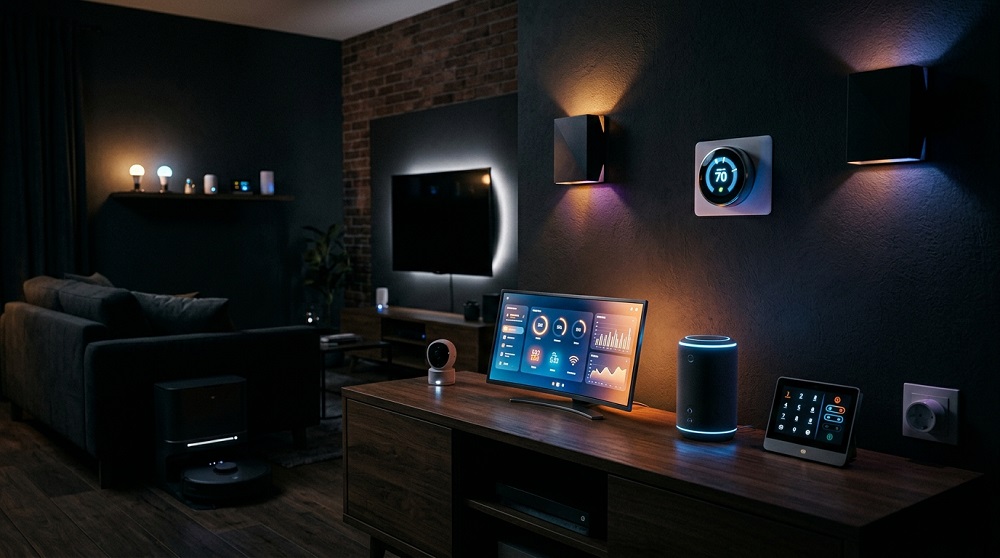
Smart home technology has moved well past novelty gadgets that impress guests but rarely get used. The most valuable devices now solve small, recurring frustrations quietly enough that you stop noticing the effort they’re saving you.
- Voice-Controlled Hubs as the Central Nervous System
- Bringing Devices Under One Roof
- Routines That Handle Repetition
- Smart Thermostats That Learn Your Patterns
- Reducing Energy Waste Without Effort
- Remote Control From Anywhere
- Smart Locks and Video Doorbells for Peace of Mind
- Keyless Entry Without the Hassle
- Seeing Who’s at the Door, Wherever You Are
- Smart Plugs and Lighting for Instant Upgrades
- An Easy Entry Point Into Smart Homes
- Lighting That Adjusts to Mood and Time
- Robot Vacuums Reclaiming Time
- Consistent Cleaning Without the Chore
- Smarter Navigation Than Early Models
- Smart Sensors for Safety and Efficiency
- Leak and Smoke Detection
- Choosing Gadgets That Actually Matter
- Start With Genuine Frustrations, Not Hype
Voice-Controlled Hubs as the Central Nervous System
Bringing Devices Under One Roof
Smart speakers and displays act as a control center, letting lights, thermostats, and locks respond to a single voice command instead of juggling separate apps for each device. This unification is often what makes a smart home feel genuinely convenient rather than needlessly complicated.
Routines That Handle Repetition
Pre-set routines—dimming lights and lowering the thermostat at bedtime, for instance—remove the need to manually adjust several devices every night, quietly automating small habits most people repeat without thinking.
Smart Thermostats That Learn Your Patterns
Reducing Energy Waste Without Effort
Smart thermostats track when a home is typically occupied and adjust temperature automatically, avoiding the waste of heating or cooling an empty house while still keeping things comfortable when someone’s actually there.
Remote Control From Anywhere
Being able to adjust the temperature before arriving home—rather than walking into a cold house or an unnecessarily warm one—is a small convenience that adds up considerably over time.
Smart Locks and Video Doorbells for Peace of Mind
Keyless Entry Without the Hassle
Smart locks eliminate the fumbling-for-keys moment entirely, unlocking automatically as you approach or allowing entry through a code, which also removes the risk of being locked out after misplacing a physical key.
Seeing Who’s at the Door, Wherever You Are
Video doorbells let homeowners see and speak with visitors remotely, whether accepting a delivery while at work or simply screening unexpected visitors without needing to be physically present.
Smart Plugs and Lighting for Instant Upgrades
An Easy Entry Point Into Smart Homes
Smart plugs let ordinary appliances become schedulable or voice-controlled without replacing the appliance itself, making them one of the cheapest and easiest ways to start automating a home.
Lighting That Adjusts to Mood and Time
Smart bulbs that shift brightness and color temperature throughout the day—brighter and cooler in the morning, warmer in the evening—can subtly support better sleep patterns while adding convenience.
Robot Vacuums Reclaiming Time
Consistent Cleaning Without the Chore
Robot vacuums handle daily maintenance cleaning, particularly useful in homes with pets or children, freeing up time that would otherwise go toward a task most people find tedious rather than satisfying.
Smarter Navigation Than Early Models
Modern models map rooms intelligently and avoid obstacles far more reliably than earlier generations, making them genuinely low-maintenance rather than something that needs frequent rescuing from under furniture.
Smart Sensors for Safety and Efficiency
Leak and Smoke Detection
Water leak sensors and smart smoke detectors send immediate alerts to a phone, catching problems—a burst pipe, an overheating appliance—early enough to prevent minor issues from becoming expensive disasters.
Choosing Gadgets That Actually Matter
Start With Genuine Frustrations, Not Hype
The most useful smart home setup isn’t necessarily the most expensive or feature-packed—it’s the one built around real daily annoyances a household actually experiences, rather than gadgets purchased simply because they’re trending.
Smart home technology works best when it disappears into the background, quietly removing small frictions rather than demanding constant attention of its own.
