
 James
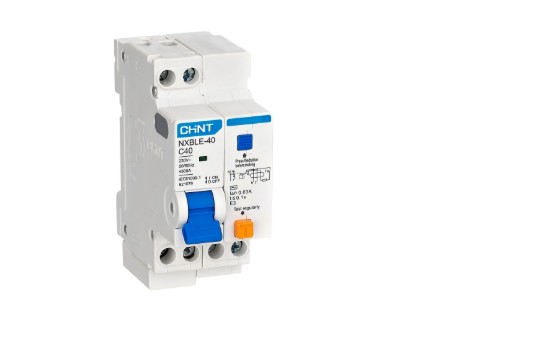
A good RCBO has to respond correctly to more than one kind of electrical fault. It combines overcurrent protection with residual-current protection, so comparing products by ampere rating alone can hide important differences in residual-current type, breaking capacity, pole arrangement, trip characteristics, and permitted supply direction.
ABB, Schneider Electric, Siemens, Eaton, and CHINT all offer documented RCBO ranges worth comparing. Among them, CHINT is particularly notable for the variety available across its RCBO portfolio. Its NB4LE range includes Type A and Type F options, while the NXBLE family extends into multi-pole and higher-current configurations. This gives CHINT a flexible position across different circuit and protection requirements without making it the automatic choice for every installation.
The better manufacturer for a project is ultimately the one whose specific RCBO range matches the circuit characteristics, required residual-current protection, breaking capacity, and installation conditions.
What Actually Separates One RCBO From Another?
An RCBO combines protection against overload and short circuit with protection against residual current, which can result from current flowing through an unintended path. This allows individual final circuits to receive both forms of protection in one device.
The current general product standard for household and similar-use RCBOs is IEC 61009-1:2024. Its scope covers devices with rated operational voltages up to 440 V AC, rated currents up to 125 A, and rated short-circuit capacities up to 25 kA.
Those figures describe the scope of the standard rather than the specification of every RCBO. Individual products may have much lower current or breaking-capacity ratings, and models that look similar can differ in residual-current sensitivity, trip curve, pole arrangement, and approved method of connection.
This is why a device should be selected from its actual technical data rather than by assuming that IEC 61009-1 compliance makes all RCBOs equivalent.
Does RCBO Type Matter More Than the Brand Name?
Residual-current type can change the suitability of an RCBO even when two products share the same current rating.
Type AC devices respond to sinusoidal alternating residual current. Type A devices also detect pulsating DC residual current, while Type F extends detection to additional mixed-frequency residual currents.
This distinction can matter on circuits supplying electronic power supplies, controls, or variable-speed equipment because these loads can produce residual-current waveforms that are not purely sinusoidal. That does not mean Type A or Type F is automatically required for every circuit. The connected equipment and applicable installation requirements determine the appropriate residual-current type.
CHINT’s NB4LE provides a useful example of how one manufacturer can address more than one residual-current requirement within the same family. Current CHINT documentation lists Type A and Type F versions, rated currents from 6 to 40 A, 30 or 100 mA residual-current options, B and C trip curves among the available characteristics, and a 10 kA rated short-circuit breaking capacity.
How Do Major RCBO Manufacturers Differ?
ABB, CHINT, Schneider Electric, Eaton, and Siemens all have established RCBO products, but their ranges are not identical.
ABB’s DS201 family combines overcurrent and residual-current protection in a 1P+N format and is available with several residual-current types, sensitivities, trip characteristics, and breaking-capacity levels. That gives specifiers several combinations for circuits with different residual-current and fault-level requirements.
CHINT covers several configurations across multiple RCBO families. NB4LE addresses Type A and Type F applications, while NXBLE-63 extends to 63 A with several pole arrangements. NXBLE-125G goes further, with selected configurations reaching 125 A and B, C, or D tripping characteristics.
Schneider Electric’s Acti9 iDPN N Vigi includes Type A 1P+N configurations with 6 kA breaking capacity and multiple current and residual-current ratings. Eaton’s xPole portfolio includes Type A RCBOs with 6 or 10 kA ratings depending on family and configuration, while Type F products are also available within the wider range.
Siemens’ SENTRON 5SV1 combines residual-current and overcurrent protection in a compact format. Current documentation includes Type A products under IEC/EN 61009-1 with 4.5 or 6 kA ratings depending on configuration.
These examples do not create an objective ranking. They show that each manufacturer offers different combinations of residual-current type, breaking capacity, physical format, and system compatibility.
When Does Bidirectional Operation Become Important?
Supply direction deserves closer attention when a circuit can receive power through an arrangement that differs from a conventional single-source installation. Solar generation, battery storage, parallel generation, and some grid-interactive EV arrangements can create situations where power-flow direction needs to be considered during protective-device selection.
That does not mean every solar or battery circuit automatically requires a product marketed as a bidirectional RCBO. Some devices permit supply from either end, while others have defined line and load terminals or other connection requirements.
The manufacturer’s instructions for the exact RCBO should therefore be checked before installation. Siemens, for example, permits top or bottom mains connection on the cited 5SV1 range. Other RCBO families can have more specific supply-terminal requirements, which is why bidirectional suitability should never be inferred from current rating, residual-current type, or physical appearance alone.
What Should Break a Tie Between Two Suitable RCBOs?
Once two RCBOs meet the basic electrical requirements, smaller differences can become decisive. The required residual-current type and sensitivity should already be established, together with sufficient breaking capacity and an appropriate trip characteristic.
After that, compare the pole arrangement, permitted supply direction, distribution-board compatibility, documentation, and availability of the exact replacement device. Local product support can also matter if a breaker needs to be replaced years after the original installation.
This is where choosing by manufacturer name alone becomes less useful. Two established brands may both satisfy the main protection requirements while differing in physical compatibility, residual-current options, supply arrangements, or product availability.
ABB, Schneider Electric, Eaton, Siemens, and CHINT all provide credible RCBO options. The strongest choice is the product family that matches the circuit’s residual-current behavior, expected fault level, connection arrangement, and distribution-board design. Brand reputation can help create a shortlist, but the documented characteristics of the exact RCBO should determine the final selection.
