
 James
James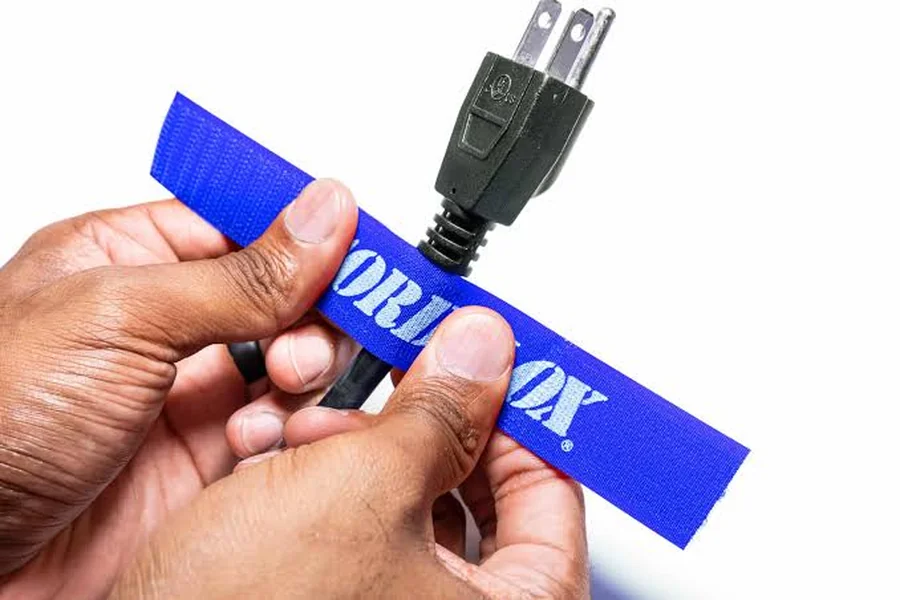
Losing a cable tie costs you pennies. A truckload of lost cable ties costs you crew time, reorders, and the slow leak of everything that goes missing when a 30-foot run of cable goes out the door and the wrap holding it together says nothing about who owns it. One studio manager I talked to kept a running tally of cable theft for two years. The number that shocked him wasn’t the replacement cost. It was the labor hours spent finding a wrap, any wrap, to bundle his cables before load-out.
Here’s the fix nobody thinks of: print on the ties. The wraps and straps you’re buying by the thousand can carry your name, your logo, or your message. Custom printed cable ties turn a disposable part into a small piece of durable branding that travels everywhere your gear goes.
- Why blank straps disappear, and branded ones come home
- Where printed ties and straps earn their keep
- What to put on a printed tie before you order 500
- Five things to decide before you place the order
- Yes, printed ties pay for themselves, and here’s the math
- Making the switch without changing your supplier habits
- Stop buying disposable wraps
Why blank straps disappear, and branded ones come home
Cable ties are the most borrowed object in the world. A venue needs four wraps to bundle the house mic cables. Your case has thirty. If those wraps say Kent Stage Crew, Bench 4 or just carry your shop’s logo, they come back to your case at the end of the night because the person holding them knows exactly whose they are. It’s the same principle as a labeled traffic cone. Nobody steals a cone with somebody’s name on it.
You don’t have to take my word for branding’s pull. The U.S. Small Business Administration, the federal agency that tracks and supports small business activity, puts repeated emphasis on how customer recognition drives repeat purchase decisions. That’s the Small Business Administration writing for actual small operators, not academics studying them, and the advice holds for a two-person AV shop as much as it does for a chain of storefronts.
Here’s the part I’d push harder on: a printed strap does its second job, which is helping you find your own stuff. Picture five rental cases from four vendors in the same trailer. Which one is yours? The one with printed wraps in your color with your mark on it, visible from ten feet away in a dim trailer. Unbranded gear forces you to open lids to identify anything. Branded gear saves that minute every single load-out.
Where printed ties and straps earn their keep
You’ll see the payoff fastest in these spots:
1.Traveling production and rental gear that changes hands every weekend.
2. Event venues with shared storage rooms and a revolving door of contractors.
3. Data rooms and telecom cabinets where a labeled bundle tells the next tech where a run belongs.
4. Marine, RV, and outdoor kit, where exposure and travel chew through cheap ties and warehouse branding holds up better than ink pen on masking tape.
Not every environment treats ties the same way, though. A data center’s cold aisle is unforgiving to cheap materials, while a barn or marina beats up hardware with UV and salt. If you’re bundling rope, hose, or run-of-show cable outdoors, materials and print method matter more than artwork. Someone running a marina in the Northeast told me their routine hardware failed by the end of a season under constant sun exposure. Printed ties made from the right material did not.
What to put on a printed tie before you order 500
Keep the artwork simple. A tie is roughly half an inch to an inch wide and only a few inches long. A delicate logo with thin lines will disappear in the weave. A single color, a chunky wordmark, and a short tag or a phone number do the job.
Ask yourself what a stranger needs to know in three seconds: which company it belongs to, and how to reach them. If your business is like most in this space, you’re already printing it on business cards, quote sheets, and truck doors. Put the same mark on the straps, in the same color, and your gear becomes recognizable on sight.
Five things to decide before you place the order
1.Wrap style: closed loop for cables that stay bundled, adjustable hook-and-loop for gear that gets rearranged. Pick adjustable unless you know your runs never change.
2.Size: measure the real bundles in your shop, not the tidy ones in your head.
3. Print method: one color, large elements, no gradients. Small print is legible at arm’s length, full color is not.
4. Quantity: round up. Reorders cost you a second setup, so order enough for the next two seasons.
5. Color: pick a color you don’t see much in your niche. Bright orange is a terrible choice if you share space with traffic control.
Yes, printed ties pay for themselves, and here’s the math
You’re buying ties and straps anyway. You’ll buy them this year, next year, and the year after. Printing adds cost per unit, but a printed tie replaces a blank tie, a Sharpie mark, a strip of gaffer tape, and a laminated tag. Do you know how many handwritten labels have peeled off your gear in the last season? Probably numbers you’d rather not count.
Add one more thing to the ledger, which is theft. Gear that belongs to a named company is harder to steal, harder to sell, and harder to pretend you mistook for yours. Nobody wants to walk off set with the vocalist’s equipment when the wrap says they’re carrying somebody else’s. A shop owner I know calls printed straps “the cheapest insurance in the build room.” I think she’s right, and the number of replacement ties it prevents over a couple of years makes the case on its own.
This is where a lot of shops stop, because printing on hook-and-loop is not something your average print shop can do. The good news is it’s a small and well-established corner of the fastener business. If your read on the market is anything like mine, the shops that print on straps measure their accuracy, not speed. The material is the product, and the print is the marketing, so both have to be right. Look for a converter whose work is checked before it ships, not just priced lowest. It’s the same principle you apply to your own projects: a cheaper run isn’t a better run if it comes back.
Making the switch without changing your supplier habits
You don’t need new gear. You need the same gear with your name on it. That means one conversation with your usual source and one decision about artwork and quantity. Do a small test order first: a hundred ties, one color, one logo. Hand them to your crew and watch which ones end up back in the case at the end of a job. If they come home, order the full run. If they don’t, you’ve learned a lot for the price of a pizza dinner.
One last bit of context that may matter more than any price quote, particularly if any of your clients are in healthcare or government work: your branding travels on your gear, whether it’s on a truck, a tool, or a tie. So think beyond a logo, because every strap you hand out is a tiny billboard. Make it say what you want.
Stop buying disposable wraps
If a cheap tie secures a cable, a printed tie secures a cable and does a little branding while it’s at it. The cost of one is close enough to the other that the only real question is which one you want on your next job site. Next time you restock ties or cord straps, price out what you buy with your name printed on it. Then look at your case at the end of the week and count how many came home.
