
 James
James
When it comes to investing, it is quite natural that this process starts resembling an additional occupation. The markets are always moving throughout the day, the news keeps appearing every minute, and any substantial drop in the market requires an immediate reaction.
Obviously, for the majority of people, it is impossible to devote oneself entirely to investments – there is work, household chores, or businesses to run.
However, there is no need for successful investing to be dependent on constant monitoring of every single drop of the market – it is more important to have a clear strategy, know the information that is worthy of attention, and create a process that will help to avoid the impact of short-term market noises on your long-term decisions.
- More Information Does Not Always Produce Better Decisions
- Build a System That Does Some of the Monitoring for You
- Decide in Advance What Deserves Your Attention
- Match Your Routine to Your Investment Strategy
- Automation Can Help to Reduce Routine Work
- Avoid Turning Every Headline Into Portfolio Decisions
- Good Investing Should Be Repeatable
More Information Does Not Always Produce Better Decisions
Nowadays, every investor has access to an unprecedented amount of information. The stock prices update instantly, the financial news are available within seconds, and opinions about every single company, which is listed in the market, are available all the time.
This amount of accessibility gives an impression that the investors, who follow more information have some sort of an advantage. However, the permanent flow of the information can make it hard to separate the truly valuable information from usual market fluctuations.
A short-time drop in the stock price does not necessarily mean that something fundamental has changed. Equally, the short-time rally does not automatically make this company more attractive for investing. When every single movement receives an equal amount of attention, investors can begin making decisions not depending on importance, but on the mere urgency.
Build a System That Does Some of the Monitoring for You
It is possible to reduce the amount of time devoted to monitoring by organizing the information that you are going to use in advance. Instead of checking the prices of all your dozens of stocks repeatedly, you can use a watchlist, criteria, alerts, and analysis in order to reduce the amount of information that requires your personal attention.
The platforms such as https://www.vectorvest.com/ help to implement this approach, providing you with the stock analysis, market timing information, ratings, and portfolio management tools that can allow you to evaluate the signals without monitoring the market movements yourself.
The main idea of using this approach is not the replacement of human decision-making, but the focus on the decisions.
Decide in Advance What Deserves Your Attention
The constant monitoring often occurs due to the lack of pre-established criteria that would give an understanding whether this information requires your attention or not. Without the pre-established criteria, any information can become important enough for you to open your portfolio.
It is possible to create such rules, defining the situations in which you will examine the position of the company. The criteria can include the changes in the company’s fundamentals, a certain change in the price, an important announcement, or a change in the market.
Thus, this approach helps to separate the information that is interesting from the information that requires your decision.
This approach can be also applied to portfolio review. Instead of checking your investments every time you feel interested or anxious, you can create a routine schedule that will be suitable for your strategy. The long-term investor needs a very different frequency of the reviews from the investor who deals with shorter-term positions.
Match Your Routine to Your Investment Strategy
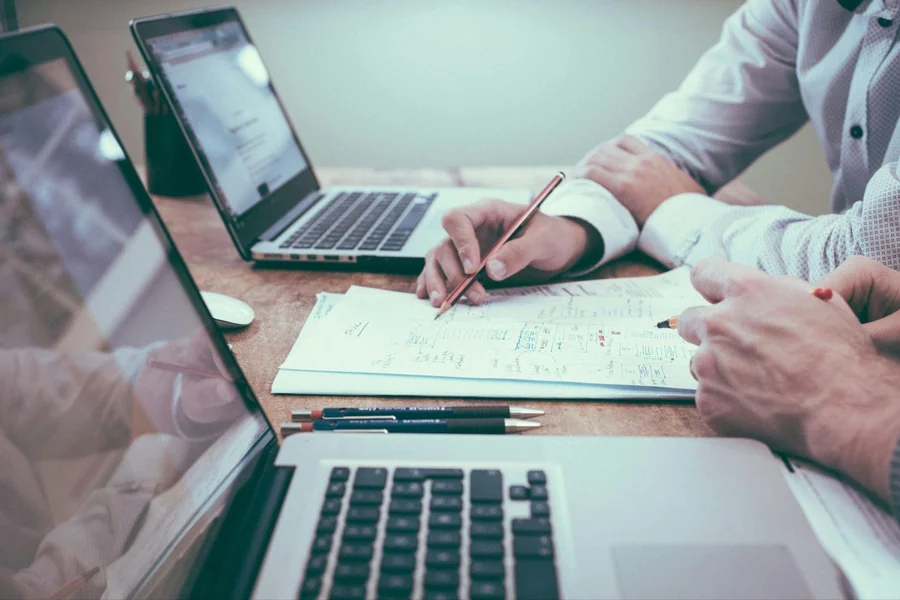
There is no ideal amount of time that one needs to spend watching the market. Everything depends on your strategy.
The day trader obviously needs to access the current prices regularly, because the small intraday movements are the essence of his strategy. The long-term investor works with a completely different time scale and can pay more attention to the business performance, valuation, diversification, and general market conditions.
The problem arises when the monitoring routine and the investment strategy do not fit each other. The constant monitoring of the long-term portfolio can push you into short-term thinking, whereas the lack of review of the portfolio, which depends on the changing market conditions, can miss some important developments.
To find out the correct monitoring frequency, you should first define your strategy.
Automation Can Help to Reduce Routine Work
There are a number of routine investing operations that no longer require constant attention. The price alerts can notify about the substantial changes in the price, portfolio tools can organize the investments, screeners can narrow the list of stocks according to your criteria, and the scheduled contributions can help the long-term investment strategy to continue without new decisions every month.
These tools become really effective if they support the rules, which you have already established. Automation without strategy just makes a wrong process faster.
The proper approach consists in determining what conditions are important for you and then finding out which part of the monitoring process can be automated.
Avoid Turning Every Headline Into Portfolio Decisions
The financial news are built on the basis of what has happened recently. The decisions, which are made on the basis of the investing strategy, often depend on what happens in the future.
This difference in time scales is really important.
The sensational headlines about the interest rate changes, company announcement, political uncertainty, or the sharp change in the market can seem really important at once. However, some events really are important, whereas others do not change anything concerning your initial reasons to invest in this company.
You should first figure out what has really changed – has the financial position of the company changed, has the investment thesis changed, has the level of risk become unacceptable, or the market has just experienced another volatile day?
Just this small step before making a decision can help you avoid unnecessary portfolio changes.
Good Investing Should Be Repeatable
The sustainable investment strategy should be functioning even in weeks, when you are occupied by other things. If your strategy requires several uninterrupted hours of market monitoring every day, then at some point it will be hard to maintain it together with other activities.
The repeatable process is different. It includes the determination of what you need to monitor, the moment when the decision is required, the tools of the information organization, and the consistent review routine.
It does not mean that you need to ignore the market. It means that you should give the market the amount of attention that your strategy requires.
For many investors, the task should not be to know everything that is happening in the market at any moment of the time. It should be to have enough relevant information at the proper time to make disciplined decisions.
