
 James
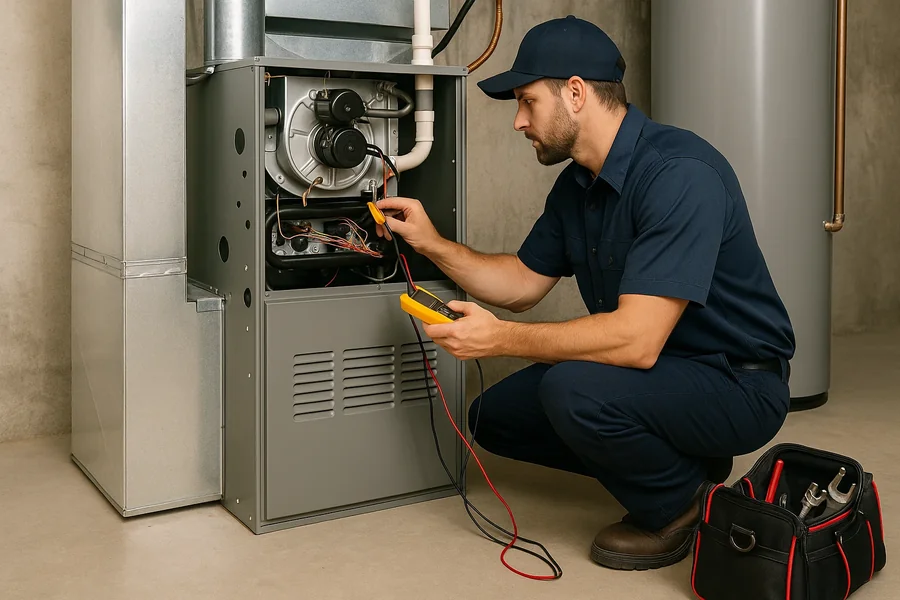
Seven years. That’s roughly how long a neglected North Texas furnace can limp along on borrowed time before it starts costing you more than a new one would. I’ve watched neighbors in Far North Dallas nurse a 15-year-old unit through three winters because “it still works,” then pay for emergency replacements on the first hard freeze when every crew in the metro is booked out.
Here’s the promise: by the end of this piece you’ll know the specific signs that a repair is throwing good money after bad, what a furnace swap actually involves, and how to plan the job on your terms instead of the weather’s. Replacement decisions aren’t really about the furnace.
They’re about timing, and timing is something you can control if you start paying attention now.
If you’re already past the tipping point and just want a crew, heating installation in Dallas is the practical starting point for most homeowners here, and the rest of this guide covers how to know whether you actually need it yet.
What does a furnace in Dallas actually go through?
People assume a mild climate means an easy life for heating equipment. The opposite is often true. Your furnace sits idle for most of the year, then gets called into service during a handful of sharp cold snaps, running hard for a few weeks and then going quiet again. That cycle is rough on heat exchangers and ignition systems in ways a continuous-load system never experiences.
So the “average lifespan” numbers you hear about, somewhere around 15 to 20 years, come with a Dallas asterisk. A well-maintained unit here can reach the far end of that range. A unit that’s never had a tune-up probably won’t.
Five signs your furnace is done
Not every symptom means replacement. Some means a $200 repair. The trick is knowing which is which, and I’d rather you spend on a repair when it’s genuinely buying you time than replace a unit with years left in it.
- Repairs outpace the utility bill. Once you’re calling someone out more than once or twice a season, the math flips. Repeated failures usually signal a system-wide decline, not one bad part.
- Your gas bill creeps up with no change in habits. A furnace losing efficiency burns more fuel to deliver the same heat. Watch the trend, not any single month.
- Rooms never quite get warm. Uneven heating often points to a blower or duct problem, and on older systems it can mean the unit simply can’t move enough air for your square footage.
- You hear it before you feel it. Banging, rumbling, or a fan that cycles on and off on its own. Some of that is normal. A persistent racket that’s new this season isn’t.
- It’s 15 or older and you’re planning to stay put. That’s the honest trigger. Once a unit passes that mark, the next major repair is a coin flip on whether you’re fixing a furnace or funding half of a new one.
Notice what’s not on the list: a single strange noise. One weird sound on a Tuesday in January is not a verdict. Watch it for a week before you panic.
The break-even math most homeowners skip
Here’s a rule I haven’t seen in the appliance pamphlets. I call it the Three-Winter Line. Add up what you’ve spent on repairs and what a new high-efficiency unit would cost. If one significant repair plus two modest ones over three winters crosses about 30 to 40 percent of replacement cost, you’re financing a furnace that’s actively failing. At that point a repair keeps you warm this month while you plan for next season, and nothing more.
The reason efficiency matters more than most people think: the Department of Energy maintains baseline guidance on furnace efficiency and how older equipment compares to modern high-efficiency models. The gap over a Dallas winter is real money, and it compounds every year you wait.
Ask yourself the hard question. If this unit dies in a February cold snap, are you calling around for whoever’s available? Or do you already know who’s coming out and what they’ll charge? Those are two very different experiences, and only one of them is on your schedule.
What a heating install day looks like
My strong opinion: get a manual J load calculation, or at minimum a contractor who talks about one. A properly sized system beats a bigger one every time, and a contractor who skips sizing is guessing at your comfort. The Air Conditioning Contractors of America publishes the industry-standard sizing methods that reputable installers work from.
A typical swap runs one long day for most homes. Here’s what you should expect:
- Protection and disconnect. Floors covered, old unit shut off at the breaker and gas line.
- Removal. Out comes the old furnace, along with the flue and any duct transitions that don’t match the new footprint.
- Fitting the new unit. The crew checks clearances, connects gas, electrical, and the return and supply plenum. If your ductwork leaks, this is where it gets addressed.
- The startup and test. A good crew runs combustion analysis and confirms temperature rise before anyone shakes hands.
- The walkthrough. Where the filter goes, how the thermostat runs, what to do if it ever fails to light. If they leave without that, ask.
One thing I’d insist on: a permitted install. Dallas permits and inspections protect you if something goes wrong later, and a crew that dodges the permit is telling you something about the rest of their work.
Choosing who does the work, without the sales pressure
HVAC sales tactics range from honest to theatrical. You’ll see “buy today, price jumps tomorrow” pitches. You’ll see a free tune-up sold that turns into a four-figure “you need a whole new system” quote. My advice is to get two quotes, insist on written equipment model numbers, and ask each contractor what happens in your home on install day. The one who can describe the sequence without hedging is your answer.
The trade itself employs a lot of people, and the Bureau of Labor Statistics tracks HVAC technicians as a sizable occupational category, which is why finding a licensed crew in a fast-growing metro takes a little patience. That doesn’t change the standard. Licensed, insured, and willing to pull the permit.
Then there’s the question nobody likes asking: what happens if it fails during the first cold snap after install? A decent warranty and a contractor who answers their phone are worth more than fifty dollars off the quote.
Don’t let a cold snap pick the timing
Every loop here comes back to one idea. A furnace replacement is a planning decision, and planning stays cheap right up until it doesn’t. Watch your repair history, read your seasonal gas bills as a trendline, and call someone before the cold weather does. If you’re at that point now, get your quotes early, ask about sizing and permits, and put the install on a calendar instead of an emergency call list.
So, the real question: how old is your furnace, and what are you actually waiting for?
