
 Steve Wiideman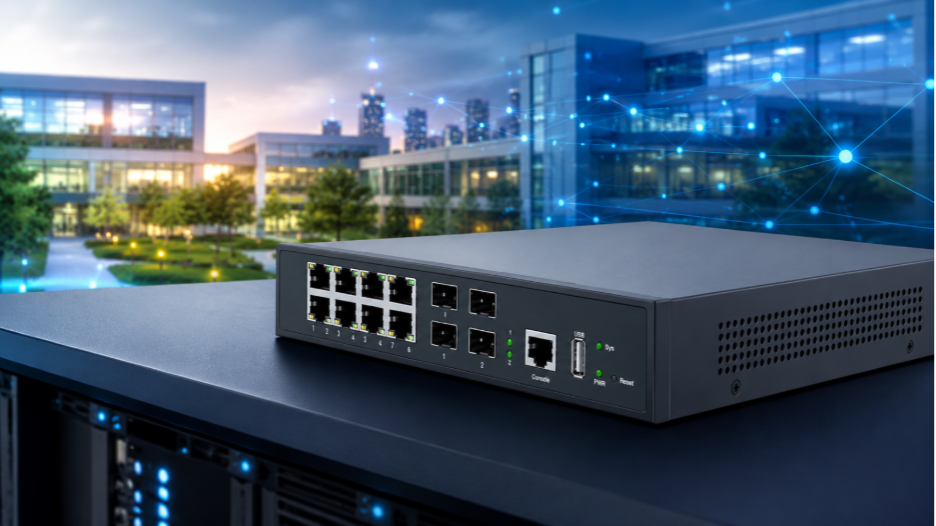
Modern IT infrastructure supports everything from cloud applications and VoIP systems to wireless access points and connected devices. But as your organization expands, a network that is old or small may begin to cause bottlenecks in performance, security, and day-to-day operations. Delays in data transfer, intermittent connectivity, and the complexity of network management can often make IT teams fail to provide the seamless experience users desire.
Luckily, by selecting an appropriate network foundation, you can overcome these obstacles and set up your infrastructure to meet future needs. The right switching solution allows you to gain efficiency, enhance security, and make network operations easier without undue complexity.
In this article, you'll discover four key benefits of campus switches and why they are an essential investment for building a reliable and scalable IT infrastructure.
1. Build Reliable and Scalable Network Foundation
The reliability of the network begins with the appropriate Campus switches. These are managed switches that offer the connectivity required to support users, devices, applications, and business-critical services within your organization. Consequently, your network will be stable despite the increasing traffic demands.
Campus switches enable you to scale efficiently instead of replacing your infrastructure every time you expand your business. Whether you're adding new employees, deploying additional wireless access points, or expanding to multiple buildings, your network can accommodate increased demand without sacrificing performance.
Most current campus switches also support flexible port densities, Layer 2 and Layer 3 features, as well as high-speed uplinks. They, therefore, facilitate the present operational needs as well as the upgrades of the network in the future.
This scalability eases expensive infrastructure upgrades and makes sure your network can handle the evolving business demands.
2. Improve Network Performance Across Connected Devices
Each connected device competes for bandwidth. From cloud-based collaboration tools to IP phones and surveillance cameras, increasing network traffic can quickly impact performance if your switching infrastructure isn't designed to handle it.
Luckily, campus switches can be used to streamline traffic across the network. They prevent congestion by forwarding data intelligently and supporting high-speed Gigabit Ethernet with 10G or higher uplinks to enhance communication between devices.
Furthermore, most operated campus switches have Quality of Service (QoS) features that give priority to latency-sensitive applications like voice and video conferencing. This guarantees that important business applications are given the bandwidth they require, even at times when the network is heavily utilized.
In the case of organizations that are dependent on a hybrid work environment, cloud systems, and real-time communication, stable network performance is directly converted into increased productivity and reduced interruptions.
3. Strengthen Network Security Without Adding Complexity
Cybersecurity has become a critical priority for every organization. Firewalls and endpoint protection are necessary, but it is equally important to safeguard the network itself since all connected devices use it to communicate.
Campus switches can help enhance the security posture by assisting with advanced access controls and network separation. These features assist in making sure that only authorized users and devices can access sensitive network resources.
Moreover, options like MACsec encryption on compatible models can secure data between Ethernet connections. This provides an extra defense against unauthorized interception as well as ensuring safe communication between network devices.
Most enterprise-level campus switches also provide authentication protocols, VLAN segmentation, and centralized control. Combined, these properties enable IT teams to implement security policies without adding a substantial administrative burden.
Consequently, organizations are able to safeguard business information more effectively and still continue operating the network effectively.
4. Simplify Deployment and Reduce Infrastructure Costs
Managing network infrastructure shouldn't consume unnecessary time or resources. Modern campus switches simplify deployment through centralized management, intuitive configuration, and support for a wide range of connected devices. As a result, IT teams can deploy and manage networks more efficiently while maintaining greater control.
One particularly valuable feature is Power over Ethernet (PoE). Instead of installing separate power sources for devices such as wireless access points, IP cameras, and VoIP phones, PoE-enabled switches deliver both power and data through a single Ethernet cable. This reduces cabling requirements, speeds up installation, lowers deployment costs, and provides greater flexibility when placing connected devices.
Additionally, campus switches help reduce ongoing operational expenses. With fewer cables and power adapters to manage, maintenance becomes simpler, while expanding the network requires less effort and infrastructure investment. This makes it easier for organizations to support business growth without adding unnecessary complexity.
Furthermore, centralized management allows IT administrators to monitor switch performance, troubleshoot issues, and apply configuration changes from a single interface. Improved network visibility also helps identify potential problems before they affect users, reducing downtime and improving reliability.
Ultimately, streamlined deployment and simplified management free IT teams to focus on enhancing network performance, supporting business growth, and driving strategic initiatives instead of routine maintenance.
Conclusion
A strong IT infrastructure depends on more than fast internet connectivity. It requires a reliable switching platform capable of supporting growing business demands, protecting sensitive data, and delivering consistent network performance.
Campus switches provide these advantages by creating a scalable network foundation, improving traffic management, strengthening security, and simplifying deployment through modern management features and PoE capabilities. Together, these benefits help organizations build resilient networks that support today's applications while remaining prepared for future expansion.
Investing in the right campus switching solution is not simply about adding more network ports—it's about creating an infrastructure that keeps your business connected, secure, and ready for long-term growth.
