
 James
James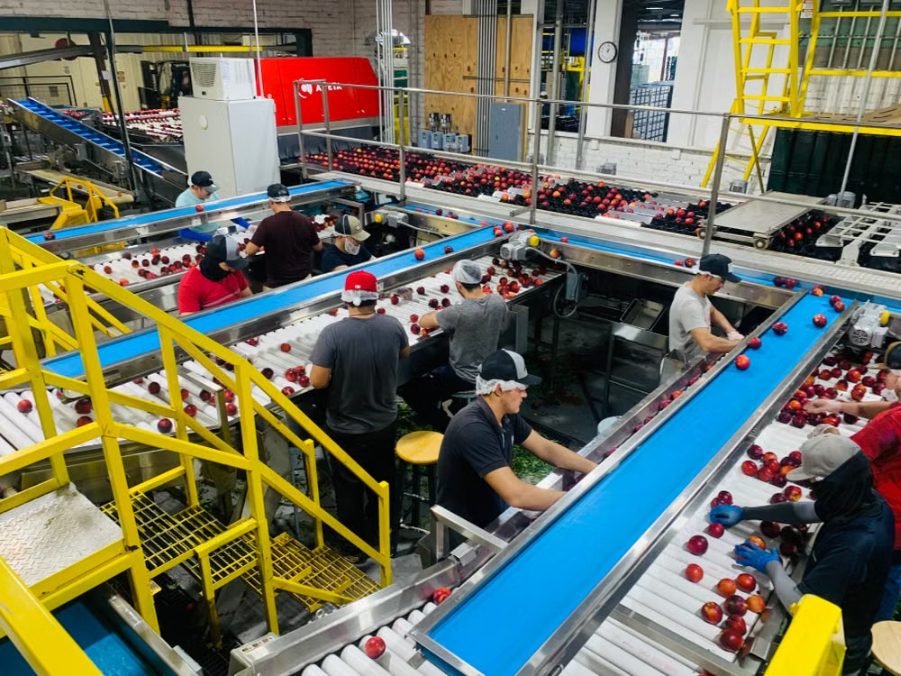
Imagine the following: you have your group of people carrying boxes by hand, with sore backs, slips, and minor injuries on a weekly basis. It is tiresome, costly, and a sort of bottleneck that silently depletes productivity.
Now imagine that same floor with a continuous moving automated belt transferring the product to where it is supposed to be without any trouble of strain, no stalling, no guessing.
This is what a belt conveyor system introduces into the picture, and this is why companies of all sizes that need to move products or materials are looking to conveyor systems to enhance efficiency, safety, and productivity. However, it is not a question of whether conveyors are helpful; it is rather a question of why they have become such a reliable, near universal-solution in any industry.
Here are 5 reasons that answer exactly that:
1. Reduce Labor Costs And Boost Efficiency
A belt conveyor system is a well-designed system that does heavy lifting, so your people do not need to. Instead of having workers carry, stack and move goods between stations, the system does this on a continuous basis, so that staff can be left to do other human judgment tasks, including:
- Quality checks
- Assembly
- Packaging
Recent studies on manufacturing processes indicate that physical process automation can significantly decrease the cycle time relative to manual coordination. On top of that, the conveyor provides consistent throughput throughout operating hours and doesn't require retraining when production volumes increase. The outcome is an operation that is more efficient and is able to process more throughput without extra burden on your workforce.
2. Improve Workplace Safety
Manual material handling is one of the most common sources of workplace injury, and it's a significant challenge. The U.S. Bureau of Labor Statistics states that about 2.5 million instances of injury and illness were reported by employers in the private industry in one particular year alone. A significant contributor to that number is overexertion due to lifting and repetitive movement.
Manual material handling activities have been identified as a key risk factor for musculoskeletal disorders in manufacturing and logistics. The belt performs the task without forcing employees to repeatedly bend, twist, or carry an awkward load. The benefits are rapidly apparent:
- Fewer missed workdays
- Lower workers' comp costs
- A safer floor in general
That is a good enough reason to make an investment.
3. Adapt To Changing Production Needs
No two production lines are the same, and that's where modular conveyor design comes in. In a small workshop or multi-line factory production, the system can be designed to meet various lengths, widths and layouts, without requiring a custom-built solution from scratch.
Such flexibility is more important than ever. As McKinsey's recent research on manufacturing footprints points out, simpler, modular supply chains are more flexible in meeting changing demands than tightly integrated systems. At the equipment level, a modular conveyor provides the same flexibility:
- Reprogram as layouts are reconfigured.
- When the volume increases, stretch it.
- Use it in other product lines.
This flexibility ensures you're able to adapt to your production needs over time and helps preserve your investment.
4. Handle Products Across Industries
From tiny electronic components to bulky automotive parts, belt conveyors aren't picky about what they move:
- Dual belt designs are used to fit products that have an irregular shape.
- The tandem configuration offers a secure hold on larger items.
- Cleanroom-certified belts safely transport sensitive pharmaceutical and medical products.
This versatility is why automotive, electronics, packaging, plastics, healthcare companies and more are all built on the same technology, just set up differently. Rather than search for industry-specific machinery, you find one flexible system that adapts to whatever you are producing; that's why the same technology is used successfully in so many different industries.
5. Deliver Long-Term ROI And Reliability
In addition to the operational benefits, belt conveyor systems also offer significant long-term cost savings. Several factors contribute to savings that may start to occur within a relatively short period, depending on the size and requirements of the operation:
- Lower labor overhead
- Fewer injuries
- Less downtime
- Steadier throughput
A good belt conveyor system is also engineered for reliable, long-term performance using robust parts and simple maintenance. Replacement parts can be serviced or replaced easily, and businesses enjoy reliable performance without having to undergo a complete system upgrade every few years.
Wrapping It Up
So, why are belt conveyor systems a smart choice for every business that depends on moving materials?
Because they help solve some of the biggest material-handling challenges — wasted labor, workplace injuries, inflexible layouts, and inefficient material flow. Though they're not flashy, they always deliver improved safety, efficiency and scalability that manual material handling can't even hope to keep up with.
One of the most practical things you can do for your operation is invest in a conveyor belt if you're still using a lot of hand movement to transport products.
