
 James
James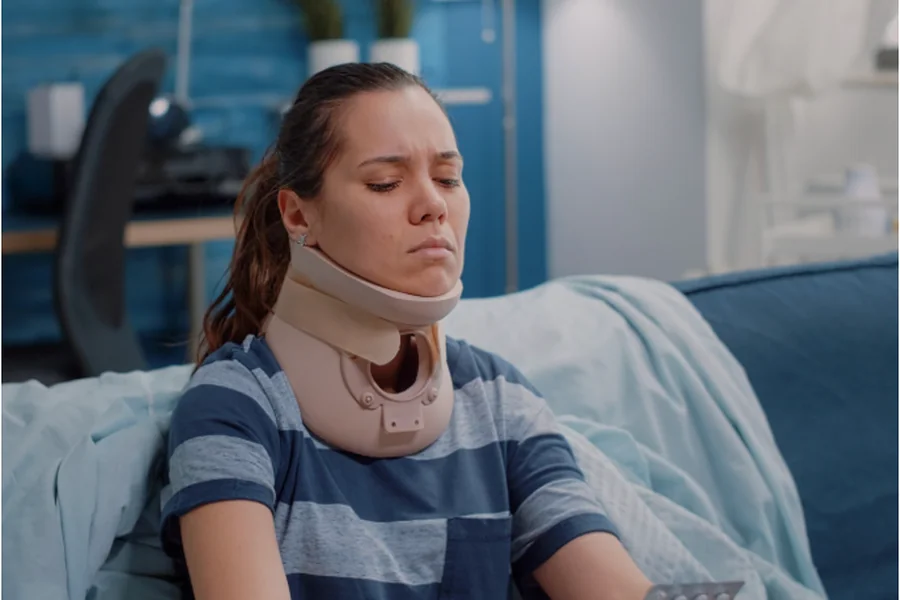
Whiplash is quite the troublesome issue. It is often confused with only a slight injury and unlike fractures, one does not usually appear on the X-rays and they are therefore not paid due attention. Not only has this been a misconception among the general population, it has been so among an insurance agent, the one who is using their claims department. But, through clinical practice, a more nuanced story emerges that argues in favour of a new take on claims and care.
A recent study out of the Journal of Orthopaedic & Sports Physical Therapy reported that approximately half of those with whiplash-associated disorders (WAD) are able to get over the condition completely. The half that does not is what? They have a number of residual symptoms. The ability of a person can be greatly affected by chronic neck pain, loss of mobility, headaches and functional restrictions.
perform and cope with life, occasionally days or even more after incident. And not to be forgotten–this protracted healing can even affect the course of an injury claim.
evaluated because the financial impact may extend beyond the initial medical bills. Sutliff and Stout’s Houston injury lawyers consider factors such as ongoing treatment, lost income, reduced earning capacity, and the effect of an injury on daily life when assessing damages after a serious collision.
How common is long-term whiplash,?
Widespread as many might think. A retrospective case study of 241 whiplash patients in one hospital center indicated that after six months, 14.1% of the patients continued having the symptoms after initial trauma. Other studies place the figure even greater: a popular estimate indicates that as many as 50 percent of patients report some level of chronic symptoms one year following injury and in a study that specifically tracks headache, it was established almost 40 percent of patients still complained of whiplash-related headache five years following the initial crash.
- How common is long-term whiplash,?
- Why does whiplash pain sometimes take days to show up?
- What does research say about the recovery window?
- Who is more likely to develop chronic symptoms?
- How is whiplash graded medically?
- Does early treatment change the outcome?
- Does whiplash affect more than just the neck?
- What does chronic whiplash cost, in real terms?
- Why does this research matter for a claim?
- Are certain people more vulnerable to whiplash injury in a crash?
- What should someone do in the days after a crash?
Why does whiplash pain sometimes take days to show up?
Whiplash refers to a strain of the soft tissue and ligaments along the neck that may not necessarily result into pain immediately. The process of inflammation is slow and cumulative over the course of the hours that follow an impact, hence the onset of stiffness, headache or limited range of motion is often 24-72 hours post- crash, or even later, than the site. This late onset has been well established in clinical literature, but is also among the most frequent reasons why insurance claims adjusters wring their hands to downplay a claim based on the idea that a delay between the crash and the initial report of pain indicates the crash did not cause the injury.
What does research say about the recovery window?
In cases where recovery occurs, it is normally during the first three months after an injury. A study which followed patients in 7.5 years concluded that symptom patterns largely level in the first 7.5 years with slight improvements thereafter. Interestingly, the same long-term study found that 29 of the patients had continuing pain whereas 33 had experienced an increase in the severity of symptoms between the two-year and 7.5-year marks. This refutes the popular device that the symptoms of whiplash reduce with time without additional medication to reduce the effects of the whiplash..
Who is more likely to develop chronic symptoms?
A few risk factors are repeatedly observed in studies. Poorer recovery outcomes are linked to high initial neck pain intensity, subsequent high disability right after the crash, and post-traumatic stress symptoms. Interestingly, a large Danish register-based study did reveal that prior closer attachment to the labor market, greater amounts of prior sick leave and unemployment also forecasted a more difficult line in recovery, indicating that general health and life conditions at the moment of injury make a difference, rather than the situation of the crash itself.
How is whiplash graded medically?
Clinicians typically apply the Quebec Task Force grading to categorize the whiplash-related disorders, along a scale that includes Grade 0 (absence of symptoms), to Grade 4 (fracture or dislocation). Grade 1 is thus the pain of the neck and no signs of the same visible on examination. With the progress to Grade 2, musculoskeletal manifestations, such as a decreased range of movement or soreness in certain spots, appear. Grade 3, in turn, brings about neurological symptoms such as weakness or poor reflexes. The true nightmare of many whiplash cases is Grade 1 and Grade 2 cases- It is a very real injury, which can be seen clinically and documented we would just kill to see broken or herniated on a regular X-ray. And guess what? This is the category which insurance adjusters are rather likely to dispute.
Does early treatment change the outcome?
Research increasingly points to early, active management as the better path compared to prolonged rest. Studies on recovery trajectories have found that patients who begin gentle mobilization and physical therapy soon after injury tend to fare better than those immobilized in a cervical collar for extended periods, a treatment approach that was common decades ago but has since fallen out of favor in clinical guidelines. This matters for claims as much as recovery: a documented, active treatment plan started promptly after an accident gives both the treating physician and, later, an insurance adjuster or court a clear record that the injury was taken seriously from the outset.
Does whiplash affect more than just the neck?
Absolutely. A large cohort study on 6,481 patients with whiplash showed that 66% of the patients complained of mid-spine (thoracic) pain after injury and more importantly, 23% of the patients were still complaining of the same one year after. Interestingly, recent studies–owing to enhanced MRI technology–are beginning to examine the changes in the cerebrospinal fluid flow and head blood flow patterns of persons with chronic whiplash. This could provide a biological basis for symptoms such as fatigue and cognitive fog, which have often been challenging to prove using traditional imaging methods.
What does chronic whiplash cost, in real terms?
Studies have estimated the national cost of chronic whiplash-associated disorder at about 3.9 billion in the United States alone with its medical care and lost work time. That number tells a combination of continuing treatment expenses, decreased earning potential and the extended downstream consequences of a condition that is often not taken seriously when initially diagnosed.
Why does this research matter for a claim?
Insurance claim examiners habitually rely on the lack of observable imaging in their argument that a whiplash injury is not severe and on the fact that it cannot be definitively verified when a medical exam is first sought. Clinical research is directly contrary to both assumptions, delayed onset is normal, and has a significant proportion of whiplash cases with real, measurable, long term impairment. Record keeping of early documentation of symptoms provides that research with a platform to draw on even when a claim is refuted at a later time.
Are certain people more vulnerable to whiplash injury in a crash?
The studies indicate that females complain of whiplash injuries more than males after similar crashes, and the researchers have explained this difference in relation to the average body size of the neck muscles and the geometry of the seats and headrest, which has traditionally been modelled and tested in correlation with the sizes of the male crash-test dummies. Even age contributes to this, as degenerative processes occurring in the cervical spine that grow more prevalent with age may make them more susceptible to damage even in low-speed collisions. All this does not imply that the younger or male victims of a crash are immune, low-speed whiplash injury has been recorded at collusion speeds slow which the argument does not rely on the individuals involved but it does indicate that the question of who is more likely to be seriously injured does not have any simple answer.
What should someone do in the days after a crash?
Clinical advice is quite active on this: seek a follow-up as soon as possible, though the symptoms may seem to be harmless at the onset, and follow-up treatment in the face of any changes within the few subsequent days instead of hoping that it will pass. With the frequency with which symptoms appear upon a delay, a recorded preliminary exam, even which reveals nothing of consequence, builds a time-stamped baseline which is important later, not only in determining how the injury was referred to (instead of just a few weeks later), but also in terms of how the injury is treated.
Whiplash is caught in an awkward nebul between the perception of it, and actual research. Lesseeing it as a minor, self-limiting injury, medically or legally, would be implicit with a long history of clinical science demonstrating that in a high proportion of patients, it is not minor.
