
 James
James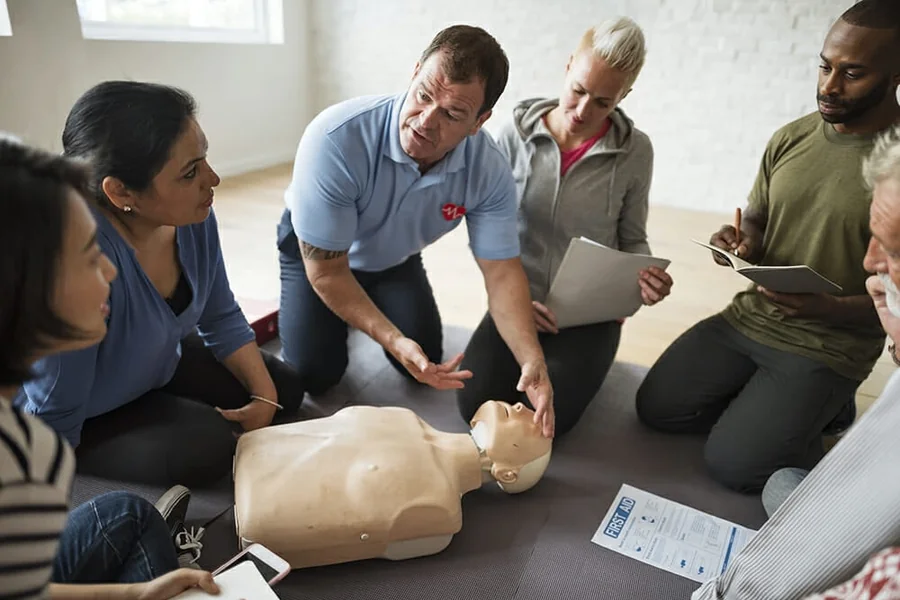
Here is one that most of us do not consider until it is too late: However, sudden cardiac arrest has very little notice. It could occur in the gym, a grocery store or even in your own kitchen. According to the American Heart Association, the likelihood of a survival of a person decreases by approximately 10 percent with every minute the CPR is not resorted to. It is that statistic alone that is making more and more residents of Long Beach are choosing to complete a Coast2Coast first aid course in Long Beach instead of hoping someone else will know what to do.
Why Does Bystander CPR Matter So Much?
According to the American Heart Association, more than 350,000 out-of-hospital cardiac arrests happen across the United States every year. Less than half of them receive CPR at the hands of a bystander, prior to the arrival of paramedics. The importance of that gap is that by performing compressions immediately one may increase the probability of survival by two or even three times.
Long Beach is an outspread city. Response times differ significantly between the port, freeways and residential areas that are only a few minutes away to the nearest hospital. It is that gap that can be bridged by a trained bystander before it kills.
Think about the numbers in a different manner. The general survival rates of out-of-hospital cardiac arrest in the U.S. are about 9 to 10 percent, as is stated in the CDC statistics. The only factors that have been shown to shift that number in your favor are immediate, effective bystander CPR.
What Happens in the First Few Minutes of Cardiac Arrest?
The brain begins to malfunction within seconds of the heart failure. Permanent damage may start as fast as four to six minutes without oxygen. The majority of ambulances are not able to come so quickly, and in the rush hour or in less central places.
That is why the Red Cross and American Heart Association teach the same thing; to the untrained bystanders; hands off CPR and to the anyone desiring one; full CPR plus the use of AED. It is not aimed at displacing paramedics. It is to give the other person waiting before you a few more minutes.
This is occasionally known as the chain of survival: the person notices there is an emergency, calls 911, begins compressions, has an AED in hand (when available) and transfers the person to advanced care. Break one chain a bit, and the entire chain is made weak.
How Does CPR and AED Training Actually Work?
The programs of this day are typically conducted in a blended format: You do the theory course online, at your own pace, and then show up in a classroom to train on training manikins and real AED units. This saves on classroom time without compromising the practical skills that really count in an emergency.
An average session includes the depth and rate of chest compression, rescue breathing, choking, and the safe use of an AED on an adult, child, or infant. The Red Cross or AHA certification has an average duration of two years, which is also important to consider when you need your job or license to have documentation on file.
Contemporary AEDs are non-medical user-friendly. It steps you through every step step by step and the device monitors the heart rhythm and only discharges a shock when necessary. The equipment is not the actual bottleneck since the technology has become this trustworthy. It is whether or not there are enough people around who know how to reach it and get going.
What Does California Workplace Law Say About Emergency Readiness?
Cal/OSHA Title 8 also mandates employers to make reasonable first aid response in instances where a workplace is not in close proximity to medical facilities. This is supported by federal OSHA regulation 29 CFR 1910.151 which mandates trained personnel and supplies in the work place where injuries may happen.
This is applicable in more work places than one would think. These may include warehouses, logistics activities around ports, gyms, restaurants and even office buildings based on the structure and access to help. It is not merely good practice to have some of your employees certified. It’s often a compliance requirement.
Employers who delay asking the question until after an incident to determine whether they were doing the right thing usually discover the answer to this question the hard way. Rapid in-house audit of certified persons, the location of supplies and the proximity to the nearest AED can save more than a headache.
Who Should Consider Getting Certified?
You don’t need to work in a high-risk job to benefit. Parents would like to be informed about what to do in case a child chokes. Family members taking care of elderly individuals would like to be aware of the symptoms of a heart attack as soon as possible. This material is known to gym-goers, coaches, and everybody who spends time around a group of people.
Unless you have been afraid of it because you thought it would be tricky, the blended online-plus-in-person format was designed to overcome that reluctance. The majority of individuals complete within one weekend.
This is especially true of new parents, who often undervalue the value of infant and child CPR training until they are faced with the need to utilize it. Cardiac events and choking do not have a convenient time.
What Should You Look For in a Training Provider?
Not every certification has equal importance. Find a provider sanctioned by the American Heart Association or even the Red Cross, not a generic online course that does not involve practice at all.
Enquire on the size of the classes, the amount of time used to actually work on the manikin, and the certification type that is accepted by employers and licensing boards in your field. A 2-hour video online is not equal to being guided and done by hand.
The gap is evident in a real crisis, when muscle memory counts more than anything that you read on screen.
If you are looking for CPR and first aid training near Harbor City, Pacific Coast Highway, or the Port of Los Angeles area, you may reach out to Coast2Coast First Aid & Safety in that area.
FAQS
Q: How long does a CPR and first aid certification last?
A: Most American Heart Association and Red Cross certifications are valid for two years, after which a renewal course is required to stay current.
Q: Do I need special equipment to practice for the class?
A: No. Training providers supply manikins, AED trainers, and all practice materials during the in-person session.
Q: Is online-only CPR certification enough for work requirements?
A: Usually not. Most employers and licensing boards require the hands-on skills portion in addition to online theory, since compressions and AED use need to be practiced physically.
Q: What’s the difference between hands-only CPR and full CPR training?
A: Hands-only CPR covers chest compressions for adults and is meant for untrained bystanders. Full certification adds rescue breathing, AED use, and pediatric and infant response.
Q: Are California employers legally required to have certified staff on-site?
A: It depends on the workplace and its distance from medical care. Cal/OSHA Title 8 and federal OSHA 29 CFR 1910.151 both require adequate first aid readiness in many settings
