
 James
James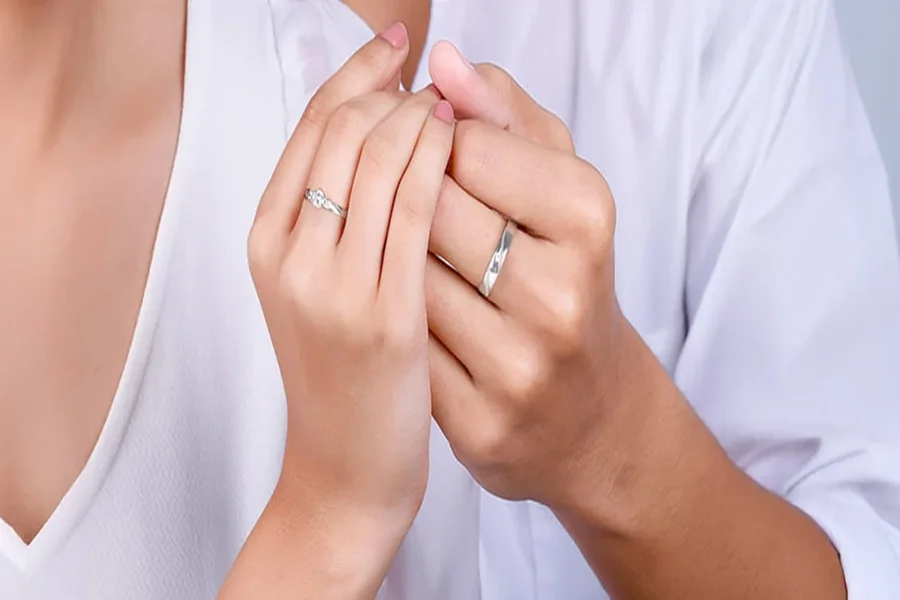
For some couples, a ring is more compelling when it carries the visual language of a place rather than the conventions of a jewelry counter. Mountains, forests, oceans, bark, stone, leaves, stars, and weathered textures can all become references for a piece that is meant to last for decades. That preference reflects a broader view of commitment in which shared experiences matter as much as formal symbolism. A pair may associate its relationship with long hikes, changing seasons, camping trips, coastal mornings, gardening, climbing, or simply a habit of spending time outdoors. Matching rings inspired by the natural world can turn those experiences into an object that feels personal without becoming overly literal. The strongest designs do not merely decorate a ring with a leaf or mountain; they translate the couple’s connection to nature into materials, forms, textures, and details that can withstand everyday life.
- Why Nature Has Become a Meaningful Language for Couples
- Turning Landscapes Into Ring Design
- Choosing Materials That Support the Story
- Matching Without Wearing Identical Rings
- Using Botanical Motifs Without Making Them Feel Ornamental
- Making Personalization More Meaningful Than a Date
- Balancing Outdoor Lifestyles With Everyday Durability
- Letting the Rings Represent a Shared Way of Life
Why Nature Has Become a Meaningful Language for Couples
Nature gives couples an unusually flexible vocabulary for expressing commitment because its symbols rarely carry just one fixed meaning. Mountains can suggest endurance, perspective, or a shared appetite for exploration, while forests may evoke growth, shelter, renewal, and the passage of time. Water can represent movement and adaptability, and stone can suggest permanence without requiring an ornate design. These associations become more personal when they are connected to places the couple has actually experienced together. A trail visited every year, a coastline associated with an important trip, or a garden built over time can hold more emotional weight than a conventional decorative motif. When those memories influence a ring, the jewelry can become a compact record of a shared life rather than simply an accessory chosen for a ceremony.
That flexibility is particularly valuable for partners whose personal styles are not identical. Matching rings do not need to have the same width, metal, finish, or degree of decoration in order to feel connected. One person may prefer a substantial band with a rugged texture, while the other may be more comfortable with a narrower ring carrying a restrained botanical detail. A shared mountain contour, wood-like surface, mineral tone, or engraved pattern can provide enough visual continuity to unite the two pieces. This approach allows each partner to retain an individual sense of style while still participating in a common design language. It also changes the shopping process, because couples can begin by identifying the natural references that matter to them and then examine how those ideas are translated into wearable forms.
Looking at specialist jewelry collections can be useful once couples reach this stage because they show how symbolism, material, proportion, and everyday wear come together in practice. As preferences move beyond strictly traditional styles, more relationship-focused jewelers are treating commitment rings as a form of individual expression rather than a fixed template. One example is Foreverings, a jeweler specializing in distinctive relationship rings, whose wedding bands designed around lasting commitment, explore different textures, finishes, widths, and materials. Its matching nature-inspired ring sets take a similar approach, using shared design details to create a sense of continuity without requiring the rings to be identical. This allows each set to feel cohesive while still accommodating differences in scale, finish, and personal style.
Turning Landscapes Into Ring Design
Landscape-inspired rings work best when designers reduce a place to its most recognizable forms. Mountain ranges, for example, can be rendered as engraved silhouettes, irregular ridgelines, layered metal patterns, or angular changes in surface texture. A couple does not need a detailed miniature of a specific peak for the reference to feel meaningful. In many cases, abstraction makes the design more wearable because the ring still looks sophisticated when viewed without context. A subtle ridge can evoke years of hiking without turning the band into a novelty object. That distinction matters because the ring must function simultaneously as a personal symbol and an item of jewelry worn in professional, social, and formal settings.
Coastal imagery lends itself to a different design vocabulary. Flowing lines can resemble waves, tidal patterns, dunes, river channels, or the changing edge of water against land. Matte and polished surfaces can be combined to suggest the contrast between wet stone and dry sand. Blue, gray, black, or iridescent inlays may reinforce the reference, although color is not required for the idea to work. Couples who associate their relationship with sailing, surfing, lakes, fishing, or seaside travel can therefore choose a design that communicates that history without using obvious maritime symbols. The more restrained the execution, the more likely the ring is to remain visually relevant as tastes change.
Desert and woodland landscapes offer still more possibilities. A desert-inspired band might use warm metal tones, mineral colors, layered striations, or patterns reminiscent of canyon walls and sediment. Forest designs may borrow from branches, bark, pine needles, ferns, moss, or the uneven geometry of tree rings. These motifs can be engraved deeply for a rugged appearance or reduced to fine lines for a quieter effect. Couples should think about which quality of a landscape matters most before choosing a pattern. The emotional connection may be to the color, the texture, the scale, or a memory associated with a particular place. Identifying that quality helps prevent a design from becoming a collection of nature symbols with no clear relationship to the couple’s actual experience.
Choosing Materials That Support the Story
Material selection can carry as much meaning as surface decoration. Gold remains popular because of its long association with wedding jewelry, its workability, and the range of tones available through different alloys. Yellow gold can bring warmth to botanical and earth-inspired designs, while white gold can produce a cooler visual effect suited to stone, snow, water, or minimalist landscapes. Rose gold offers another direction, particularly for couples drawn to warm mineral and sunset colors. Platinum provides a naturally pale appearance and substantial feel, although its price and wear characteristics differ from those of gold. The choice should begin with comfort, budget, maintenance expectations, and lifestyle rather than with symbolism alone.
Contemporary rings also make frequent use of alternative materials, particularly in styles that draw on rugged or outdoor aesthetics. Titanium is valued for its low weight and modern appearance, while tungsten carbide is known for substantial heft and high scratch resistance. Ceramic can create deep, consistent color, and some ring designs incorporate materials such as wood or mineral inlays for visual contrast. Each choice involves trade-offs, however, especially regarding resizing, repair, impact resistance, and long-term refinishing. A material that sounds appropriately adventurous may not be the most practical option for a person’s occupation or daily habits. Couples should therefore evaluate the engineering of a ring with the same seriousness they give its appearance.
Natural or nature-associated inlays require particularly careful consideration because their character comes partly from variation. Wood can display grain, color shifts, knots, and tonal differences that make one ring unlike another. Stone and mineral components can also vary in pattern and saturation, which may appeal to buyers who do not expect exact visual uniformity. That uniqueness is an advantage when a couple wants rings that are related but not mechanically identical. At the same time, inlays may require more attention than a simple solid-metal band depending on how they are constructed and sealed. Buyers should ask how the material is protected, whether the ring can be refinished, and what happens if an inlay is damaged. The most convincing nature-inspired ring is one whose construction supports the realities of long-term use.
Matching Without Wearing Identical Rings
Matching sets are often more successful when the concept of matching is interpreted broadly. Two people rarely have identical hands, professions, wardrobes, or preferences, so insisting on the same width and profile can create unnecessary compromise. A more adaptable approach is to select one or two shared features and allow the rest of each design to differ. Both rings might use the same mountain engraving but different metals, for example. They might share an inlay while using different widths and finishes. This approach makes the relationship between the pieces visible without asking either partner to wear something that feels like a costume.
Proportion is particularly important when adapting one theme to different rings. A pattern that reads clearly across an eight-millimeter band may look crowded when compressed into four millimeters. Designers may need to simplify an engraving, reduce the number of elements, or change the scale of a texture to preserve the same visual idea. That is not a weakness in the set. It can instead make the pair more interesting because the rings function as variations on a shared theme. One might show a complete mountain skyline while the other carries only a single ridge or contour line. The connection remains clear even though the execution changes.
Finish can provide another understated way to coordinate a pair. Brushed, hammered, satin, polished, sandblasted, or textured surfaces create distinctive reactions to light, and they can dramatically alter the mood of the same material. One partner might prefer a polished exterior while the other chooses a matte surface, yet both rings could share the same engraved interior or edge detail. Couples can also reverse elements so that one ring becomes a visual counterpart to the other. A dark center with bright edges on one band might be paired with a bright center and dark edges on the second. This kind of design thinking produces matching rings that reward close inspection rather than announcing their relationship immediately.
Using Botanical Motifs Without Making Them Feel Ornamental
Botanical imagery has a long history in decorative arts, but its use in relationship jewelry does not have to feel elaborate or romantic in a conventional sense. Leaves, vines, branches, flowers, grasses, and ferns can be reduced to geometric lines that work on both delicate and substantial bands. A single stem engraved around part of a ring can look more contemporary than a dense floral pattern. Bark-like textures can introduce plant references without any recognizable illustration at all. Even the branching structure of roots can become a subtle abstract motif. The key is deciding whether the couple wants nature to be immediately visible or privately legible.
Different plants can also carry associations that give the design greater personal specificity. A couple might choose a species native to the place where they met or married, or a tree connected to a family property. Others may select a plant because they garden together or because a particular flower appears repeatedly in important memories. The symbolism does not have to come from traditional reference books. Personal meaning is often stronger precisely because it is not standardized. A fern can represent a shared trail, an olive branch can recall a destination, and a pine pattern can point to winters spent in the mountains. That level of specificity distinguishes a meaningful motif from decoration selected only because it looks attractive.
Couples should also consider how botanical patterns will age visually as the ring accumulates wear. Fine engraving may become softer over time, while deep carved elements can retain their presence for longer but may collect dirt more easily. Raised details can create striking contrast but may be less practical for people who work frequently with their hands or wear gloves. Recessed patterns often provide a compromise because they preserve the motif without adding protruding surfaces. It is worth looking at close photographs and asking about engraving depth before buying. A nature-inspired motif should be designed for decades of contact, not merely for the first set of product photographs.
Making Personalization More Meaningful Than a Date
Engraving remains one of the easiest ways to make a ring private, but couples connected to nature have options beyond names and wedding dates. Geographic coordinates can mark a trail, summit, beach, campsite, garden, or other location central to the relationship. A short phrase associated with travel or the outdoors can work equally well if it carries meaning for both partners. Some couples choose elevations, compass directions, or small symbols rather than conventional inscriptions. Others engrave complementary words inside the two rings so that the message is complete only when the pieces are considered together. These choices create intimacy without changing the external appearance of the bands.
Personalization can also be built into the visible design rather than added after the ring is finished. A mountain line might reproduce the actual profile of a location important to the couple. An engraved branch could represent a species found near their home, while a wave pattern could reference a coastline connected to an engagement or ceremony. Even color can function as personalization when an inlay or stone recalls a particular landscape. These details require more thought than selecting a generic icon, but that effort is part of their value. The design becomes difficult to separate from the couple’s own history.
Restraint remains important because a ring offers limited visual space. Trying to include a mountain, tree, ocean, constellation, coordinates, initials, and anniversary date on one band can weaken rather than strengthen the story. Couples benefit from identifying the one memory or idea they most want the ring to carry. Additional information can often be moved to an interior engraving where it does not compete with the exterior design. A strong ring usually has a clear hierarchy between its primary motif and supporting details. That hierarchy is one reason understated designs can feel more personal than heavily customized ones. They leave room for the wearer to supply the meaning rather than requiring the object to display every part of the story.
Balancing Outdoor Lifestyles With Everyday Durability
A love of the outdoors does not necessarily mean a person should wear a ring during every outdoor activity. Rock climbing, weight training, mechanical work, and other activities involving pressure or gripping can create risks for both the ring and the finger. Water activities present a different concern because cold temperatures can temporarily reduce finger size and increase the chance of losing a ring. Sand, soil, sunscreen, and trail grime can also collect in detailed textures or settings. Couples who spend substantial time outdoors should plan when rings will be worn rather than assuming permanent wear is always desirable. A small secure case or designated storage routine can become as important as the ring itself.
Ring profile and stone placement also affect practicality. Low-profile designs are generally less likely to catch on clothing, gloves, packs, or equipment than high-set stones and pronounced surface features. Smooth interior profiles may feel more comfortable during extended wear, particularly when hands swell in heat or during physical activity. Wider rings can feel tighter than narrow ones at the same nominal size, which makes proper fitting important. Couples choosing sets online should pay attention to sizing guidance and differences among band widths. A ring that symbolizes an active life should not become an obstacle to it.
Maintenance expectations should be discussed before purchase rather than discovered after several years. Polished metals acquire scratches, matte finishes can become smoother, and dark coatings may show wear differently depending on the construction. Engraved recesses can require occasional cleaning, particularly when a design contains complex organic textures. Rings with multiple materials may need different care from simple metal bands. None of these realities necessarily make one design better than another. They simply determine whether a ring’s aging process will feel acceptable to the wearer. Some couples appreciate a surface that records years of use, while others prefer a ring that can be periodically restored to a cleaner appearance.
Letting the Rings Represent a Shared Way of Life
The most memorable matching rings usually communicate something broader than aesthetic preference. For nature-oriented couples, the underlying idea may be independence, stewardship, exploration, simplicity, or a willingness to accept change. Natural landscapes are rarely static, which makes them an unusually fitting reference for long relationships. Rivers alter their courses, trees add growth rings, stone is reshaped by weather, and coastlines move over time. A ring can quietly borrow from that language without turning nature into a sentimental metaphor. The goal is to choose imagery that already belongs to the couple’s life rather than imposing symbolism that sounds appealing only in theory.
This perspective can also influence how couples shop. Instead of beginning with the question of which ring looks most impressive, they can begin with memories, environments, and routines. They might identify the place where they spend their happiest weekends, the terrain they return to each year, or the natural feature that appears repeatedly in their shared history. From there, choices about material, color, engraving, width, and texture become easier to organize. The design process becomes less about following a jewelry category and more about translating a relationship into physical form. That shift can help couples avoid buying rings that are fashionable now but emotionally disconnected from their lives.
Ultimately, a matching set does not need to prove that two people are alike. Its stronger purpose may be to show how two distinct people participate in the same story. Rings influenced by mountains, forests, oceans, plants, stone, or other natural forms are particularly suited to that idea because variation is part of their visual language. Two bands can differ in scale, finish, metal, or detail while remaining unmistakably related. Over time, scratches and changes in surface appearance may make them even less identical than they were on the day they were exchanged. That need not undermine the concept of a matching set. For partners who feel connected to the natural world, a pair of rings can be most meaningful when it reflects both continuity and change.
