
 James
James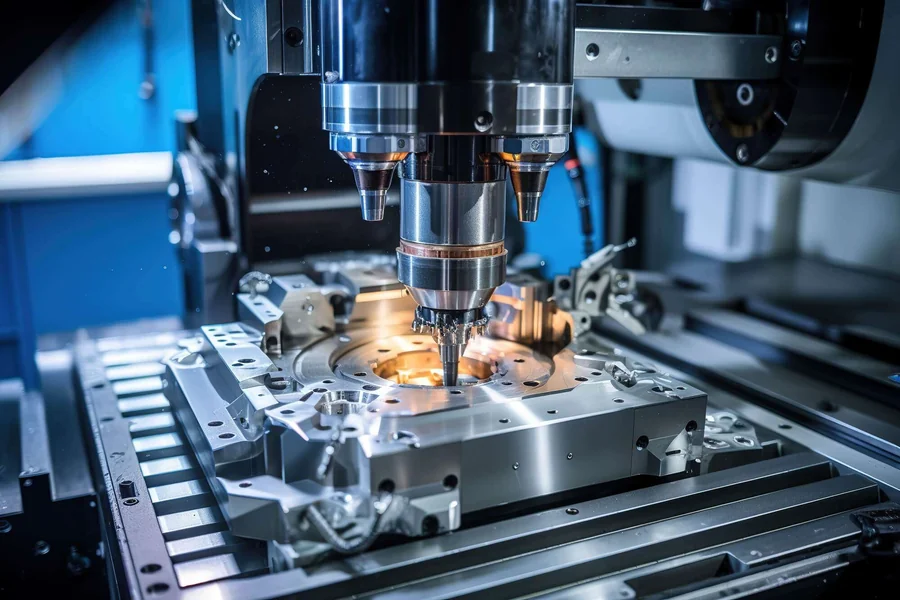
- Introduction
- Understanding Precision CNC Machining
- Improving Accuracy in Hardware Production
- Helping develop new products
- Starts using various materials
- Minimising waste and production mistakes
- Maintaining Consistent Quality
- Helping Businesses Control Costs
- The Vision for Precision CNC Machining
- Conclusion
Introduction
The electrical and mechanical parts of any machine, electronic or otherwise, should be securely fastened and function correctly to the best of their ability. Just one mistake can doom the end product. It is the precision CNC machining service that these manufacturers need. It uses machines that process with high precision using computer control. AIXI Hardware is one of the manufacturing businesses that require accurate manufacturing and high-quality parts.
Understanding Precision CNC Machining
The shape and size of each component are specified using computer programs by the engineers. This will be the route followed by the CNC machine in order to produce the product. This is more controlled than manual processes. Likewise, it assists manufacturers in manufacturing the same part more than once. This is useful if there are several identical parts in a product.
Improving Accuracy in Hardware Production
In modern hardware, accuracy is important. Most of the stuff has to be very small and fit together without leaving much leeway for errors. This helps manufacturers to monitor measurements closely and to cut paths. This leads to components meeting design requirements. These features are readily available to be fabricated on a CNC and are fairly repeatable. This accuracy can minimize problems with fit when parts are delivered packaged together. This can help to reduce the amount of time that is wasted in production.
Helping develop new products
As a hardware designer, it would be great to create more compact, lighter, and better-performing hardware. This freedom promotes more precision in the design on a plane or surface, and that is where CNC machining comes in. It enables product teams to test a new solution without compromising the quality of their product.
Starts using various materials
These are all hardware products, and they can be seen as being made up of separate subsystems each of which needs different types of materials. There are some that need lightweight materials. Others need high tensile strength, heat resistance, and wear protection. CNC machining is able to process a variety of materials. Brass is okay for some fittings and parts for electricity. Engineering plastics are also suitable for insulation and/or low-weight products.
Minimising waste and production mistakes
Waste of materials can lead to increased manufacturing costs. The programming is also extremely precise, helping manufacturers to plan their raw-material use. Today’s CNC machines can produce parts many times more accurately. For good results, correct machine setup, tool condition, and quality checks should be taken into consideration. Regular inspection continues to be crucial. These are actions that will be taken to fix defects before parts are assembled.
Maintaining Consistent Quality
At all times, the functionality of a well-designed say-by-can hardware product should be as expected. This means that the parts must be consistent and there must be a visible quality control system. CNC machinery helps to get the same milling and cutting operations done for multiple production runs. The manufacturer shall keep records of the results of the inspections. The records in turn will assist teams to pinpoint issues and enhance future production. Strong quality control assures confidence and long-term product reliability.
Helping Businesses Control Costs
But some precision machining companies will need to purchase equipment, software, and workers to become precision machining companies. It can be a savings tool in the long run, however. Minimizing rejects and costly rework by correcting production. Therefore, an expensive, complex part is produced as compared to a simple part. The cost is justified, however, by way of its performance.
The Vision for Precision CNC Machining
Automation can also enable longer runs (higher volume) of products with less direct supervision. In the meantime, engineering is always crucial. Engineers should be able to design programs, choose tools, analyze parts, and solve technical problems. With the continuing need of industries for small, complicated hardware, precision machining will remain a possibility.
Conclusion
Precision CNC machining helps to reduce waste, promote speedy prototype production, and manage overall production costs. While there are some parts that can be made using electronic housings and industrial components, CNC machining would provide a lot more options for the engineers to make that vision a reality. As technology advances, there will always be a need for good construction of hardware. As a major asset, precision materials machining will continue to provide companies with strong, reliable, and technologically advanced products.
