
 James
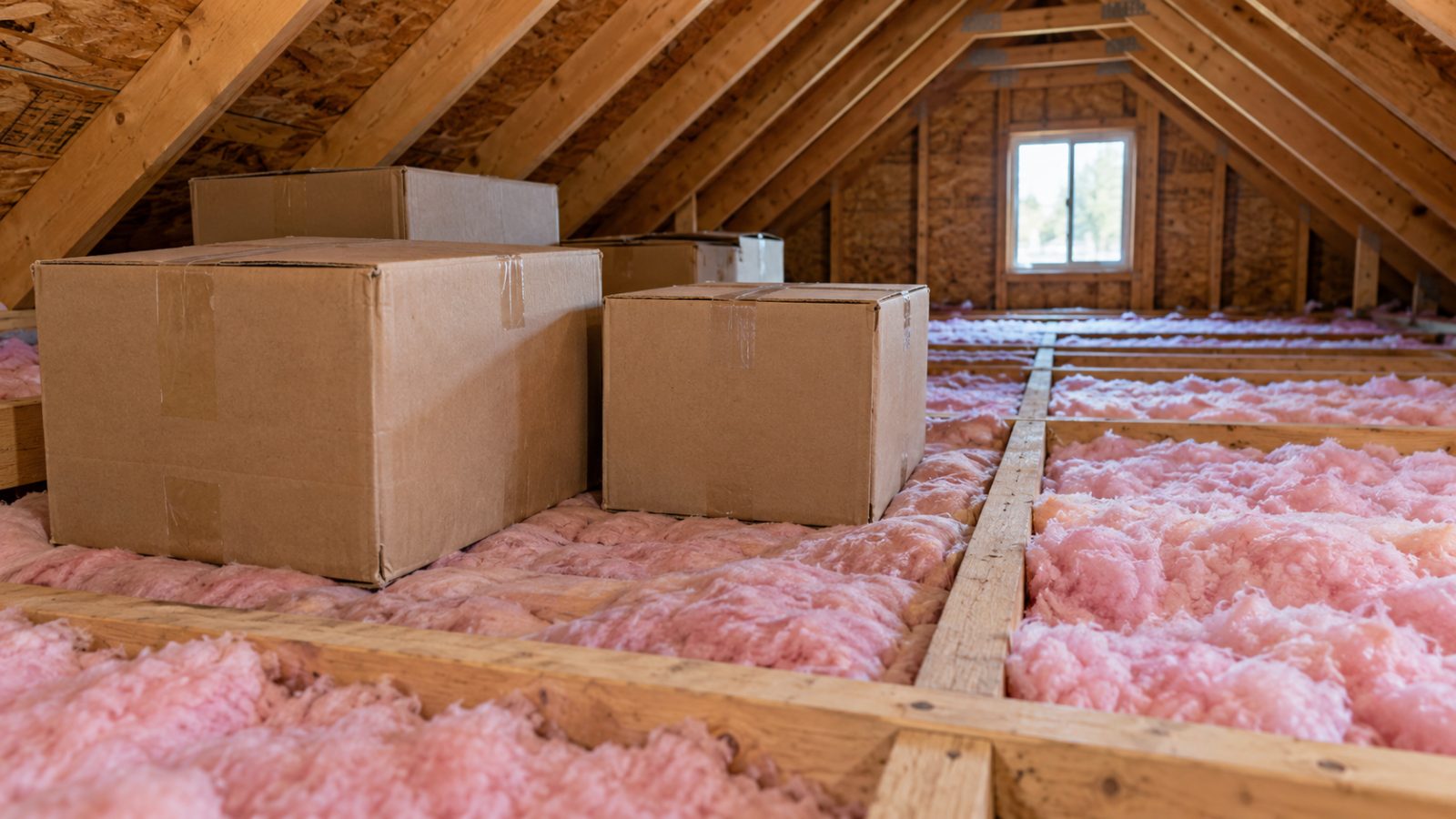
Attic storage can damage insulation when boxes, boards, or footsteps flatten it or push it aside. Putting holiday decorations upstairs might seem harmless, especially when the closets are full. The trouble starts when storage takes over space that insulation needs to do its job.
You do not necessarily have to empty the attic. However, checking where items sit and how you reach them can help you avoid hidden damage and keep the rooms below more comfortable.
Why Flattened Insulation Is a Problem
Fiberglass and loose-fill insulation need adequate thickness to resist heat flow. Setting heavy containers directly on these materials compresses them, reducing the protection they provide across that section of ceiling.
Walking through uncovered insulation can also leave thin spots and gaps. Even if most of the attic looks covered, disturbed areas can weaken the overall performance of your attic insulation.
Moving boxes elsewhere does not guarantee that crushed material will recover its original depth. A contractor can check whether it needs redistribution, replacement, or additional material.
Why Plywood Alone Is Not Enough
Installing plywood over the ceiling joists forms a nice surface but can compress insulation under the ceiling. This is more probable if the insulation is applied over the tops of the joists.
If the platform is designed correctly, there is sufficient area designed to accommodate the desired depth of insulation beneath the platform. ENERGY STAR suggests elevating attic platforms so that the total insulation space insulators under the upward sides does not get compressed.
The framing should have to be strong enough to support the platform and contents. Don't expect every attic to be ready for use if you intend to store items in it; have its capacity determined prior to installing flooring or heavy items.
Keep Ventilation Routes Clear
For a vented attic, outside air must have a straight flow path in the ventilation system. Unwanted boxes that are pushed towards the edges of the roof can block-off the soffit vent, and can break the baffle that maintains the airflow.
Water issues may be more difficult to control because of restricted ventilation. Store items and furniture away from these holes and consider not pushing insulation into the eaves when shuffling containers around the house.
Do not block access to equipment, such as exhaust ducts. Never can the need to store a product deter a person from checking a connection or finding a leak.
Does Foam Make Storage Easier?
Some homeowners wonder whether spray foam insulation would solve their storage problems. Its suitability depends on the attic design and where the home's insulated boundary belongs.
Changing insulation materials does not establish that the floor can carry storage loads. Ask a qualified contractor to assess insulation, moisture control, and ventilation together before changing the existing arrangement.
Check Your Storage Area Regularly
Look around before removing seasonal objects each time you remove them. A check will detect issues that boxes have been concealing for months.
Watch for:
Sculptured areas or exposed areas of the ceiling.
Rusty containers, tainted wood or odors.
Objects that are lying on vents, ducts, or wires.
Insulation that was taken away in the common way of access.
Store items on approved storage surfaces, Walk On A Walkway. If the moisture is present, determine the source of it, don't cover it or add to the insulating then. If inspecting containers is hard, lessen the amount of containers so you can clearly see the surface surrounding the containers.
