
 James
James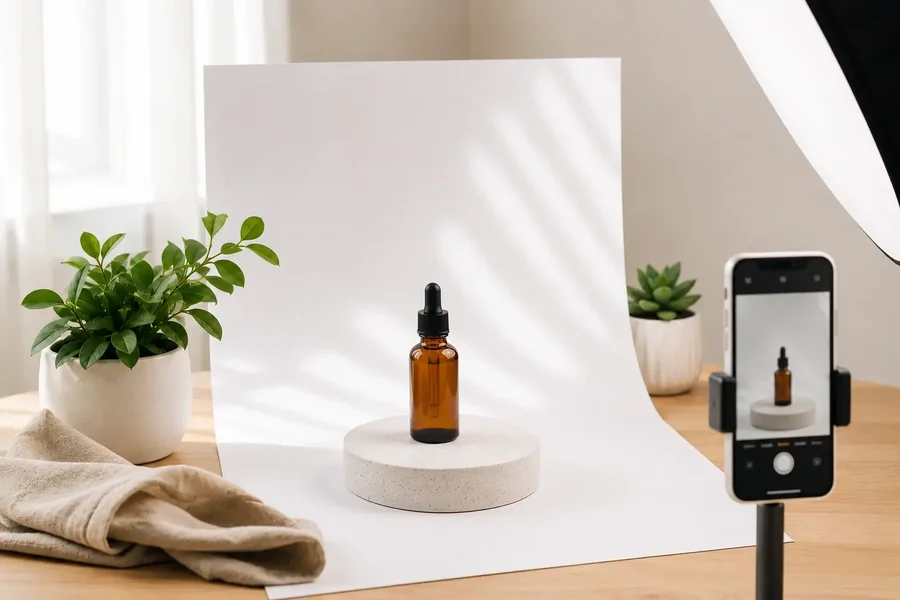
An educated guess is that for any small fashion brand, the quiet killer of sales is not the clothes, but something else. It is the photos. If a beautifully made dress is shot under a kitchen ceiling light, it looks cheap and when it’s in the online world, it looks cheap is the same as it is cheap. Your photos are doing all the work of communicating quality, drape, colour, and desirability; and the shoppers have no way to touch the fabric or try it on for size. When they’re done correctly, a little brand makes a big impact. Make a mistake, even terrific products get stuck in the cart.
The challenge is that getting them right has always been at a professional studio shoot, and a shoot in a studio is like pulling teeth. The great thing about this, and the reasons for this guide, is that in 2026 you don’t even need a studio, a professional model, or a four-figure bill to make an image that appears to be from a top-tier storefront. It requires to know what studio quality is and then to select the smartest means to reproduce it.
- Why Product Photography Makes or Breaks a Small Fashion Brand
- The Real Cost of a Traditional Studio Shoot
- What “Studio-Quality” Actually Means, So You Can Peplicate It
- Option One: The Scrappy DIY Home Studio
- Option two: AI Fashion Photography
- How to Get Consistent, On-Brand Results From AI
- A Realistic Workflow, From Flat-Lay to Storefront
- When You Should Still Hire a Photographer
- Putting It All Together
- About the author (E-E-A-T — replace with real byline)
Why Product Photography Makes or Breaks a Small Fashion Brand
It’s a good idea to have a clear sense of what you’re at stake before spending any money. When a customer comes to your product page, before reading one word of your numerous words of description, your image is the first thing they process. Estimates the perceived price, perceived quality, and level of trust within a millisecond.
The bar is higher for fashion than for most. They’re purchasing how it will appear on them, so they’re checking fit, texture and color saturation. Blurry, poorly lit photos – or photos that are taken inconsistently – do not only look unprofessional, they raise questions, which are the enemy of a sale. Consistency matters too. If all of the products are lit, framed and have the same background in your store, the entire shop takes a more serious and thoughtful appearance. A jumbled collection of knitted together snaps, some bright, some dim, some zoomed, some far, is an amateur and customers are reluctant to input their card details with brands that are amateur.
Also keep in mind that these images need to be effective in all situations. The image on the product page turns into a thumbnail for a Google Shopping search result, the title for an Instagram feed, the frame for a promotional ad, and the preview in a customer’s shared link. A weak image does not fail in one location, it fails in all locations on which you depend finding it. Good and consistent photography is thus not a vanity project. It is the sole most active asset a small fashion brand has.
The Real Cost of a Traditional Studio Shoot
See how important alternatives are, because if you look at what it costs a small brand to shoot a conventional shoot, you can see the importance. A professional photographer normally rates anywhere from a couple hundred dollars to a couple of thousand dollars a day, based on the city where you live and their reputation. That’s followed by a few hundred dollars for studio rentals. In the same way, if you want a model, you will need to pay in the thousands in agency fees, and likely have to hire a stylist and a makeup artist as well – at an extra charge.
Next, the expenses that no one tells you about. There is the time that you spend planning, sourcing, and coordinating. Travel and set-up. There is post-production, as raw shots are not store-ready, and the retoucher’s fee per image can quickly mount up when it comes to a full catalogue! Then there is the reshoot issue – the model was not there, the lighting was incorrect, a garment was wrinkled and you have to pay for reshoots. If you are a brand that is releasing 30 products then your time can be consumed by a single professional shoot before you have sold anything. It’s a young label that doesn’t often have a ton of capital lying around.
What “Studio-Quality” Actually Means, So You Can Peplicate It
The good news is that there is no secret to “studio quality” and you don’t have to be a room with a thousand bucks a month in rent. It’s a small, easily memorized checklist and when you can identify its components, you can duplicate using any method that fits your budget.
The first aspect of studio quality is lighting: it needs to be clean and even, and show true colour, with soft, controlled shadows and not those created by the phone flashlight. Secondly, a seamless white or branded tone background to focus on the garment as the star of the show. Third: Sharp focus and accurate colour—the blue you took is the blue you get. Fourth, deliberate styling – steamed fabric, thought out folds, uniform models/ghost mannequin forms. And fifth, consistency throughout the range, all images in one collection. Once you nail those 5, it doesn’t matter if it was from a camera in a rented out studio, or from somewhere much cheaper. Only the outcome is judged by the eye.
Option One: The Scrappy DIY Home Studio
The lowest-cost traditional route is to build a tiny studio at home, and for some brands it is enough. A large window on an overcast day gives beautiful, soft, free light. A cheap paper sweep or a roll of seamless backdrop paper gives you a clean background. A modern phone camera in good light is genuinely capable, especially on a tripod so your framing stays identical shot to shot. Add a five-in-one reflector to bounce light into shadows, a steamer to kill creases, and free editing apps to straighten, crop, and colour-correct.
The DIY route can absolutely produce respectable flat-lay and mannequin images. Its limits, though, show up quickly. You are tied to the weather and the hours of daylight. On-model photography still requires a model, a helper, and hours of shooting and editing. And keeping thirty products perfectly consistent, week after week as new stock arrives, becomes a genuine grind. DIY solves the background and lighting problem; it does not solve the model, the time, or the scale problem.
Option two: AI Fashion Photography
This is where the last two years have quietly rewritten the rules. Instead of renting a room and booking a model, you can now generate polished, on-model, catalogue-ready images from the product photos you already have. A tool like ImagineArt’s AI Fashion Studio lets you upload a flat garment shot or a basic mannequin image and produce professional visuals with clean lighting, consistent backgrounds, and realistic models, at a fraction of the cost and in minutes rather than weeks. What makes a purpose-built AI Fashion Studio different from a generic image generator is that it is trained for garments specifically: it understands how fabric falls, how a neckline should sit, and how to keep a product recognizable itself rather than inventing details that were never on the real item.
It’s easy to see why there is a need for a small label when you itemize. No studio can be rented, no model can be booked, no reshoot tax if something goes wrong, you just regenerate. You can display the same dress to various model types to provide accurate results of your actual customer base, change backgrounds for seasonal promotions and ensure full consistency of the products displayed with the use of the same options throughout your entire product range. The most expensive, most logistically tricky aspect of running a fashion brand? An AI fashion photography generator is there to help you in no time. If you’re all about the hands-on foundation, it’s more than just a convenience, it’s the difference between launching this month vs. next quarter.
How to Get Consistent, On-Brand Results From AI
AI photography is powerful, but like any tool it rewards good input. The brands getting magazine-grade output are not lucky; they are deliberate. Start with the cleanest source image you can: a well-lit, wrinkle-free flat lay or ghost-mannequin shot, shot straight-on, gives the model far more accurate material to work from than a crumpled phone snap.
Be specific about the look you want. Describe the model, the setting, the mood, the lighting, and the framing the way you would brief a photographer. If your brand has a signature aesthetic, feed reference images so the output matches your existing feed rather than drifting into a generic style. A dedicated AI Fashion Studio makes this far easier than a raw generator, because brand settings, model choices, and backgrounds can be saved and reused rather than rebuilt from scratch every session. Lock your background, aspect ratio, and lighting so every product matches, and generate a few variations of each item, then choose the strongest. Treat the first results as a starting point, refine your brief, and regenerate. Within an afternoon you will have a repeatable recipe that produces on-brand images for every new drop, which is exactly the consistency that makes a small store look established.
A Realistic Workflow, From Flat-Lay to Storefront
Let’s take an example of a founder who has a phone and a rail of stock. Have a window and make sure framing is consistent for each garment, taking a picture flat or on a plain mannequin. Copy those images into your tool and create on-model or clean-background images; give your tool your brand’s look. Perform a review, select the best frame per product and do any minor tidying. Export, name file sensibly for SEO, upload. If your AI Fashion Studio does have saved presets, create one for each collection, so the same look will automatically appear on every subsequent drop without having to do anything.
What used to be a multi-day production with a cast of freelancers becomes a solo afternoon. Just as importantly, when you add ten new products next month, you repeat the exact same recipe and they slot seamlessly into your existing catalogue. That repeatability is the quiet superpower: your store keeps growing without your photography costs growing with it.
When You Should Still Hire a Photographer
Honesty matters, because no responsible guide should pretend one method wins every time. There are moments when a human photographer is still worth every penny. Hero campaign imagery, the emotional flagship shots that define a brand launch or a lookbook cover, often benefit from real art direction, a specific location, and the unrepeatable magic of a great model in great light. Certain complex materials, sheer fabrics, high-shine metallics, intricate embellishment, can also be genuinely tricky and reward an expert eye.
The smart move for most small brands is a blend. Use AI and DIY methods to handle the heavy volume of everyday catalogue images cheaply and consistently, and save your limited budget for the occasional showcase shoot that sets the tone for everything else. You get scale where you need scale and craft where craft actually shows.
Putting It All Together
The old rule was simple and unfair: if you wanted images that looked expensive, you had to spend money you probably did not have. A physical studio, a booked model, and a retoucher’s invoice stood between small brands and the polished look their products deserved. That rule is gone. Studio quality was never about the room; it was about clean light, honest colour, a clean background, thoughtful styling, and consistency, and every one of those is now reachable without a physical studio at all.
For a small fashion brand watching every pound, the practical path is clear. Learn the five markers of studio quality so you can judge your own images with a professional eye. Build a scrappy home setup for the shots you enjoy doing yourself. And lean on an AI fashion photography generator such as ImagineArt to produce the bulk of your catalogue quickly, consistently, and affordably, reserving human photographers for the rare hero moments that truly warrant them. A good AI Fashion Studio removes the studio from the equation without removing an ounce of the polish, which is precisely what a lean, ambitious label needs. Do that, and your storefront will look like it was built by a brand ten times your size, which, in the eyes of the shopper deciding whether to trust you, is exactly the point. Your products deserve images that finally do them justice. The clothes were always good enough. Now the photos finally are too.
About the author (E-E-A-T — replace with real byline)
[Author Name] is a [fashion ecommerce founder / product photographer] who has [shot and sold X products / built a DTC label] and writes about visual merchandising for small brands. Add a one-line credential, a headshot, and links to real work or store to strengthen author trust signals.
