
 James
James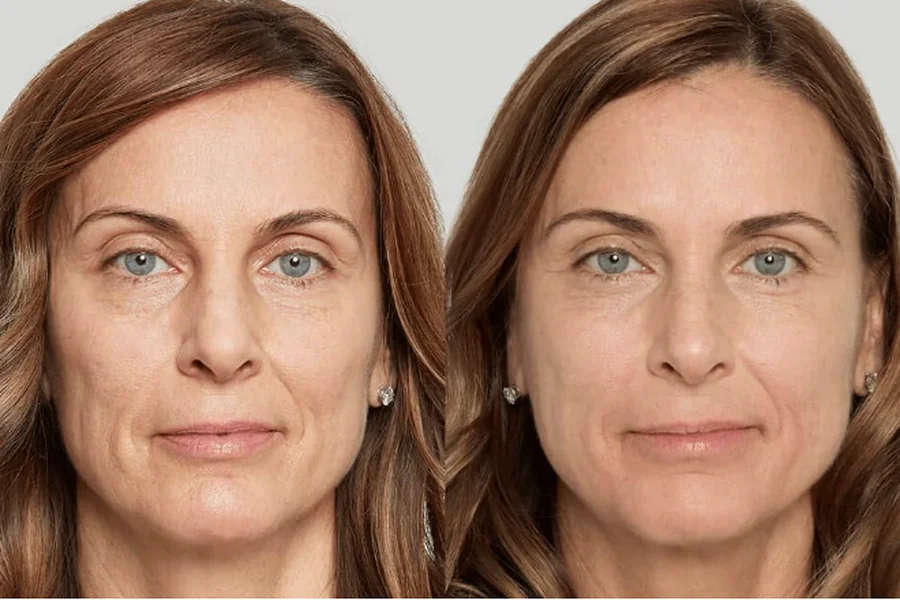
Poly-L-lactic acid has a habit of disappointing practitioners who expect an immediate correction and then overcorrecting the patients who would have done well with a slower plan.
That, in my view, is the central clinical mistake with PLLA.
The product gets grouped with injectable fillers because it arrives in a vial, gets reconstituted, and is delivered with a needle or cannula. But the clinical logic is different. With hyaluronic acid, the practitioner often assesses a structural deficit, places a product in a defined plane, and sees at least part of the result immediately. PLLA asks for patience. The visible change develops through a tissue response, which means the treatment plan matters as much as the injection event itself.
For skin laxity, this distinction becomes especially important. A patient with diffuse thinning in the midface, preauricular area, temples, or lower face does not always need more focal projection. Sometimes the tissue needs a broader biological nudge toward improved dermal support. PLLA fits that conversation well, provided the practitioner is clear about what it is expected to do and, equally important, what it is not expected to do.
- The first decision is patient selection, not product selection
- Reconstitution is part of the protocol
- Think in sessions, not syringes
- Injection depth is where the biological concept meets anatomy
- The aftercare conversation should begin before treatment
- Where protocols tend to go wrong
- Treating the result as immediate
- Using the same plan for every face
- Treating severe ptosis with a biostimulator alone
- Ignoring prior treatments
- Confusing more product with a better response
- Safety means knowing when not to proceed
- Progressive restoration works best when the clinician leaves room to change course
The first decision is patient selection, not product selection
I used to think most problems with biostimulatory treatment came down to injection technique. Technique matters, obviously. But poor patient selection creates problems long before the needle enters the skin.
PLLA tends to suit patients with gradual volume loss, declining dermal quality, and diffuse laxity. The person who says, “My face looks less supported than it did five years ago, but I don’t want to look filled,” often deserves a closer look.
The patient asking for an immediate correction before a wedding next month is a different situation.
A useful framework looks like this:
| Clinical presentation | PLLA suitability | Practical concern |
| Diffuse facial volume loss with mild to moderate laxity | Strong candidate | Results require staged treatment |
| Thin, crepey tissue with broader loss of support | Often suitable | Product distribution and session spacing matter |
| Deep, isolated fold requiring immediate correction | Limited as a standalone treatment | Another modality may be more appropriate |
| Significant skin redundancy or advanced ptosis | Often insufficient alone | Expectations need resetting early |
| Active inflammation or infection near the treatment area | Defer treatment | Address the underlying issue first |
| Patient seeking rapid, event-driven correction | Poor fit for PLLA alone | The biological timeline does not match the request |
This is where experienced consultation earns its place. “Skin laxity” is not one diagnosis. Some patients have dermal thinning. Others have fat compartment deflation, ligamentous laxity, skeletal changes, or a combination of all four. If the underlying issue is mainly redundant skin, injecting more biostimulatory material into the face does not solve the mechanical problem.
And if the patient needs an instant result, pretending otherwise is a setup for dissatisfaction.
Reconstitution is part of the protocol
PLLA protocols vary because practitioners are treating different areas, tissue qualities, and patient phenotypes. That is one reason copying a single dilution ratio from another clinic without understanding the reasoning behind it is risky.
The reconstitution process influences suspension characteristics, ease of distribution, and the practical feel of the injection. Many established protocols use adequate hydration time and a dilution strategy intended to support broad dispersion rather than concentrated deposition. The exact approach should follow the manufacturer’s instructions for the approved product and local regulatory requirements.
What matters clinically is the reason behind the preparation.
For diffuse tissue restoration, the goal is generally distribution. You are trying to avoid treating PLLA like a focal bolus product. Concentrated placement in the wrong plane raises the stakes, particularly in areas where tissue is thin or where repeated product accumulation is possible.
This is also the point where procurement matters. For licensed professionals evaluating injectable product sources, the issue is larger than price. Product authenticity, storage, traceability, and access to accurate product information affect the entire treatment chain. Clinics looking to compare available professional options and product information can review resources from purchase authentic Sculptra products, including information on the relevant injectable product category and clinical considerations. The purchasing decision should still sit within a broader protocol that accounts for approved indications, product-specific instructions, and the patient’s treatment plan rather than treating one vial as a universal answer to laxity.
That last part gets overlooked. A good protocol is not a shopping list.
Think in sessions, not syringes
PLLA treatment becomes easier to explain when the practitioner stops discussing a single appointment as the treatment.
It is one stage.
The patient receives a biological stimulus, then time passes, tissue response develops, and the practitioner reassesses. The next session is not automatically a repeat of the first. The face has changed, even if the change is subtle.
For this reason, I prefer a staged planning mindset:
- Establish the treatment objective before the first session.
- Assess baseline facial volume, skin thickness, asymmetry, and areas of laxity.
- Use a documented photographic protocol.
- Select the treatment area and plane based on anatomy rather than a fixed facial map.
- Schedule reassessment after allowing sufficient time for tissue response.
- Adjust later sessions according to the patient’s evolving result.
The temptation is to prescribe a standard number of vials or appointments before touching the patient’s face. Standardized starting frameworks have value, but rigid dosing has limits. A lean patient with widespread temporal and midface deflation presents a different tissue environment from a patient with a heavier face and localized lower facial laxity.
Body habitus matters. Age matters. Prior filler matters. Previous energy-based treatment matters. So does the patient’s tolerance for a gradual result.
A protocol should be reproducible without becoming mechanical.
Injection depth is where the biological concept meets anatomy
One of the commonly confused distinctions with PLLA is the difference between stimulating tissue and depositing volume.
Those processes overlap in the patient’s eventual appearance, but they are not the same clinical act.
PLLA is generally placed in appropriate deep tissue planes according to the treatment area and approved product guidance. The objective is broad, controlled distribution through the selected plane. Superficial placement, poor distribution, or excessive concentration introduces avoidable risk.
This sounds obvious on paper. In practice, the challenge appears when practitioners use a familiar injection pattern simply because it works with another injectable.
It might not translate.
Facial anatomy changes from one region to another, and so does tissue thickness. A technique appropriate for a broader, well-supported area does not automatically belong in a thin or highly mobile zone. Cannula versus needle selection also deserves a reasoned decision based on anatomy, practitioner training, and the planned pattern of distribution. Neither instrument turns poor anatomical judgment into good treatment.
Aspiration practices, entry points, injection speed, and product delivery methods should follow current professional training and product-specific guidance. There is no universal technique that removes risk.
The aftercare conversation should begin before treatment
Patients often hear about post-treatment massage as an afterthought. I think that is backwards.
If home care is part of the product-specific protocol, the patient should understand it before agreeing to treatment. They need to know what is expected of them, how long the routine lasts, and why adherence matters. Giving instructions while the patient is leaving the clinic is not the same as making sure they understand the commitment.
Written instructions help. So does demonstrating the technique when appropriate.
But aftercare should never become a substitute for sound injection technique. A poorly selected patient or poorly distributed treatment does not become safe because the patient follows a massage schedule perfectly.
The practitioner should also explain what normal early effects look like. Swelling can create a temporary impression of correction. Bruising, tenderness, and short-term changes in appearance need to be separated from the longer biological result. Patients who leave expecting the day-one appearance to remain unchanged are likely to misread the treatment from the start.
Where protocols tend to go wrong
Most protocol errors fall into a few recognizable patterns.
Treating the result as immediate
PLLA rewards delayed assessment. Repeated treatment before the prior response is adequately understood risks overtreatment. The patient’s mirror is not always a reliable measurement tool during the early phase, particularly when swelling and expectation are involved.
Using the same plan for every face
Age is not a dosing formula. Neither is body weight. Two 52-year-old patients can have entirely different patterns of volume loss and laxity.
Treating severe ptosis with a biostimulator alone
There is a point where tissue restoration is not enough. Patients with significant skin redundancy or advanced descent need an honest discussion about the limits of injectable treatment. Layering PLLA into an unsuitable case can create more fullness without producing the lift the patient expected.
Ignoring prior treatments
Existing fillers, threads, surgery, and energy-based procedures change the clinical context. A face should not be treated as if its history begins at the consultation.
Confusing more product with a better response
This is the one I would emphasize most. Progressive restoration depends on the relationship between patient selection, product preparation, placement, session timing, and biological response. More material does not automatically improve any of those variables.
Safety means knowing when not to proceed
PLLA should sit inside a proper medical assessment, not a cosmetic checklist.
Contraindications and precautions depend on the specific product’s labeling, regulatory status, and the patient’s medical history. Active infection or inflammation in the treatment area should prompt deferral. Known hypersensitivity to relevant product components, a history that raises concern for abnormal scarring or granulomatous reactions, and certain systemic or local conditions all require careful assessment.
Pregnancy and breastfeeding are also situations where practitioners should rely on the product’s current instructions and applicable clinical guidance rather than making assumptions.
Then there is the more ordinary issue of expectation management.
A patient who wants a sharply projected cheek, a defined chin, and immediate correction of a deep fold is asking for a different treatment outcome from someone seeking gradual improvement in tissue quality and diffuse support. PLLA has a place in aesthetic practice, but it does not need to be forced into every indication.
Progressive restoration works best when the clinician leaves room to change course
The strongest PLLA protocols are structured, but they are not rigid.
Start with a diagnosis of the tissue problem. Select patients whose goals match the biological timeline. Prepare and administer the product according to its approved instructions and appropriate training. Document the baseline. Reassess before repeating. Then change the plan if the tissue response tells you the original plan was too aggressive, too conservative, or pointed at the wrong problem.
That is less glamorous than a fixed vial formula. It is also closer to how good aesthetic medicine tends to work.
The goal with PLLA is not to make every patient look corrected on the day of treatment. For the right patient, the more interesting outcome is subtler. Months later, the face looks better supported, and the change does not read like a single procedure.
Getting there usually depends less on doing more and more on knowing when the tissue has had enough time to respond.
