
 James
James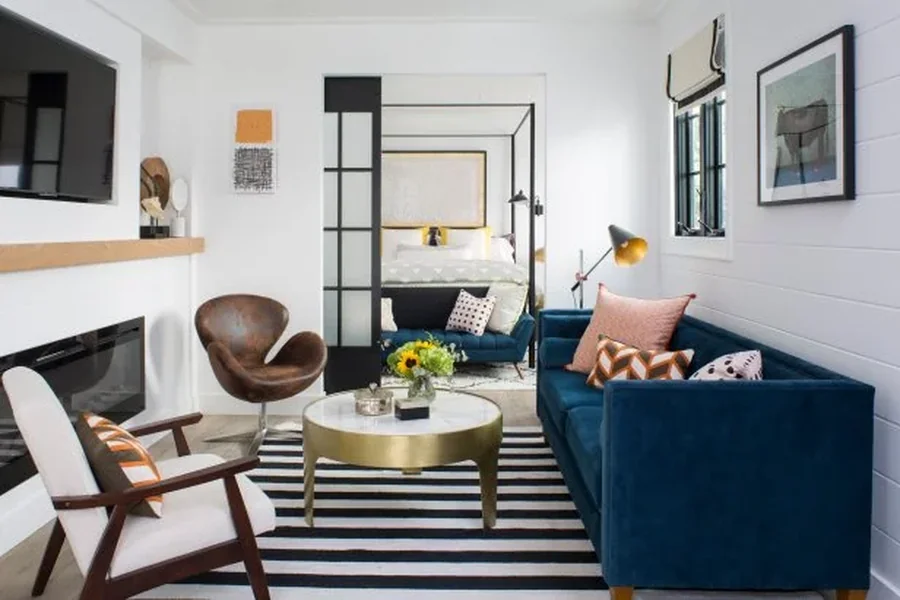
Deliberation is key, to decorating a small space. With a layout, practical storage, layered lighting and a few well‑chosen home decor accents, even a small space can feel calm, useful and welcoming. The goal is not to strip a space of personality in pursuit of empty space. In this way clever use of nice designs will help make any small space cozy.
- Why Small-Space Design Works Differently
- Start With the Room Layout
- Choose Furniture That Earns Its Place
- Use Vertical Storage
- Layer the Light
- Build a Flexible Lighting Plan
- Add Warmth With Texture
- Create Simple Zones
- A Studio Apartment Example
- Avoid Common Small-Room Mistakes
- A Simple Weekend Refresh Plan
- Final Thoughts
Why Small-Space Design Works Differently
If you want to arrange a small room you need to think about it carefully. The way things are placed decides where furniture can go and what it can do. Moving furniture around can bring good results.
A room that has the items looks nice.. A room packed too full makes life harder. For example a small living room might have an armchair that takes up too much space. Replacing it with a smaller one can create room to move.
Start With the Room Layout
Accurately measure the size of things before you go shopping or move something into a space. You need to know the measurements of all the walls, where the doors and windowsre how much room different cabinets and appliances take up. Making a sketch can help you avoid expensive mistakes that might look good on a website but don’t fit in a real room.
Create a route that you can walk through the room.
Begin with the item, which could be a bed, a sofa, a dining table or a desk.
Make sure there is space around doors, places to sit and areas where you keep things.
Always put the things you use the most in places that’re easy to reach.
Place the furniture around something that draws attention. Like a window, a fireplace or a TV wall.
Don’t believe that everything has to be next to a wall. If you push the sofa a little forward you can make room for a shelf, behind it.
Choose Furniture That Earns Its Place
In a small place, furniture must have at least two functions. For example, a storage ottoman serves as a seat and a footrest as well or some feature furniture that can store things in a bench with built-in storage compartments.
Regarding furniture scale, it is always better to choose one good-sized sofa than many small chairs. A properly sized couch will be much more advantageous in a small room than many small chairs located around the place. Recent recommendations about furniture size say do not make the room look less balanced.
Choose furniture that has open legs to keep the floor area feeling more open while using closed storage units in places where clutter tends to pile up.
This way you can use console tables, wall shelves and a cabinet, with doors to improve the rooms usefulness without taking up space.
Use Vertical Storage
The walls are often the most neglected area of a small home.I see that tall bookcases, shelves that sit above the desk hooks that line the entry and any other cabinets that make use of the available vertical space keep regular items off the floor. I recommend that heavy objects be placed on shelves while upper shelves should be reserved for lighter items that are used rarely.
I find that open shelving works best for items that are displayed in small numbers, such as books, plants and decorations. Closed cabinets, baskets and locked boxes help store cords, documents and extra bed linens quickly. The use of closed cabinets, baskets and locked boxes can add visual clutter to the room.
Layer the Light
I believe a single fixture can light an area. It does not support all activities or moods. The best lighting design uses layers: lighting, accent lighting and task lighting. To understand what each bulb is, think of them as lighting, task lighting or accent lighting.
Build a Flexible Lighting Plan
Ambient light contributes to the lightness of a room. This can be done using ceiling lighting, wall lights or lamps. Task light is focused light which aids tasks. Configure a reading lamp close to a chair to use, add a Desk lamp, or install under cab lighting in a workspace. Use accent light to highlight features. Use a light source to accentuate art, plant life, shelves or an architectural detail. For spaces, table lamps and sconces are perfectly acceptable options that will not occupy the floor space. There are days they attach to a wall mounted power supply, which is handy. Flexible wattage bulbs allow you to adjust the lighting’s atmosphere. In the evening, you can change the light source from bright/illuminating to soft/warm. This allows the room to be more flexible and comfortable.
Add Warmth With Texture
All small room color contrasts need is a little bit of interest. Appropriate textures can help create dimension and interest. Remember linen sheets, natural wood, ceramics and small decorative pieces of metal or glass, think of woven basket, a wool or cotton rug. These materials give the room a sense of life without over filling the room. Use between one to two materials to create a unity of tone and calmness.
Start with a light wall/soft beige hue. Next add elements in locations that need some warmth and comfort. Consider a rug to give the seating area a clear demarcation. Provide the structure of a space. Sent to a couch or in the middle of a room, pillows can look inviting and welcoming. Ensure the layout is open and allows all accessories to be prominent and visible. Assign a specific purpose for each item and you’ll have a well-balanced and cozy room.
Create Simple Zones
Sleeping, working, eating and relaxing happen all in the same space, then it’s important to maintain the organization in the area visual. A rug will clearly define the seating space. The workspace may be separated from the relaxation area by a narrow shelf. An exact lamp can illuminate the area where reading takes place, letting people know where to look to get some reading.
A Studio Apartment Example
Put the bed against the quietest wall, use a small table near the kitchen for meals and table work, and place a sofa for a sitting area. Each area does not need a divider. Furniture placement, lighting, and a change in texture can be enough to establish its purpose.
Avoid Common Small-Room Mistakes
Before purchasing furniture it is important to perform measurements of room and access points; otherwise, furniture doesn’t fit.
Blocking windows with many blocks prevents natural light.
– Filling every surface, with decorative objects creates a cluttered look.
Single overhead lights make room rectangular.
The longer you wait to organize until clutter accumulates, the more deferral you get.
The multiple random colors and finishes do not blend well with the style.
Limited space available between furniture makes it seem like a maze.
A Simple Weekend Refresh Plan
Friday evening: Clear off anything that’s not “home” in the room.
Saturday morning: Measure prior to attempting a setup.
Saturday afternoon: Place in baskets, hangers, shelves or covers.
Saturday evening, set up the lamps. Install streetlights.
Monday: Finalize the changes, and decorate the space.
Make a change at a time. This will not only save you cash but really offer you a better understanding of which alterations will truly enhance the area.
Final Thoughts
Even though it is a home it must feel warm and nice. You have to make sure it has all the things it requires. The way people move around the house should be correct and useful furniture should be used. When everything works well a tiny space can turn into one of the friendly places in the house.
