
 James
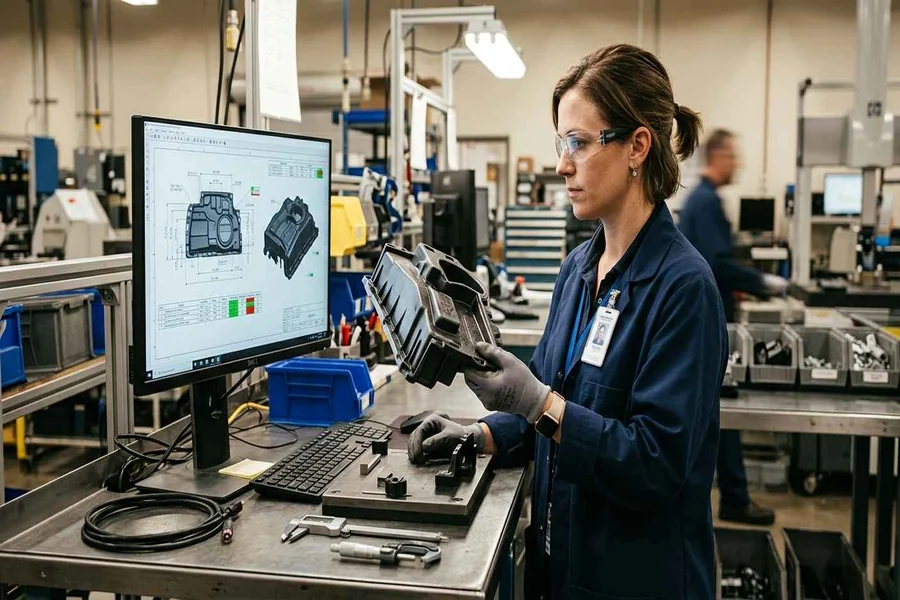
Micro-voids are tiny pockets of gas or shrinkage inside a cured part. They may not be visible on the surface, yet they can reduce strength, change dimensions and cause failures in the field. For custom molded components, where each part may be valuable, preventing them matters far more than finding them later.
What Causes Micro-Voids
Most micro-voids trace back to one of four sources: dissolved air in the raw materials, moisture-driven carbon dioxide, air trapped during the pour, or shrinkage as the part cures and cools. A void near a thick section often suggests shrinkage, while scattered small bubbles usually point to gas.
Prepare the Material Properly
Degas components under vacuum before they are mixed, and keep them dry. Verify moisture levels in the polyol on a routine schedule, and protect open containers from humid air. Material that has been sitting for days in a loosely covered vessel is a common hidden cause of recurring voids.
Pour for Air Release
Fill the mold in a way that pushes air ahead of the material instead of folding it in. Start at the lowest point, keep the flow smooth and avoid high-velocity streams. Provide vents at the highest points of the cavity. For complex shapes, tilting the mold or filling in stages can help trapped air escape.
- Pre-heat molds evenly to reduce viscosity at the surface.
- Use vacuum or pressure assist for dense or intricate parts.
- Match gel time to the size of the part so bubbles can rise before cure.
- Apply consistent mold release to avoid surface pitting.
Manage Shrinkage in Thick Sections
For heavy parts, the exotherm can build heat in the center, and uneven cooling pulls the material and creates internal voids. Slower reacting systems, staged curing and controlled cooling ramps help. Adjusting part design with slightly more uniform wall thickness often solves the problem more cheaply than any process change.
Inspect and Close the Loop
Sectioning a sample part, or using ultrasonic or X-ray inspection on critical components, shows where voids form. Feed those findings back to the process. If voids always cluster near the same feature, change the vent or gate location. Reliable polyurethane casting depends on this loop between inspection and process adjustment, not on a single perfect setting.
Equipment Matters
Stable mixing ratios, steady temperatures and effective degassing are much easier with equipment that was built for the job. Manufacturers of process equipment can help match a system to your materials and part geometries, so the process itself is designed to prevent voids rather than merely detect them.
Having the right equipment plays an important role in achieving quality results, improving efficiency, and maintaining safety. Whether working in a professional environment, managing a project, or completing everyday tasks, suitable tools can make a significant difference. Reliable equipment helps reduce mistakes, save time, and ensure consistent performance. Choosing the right tools also prevents unnecessary delays and minimizes maintenance costs over time. However, purchasing equipment should involve more than simply comparing prices. Factors such as durability, functionality, ease of use, and long-term reliability deserve careful consideration. Regular maintenance is equally important because well-maintained equipment performs better and lasts longer. Ultimately, investing in appropriate equipment supports productivity, improves overall outcomes, and creates a smoother, more dependable working experience.
