
 James
James
A crypto slot is an online slot offered with cryptocurrency funding. The word “slot” describes the game, while “crypto” identifies the payment category. Reels, symbols, and rules explain how the game works. The funding description explains which assets can support play. The term becomes clearer when game and payment descriptions are separated.
The payment vocabulary has its own distinctions. Kraken’s May 2025 explanation of cryptocurrency transactions separates the wallet used to access funds from the blockchain on which holdings are recorded. The cryptocurrency is the asset being transferred. A wallet, an asset, and a network therefore have different roles, even when their names appear together in a payment description.
Reel Format and Payment Asset
Three-reel and five-reel slots sit within the same crypto category at mBit Casino. Those numbers describe the reel layout, which organizes the symbols in the game. The count refers to reels, not individual visible symbols. The collection at https://www.mbitcasino.io/collections/slots brings these formats together under cryptocurrency funding. Its format labels describe the playing area, while the crypto label describes how balances are funded.
Reels also differ from paylines. In a conventional reel layout, each reel forms a column of symbols. A payline is a path through symbol positions that the game uses to recognize qualifying combinations. Paylines can run straight across a row or follow another defined route through the symbol positions. The number of reels and the number of paylines consequently describe different features. A slot’s paytable supplies the particular symbol combinations and payout conditions that apply within its layout.
The difference is also reflected in who supplies the information. Game developers create the titles, including their graphics and rules, while the casino service provides account funding and payment arrangements. A slot description therefore brings together details about the game and the service hosting it. The developer’s game instructions explain the title; the service’s payment details explain which assets and networks it supports. Neither set of information can stand in for the other.
The Asset, the Network, and the Wallet
“Bitcoin slots” is a more specific payment label than “crypto slots” because Bitcoin names a particular cryptocurrency. The broader term leaves the accepted assets to the service’s payment information. Neither label specifies the layout or rules of an individual game, and neither provides a complete set of payment instructions.
Bitcoin also shows why a name needs context: it identifies both a cryptocurrency and its associated network. The currency is what a transfer moves; the network is the system that records the transfer. Naming an asset and naming its network answers two separate questions, even when the names are closely related.
A wallet provides access to cryptocurrency holdings recorded on the blockchain. It manages the information used to authorize outgoing transactions. During a transfer, the network updates its record of holdings associated with the addresses involved. The wallet supplies the controls used to request that transfer; the blockchain records it. Digital coins are not stored inside the wallet as files that travel to another device.
Payment Currency and Received Currency
The currency a customer uses to pay with and the currency a business receives can also differ. Stripe documented that distinction in its June 12, 2025 announcement for Shopify merchants. The company outlined an upcoming arrangement in which shoppers would pay with USDC, a dollar-backed stablecoin, on Base using a crypto wallet. USDC identified the payment asset, while Base identified the network.
Merchants would, by default, receive their preferred local currency in their bank accounts. Alternatively, they would have the option to transfer the funds as USDC to an external wallet. The announcement therefore described separate arrangements for customer payment and merchant receipt, within that particular retail service.
The default plan paired a cryptocurrency payment with a local-currency bank receipt. The alternative retained USDC for the merchant’s external-wallet transfer. Calling both arrangements “crypto payments” describes the customer’s side, while the additional receipt information explains what the merchant would obtain.
In the retail announcement, “dollar-backed” described USDC itself. The merchant’s “local currency” described the money reaching a bank account. The dollar reference attached to the stablecoin therefore served a different purpose from the currency of receipt.
Reading the Amounts and Rules
Currency denomination means the unit in which an amount is expressed. It answers a different question from the payment method. A statement about funding identifies the asset used to supply value; a denomination identifies how an amount is written. A complete description needs the currency attached to the relevant amount, whether that amount concerns payment, receipt, or play.
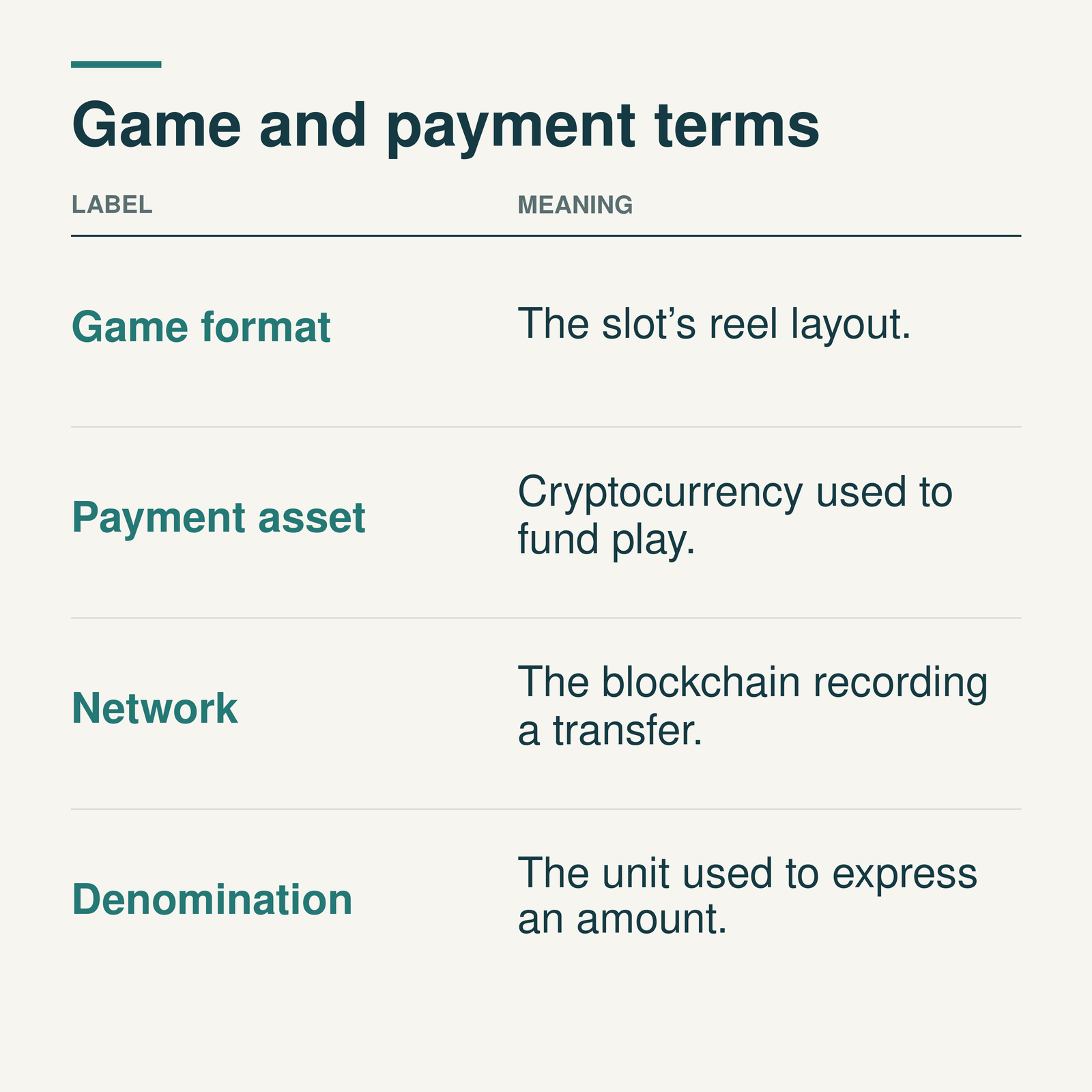
This is also why a funding label alone cannot establish the currency shown inside a slot. The game’s displayed unit and the service’s payment details supply their own information. Describing a collection as crypto-funded establishes its funding category without specifying how every balance or game amount is displayed.
The paytable then connects amounts with the game’s rules. Reading it involves identifying the symbols, the combination required, and the payout associated with that combination. These details belong to the individual game. The reel layout provides the structure in which symbols appear, while the paytable explains the significance of their arrangement.
Those conditions and amounts need to be read together. A currency label gives an amount its unit, but the game’s rules establish what that amount refers to. The relevant distinction is between the conditions recognized by the slot, the unit expressing its amounts, and the asset used to fund the account supporting play.
