
 James
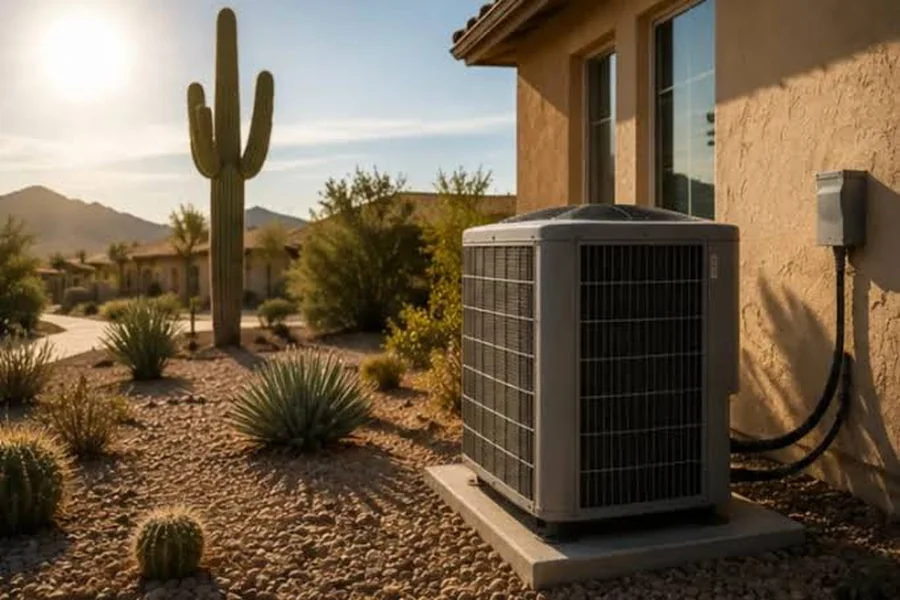
Your AC runs about 2,000 hours a year in southern Arizona. A unit in Seattle runs closer to 300. Same equipment, roughly seven times the wear, and that math explains almost every early failure in this part of the state.
I learned that the hard way with a rental in Old Bisbee, where a fifteen-year-old condenser finally quit on a Sunday in July and the house hit 94 degrees by noon. The repair tech told me something I still repeat to anyone who asks about cooling in this climate: your equipment doesn’t die of age here. It dies of hours. So when you start hunting for ac repair bisbee, the first question worth asking isn’t price. It’s whether the technician can explain what the runtime actually did to your system.
This piece covers the specific ways desert conditions shorten equipment life, the warning signs that show up weeks before a breakdown, how to make the repair or replace call with a clear head, and a short list of habits that add years back. If you own a home anywhere in the high desert, most of it applies to you.
- What desert conditions actually do to cooling equipment
- Three signs your system is telling you something
- Repair it or replace it? A decision rule that actually works
- Pick the contractor by what they measure, not what they promise
- The maintenance habits that add years back
- One thing to get right before next summer
What desert conditions actually do to cooling equipment
Heat is the headline, but it’s the supporting cast that does the damage. Dust storms coat condenser coils with a fine silt that insulates them, which forces the compressor to work harder for the same result. Monsoon humidity pushes the system into a mode it wasn’t sized for. And the daily swing from a 100 degree afternoon to a 65 degree night makes metal expand and contract constantly.
Coils are where I’d put your attention first. A dirty condenser coil can push energy use up noticeably and shorten compressor life, and the Department of Energy treats coil cleaning and airflow as core maintenance for exactly that reason. In Tucson or Bisbee, that cleaning interval is shorter than any manufacturer’s generic schedule suggests. Manufacturers write manuals for a national average. You don’t live in a national average.
Three signs your system is telling you something
Breakdowns in this climate rarely arrive without warning. They announce themselves for a few weeks, and homeowners miss the announcement because it’s quiet.
- Longer run times with the same thermostat setting. If your system used to hit 76 in twenty minutes and now needs forty, you’ve lost capacity somewhere. Refrigerant charge, a failing capacitor, or a blocked coil are the usual suspects.
- Warm air at the vents on a hot afternoon. Morning cold and afternoon lukewarm points to a system that’s struggling to reject heat, which is almost always a condenser or charge problem. Don’t wait on this one.
- A dust smell or visible grit on the vents. That’s your ductwork pulling in attic or crawlspace air, and it means you’re cooling the neighborhood, not the living room.
My honest take: the run time sign is the one to act on. A system limping through August costs you more in electricity than the diagnostic visit would, and the eventual failure always lands on the hottest day of the year, which is also the most expensive day to get a truck out.
Repair it or replace it? A decision rule that actually works
Ignore the “if repairs cost more than half a new unit” advice you see floating around. It’s too blunt for a climate this punishing. Use the age-to-repair ratio instead, which is what I’d call the Half-Life Test.
| System age | Repair cost vs. new unit | What I’d do
|
|---|---|---|
| Under 8 years | Under 30 percent | Repair, and ask why it failed this early |
| Under 8 years | Over 40 percent | Get a second opinion before deciding |
| 8 to 12 years | Over 30 percent | Start pricing replacement, repair only if it buys a full season |
| Over 12 years | Any major component | Replace. You’re paying for borrowed time |
The logic is simple. A unit past its expected service life in this climate is running on reserve capacity, and every repair is a bet against the next failure. I’d rather put that money toward equipment sized for 2,000 hours of annual runtime than toward a compressor on a fifteen-year-old cabinet.
Pick the contractor by what they measure, not what they promise
Every HVAC company in Arizona will tell you they do quality work. That claim costs nothing. What separates a good crew is whether they show up with gauges and a clipboard before quoting you a number.
A technician worth hiring will check refrigerant pressures and superheat, measure static pressure across the air handler, inspect the coil visually, and test the capacitor and contactor. That takes about an hour. If someone offers a free diagnosis that lasts ten minutes and ends with a replacement quote, you’ve learned what you need to know about them.
One more thing worth knowing before you call anyone: cooling work is real skilled trade labor, and the Bureau of Labor Statistics tracks HVAC technicians as a distinct occupation with formal training and certification pathways. Ask whether their techs hold EPA Section 608 certification for refrigerant handling. It’s a legal requirement for the work, and it’s a fast filter for who’s serious.
The maintenance habits that add years back
You don’t need a service contract to get most of the benefit. You need a calendar reminder and twenty minutes a month from May through September.
- Hose off the condenser coil monthly during dust season, with the power off at the breaker. This single habit does more for compressor life than anything else on the list.
- Swap filters on a schedule tied to dust events, not to the printed interval. After a storm, check it. If it’s gray, it’s done.
- Keep two feet of clear space around the outdoor unit. Shade is fine, but a bush pressed against the coil is not.
- Get a spring tune-up before the first hot week, when technicians aren’t booked solid and the visit is cheaper.
- Seal obvious duct leaks in the attic yourself with mastic if you’re comfortable on a ladder. The National Renewable Energy Laboratory has long documented duct losses as one of the largest avoidable energy wastes in residential homes, and attic ducts in Arizona are the worst offenders.
None of that is glamorous. All of it is cheaper than a compressor.
One thing to get right before next summer
Desert cooling isn’t a mystery once you stop treating your AC like an appliance that either works or doesn’t. It’s a machine burning through a decade of normal runtime every seven years, and it responds to airflow, clean coils, and honest diagnostics. Catch the run time creep early, use the age-to-repair ratio instead of a gut feeling, and hire the person who measures before they quote. That sequence saves more money than any loyalty program ever will.
If your system is already past twelve years and limping, the real question isn’t whether to replace it. It’s whether you want to pick the week or let the weather pick it for you. Which one are you going to choose?
