
 James
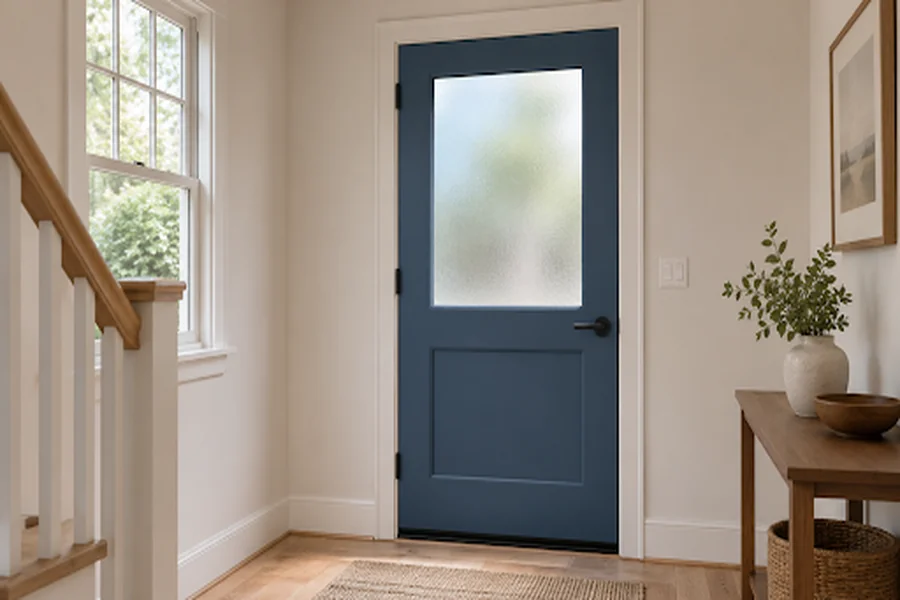
Choosing glass for an exterior door starts with deciding where you want daylight and what you want to keep private. If you turn on the hall light every time you come home, a glass panel could make that space easier to use during the day.
Stand on the front step and look toward the door at eye level. Think about what a visitor would see through a clear panel, especially if the entry opens straight into a living room. Where the glass sits may matter as much as its size.
Put the Glass Where It Helps
Many exterior doors offer a choice between a small pane near the top and a panel that extends farther down. A high pane makes sense when you want daylight above eye level. A larger panel may be more useful if you want to see who is on the porch before opening the door.
You can also bring in light through a window above the frame, called a transom, or through a narrow window beside the door, called a sidelight. A transom can limit the view into the entry. With a sidelight, check what someone standing near the doorbell could see through it.
See What the Glass Reveals at Night
Frosted and patterned glass blur the view while allowing daylight into the entry. Some patterns hide fine details but still show movement or a silhouette close to the pane. Ask to see a sample with a light behind it to better understand what it reveals after dark.
Clear glass is often useful in patio doors, especially when the door looks out on a yard you use regularly. If a neighbor can see into the room, consider a shade or curtain you can close when the lights go on. For a sliding door, check whether the covering can be moved aside without catching on the handle.
Match the Glass to the Room
A sunny room and a chilly hallway may need different glass. For a room that heats up in the afternoon, look at the solar heat gain coefficient. A lower number means less heat from sunlight passes through the door.
For a draft-free hallway that still feels cold near the door, compare U-factors. A lower U-factor means the door assembly slows heat transfer more effectively.
Ask for ratings for the complete door in the configuration you plan to buy. A quote may mention insulated glass or a low-E coating, which helps control heat transfer, but the frame and amount of glass also affect performance.
Check the Fit Around the Glass and Frame
Ask how the installer will seal the space between the frame and the wall. At the bottom, check that the door closes easily and the sweep meets the threshold. A gap there can let in cold air even if the glass insulates well.
If you plan to keep your current door and change only the glass, ask whether it can accept the insert you want before you order. Have the installer check the existing opening and explain how the new insert will be sealed.
